????????ikoniIf you’ve found your way to this page, there’s a good chance that you’re a journalist who has just had the pleasure of meeting an unusually aggressive PR flak named Jim McCarthy.
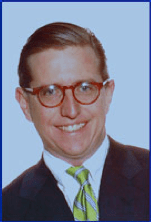
Don’t let me scare you
First off, relax. If anything, the fact that you’ve run into Jim may be a good thing. This guy has represented some major league Wall Street crooks, so there’s a chance that you’re on to something.
CounterPoint’s current and former clients include:
- Elliott Broidy, a wealthy California investor who pleaded guilty to paying $1 million in bribes to influence former New York State Comptroller Alan Hevesi.
- Ira Rennert’s Renco Group and its Doe Run subsidiary St. Louis, the largest lead producer in the Western hemisphere. Jim does not want you to watch this video about the company’s operations in Peru.
- The Formaldehyde Council
- The National Fisheries Institute (Think mercury)
- Bond insurer MBIA.
- The College Sports Council
- Hedge fund founder Raj Rajaratnam, who was convicted of securities fraud. (Update: Raj Rajaratnam was sentenced to 11 years in prison.)
- Dallas-based Kosmos Energy, majority-owned by private-equity firms Blackstone Group and Warburg Pincus.
I had the pleasure of dealing with Mr. McCarthy a few times when I was investigating one of those crooks, a guy named Elliot Broidy, so I decided to put together this handy-dandy guide for the perplexed:
Jim is president of CounterPoint Strategies, a public relations firm in Washington, D.C. that specializes in an aggressive, combative style of crisis management. Jim is the real-life version of the fictional tobacco flak in Christopher Buckley’s novel Thank You For Smoking. His job is to make your story about you.
He’s the son of liberal journalist and peace activist Colman McCarthy. The acorn fell pretty far from the tree in this case, although the dynamics of that relationship must be pretty interesting. Young Jim registered as a Republican at age 18.
Early in his PR career, Jim handled a variety of Fortune 500 and foreign government accounts for two public relations agencies in Washington, Ruder-Finn and Nichols-Dezenhall, the “brass-knuckled boys” of DC’s PR world.

Ready to pounce
In 1994, McCarthy started a boutique public relations agency, McCarthy Communications. McCarthy Communications reportedly billed one client, the Saginaw Chippewa Indian tribe of central Michigan, $280,000 for a media campaign designed to force out the head of the Bureau of Indian Affairs. Replying to a BIA spokesman who said he had never seen such tactics, McCarthy said, “I say to Mr. Hackler, welcome to the Beltway.”
A confidential McCarthy Communications proposal was obtained by The Washington Post. (See William Claiborne, “Tribe PR Drive Targeted BIA Head”, The Washington Post, Aug. 16, 1999)
McCarthy was hired by the Augusta National Golf Club in 2002 when the men-only club was under pressure by activist [[Martha Burk]] to admit women. McCarthy advised a “pugnacious” approach. “My clients appreciate that I like to get in the arena, take off the gloves and throw down,” McCarthy told Alan Shipnuck, who wrote a book about Augusta’s battle to keep women out. (See Taking on the Times”, Sports Illustrated, April 6, 2004.)
It’s the first time I’ve done this kind of media criticism as part of an overall strategy for a client, and I don’t know of any other PR firm that has done it. It’s pretty cutting-edge. Big PR firms are like large corporations in that they have always been afraid to take on the press directly, because there is this belief if you create an adversarial relationship, you will never be treated fairly again. But for a venerable institution like Augusta National to embrace that strategy, well, that has certainly opened some eyes. Now I’m trying to build media-crit-driven crisis management into stand-alone business. Who knows? Maybe I’ll be snapped up by a big, deep-pocketed PR firm.
In 2004, McCarthy co-founded Public Interest Watch, a Washington nonprofit heavily funded by Exxon Mobil. According to BusinessWeek, McCarthy’s ex-employer, renamed Dezenhall Resources, helped create PIW in 2002 specifically to prod the IRS to go after Greenpeace.
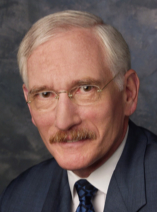
David “Nick” Nichols
Just as McCarthy had hoped, deep pockets did find him. McCarthy Communications was hired in 2004 to represent investor Kenneth Langone, who was named in a lawsuit by then-New York State Attorney General Elliot Spitzer. On Langone’s behalf, McCarthy has repeatedly attacked the credibility of Gretchen Morgenson, a Pulitzer Prize winning business journalist for The New York Times, saying businesspeople regarded her with “pure contempt.” Apparently, Langone didn’t like it that Morgenson pointed out how Langone was a poster boy for executive overcompensation.
In 2008, McCarthy co-founded CounterPoint Strategies. McCarthy is the oversized face of CounterPoint, but behind the scenes is CounterPoint’s chairman, David “Nick” Nichols, a former investigative journalist who went on to found Nichols-Dezenhall, McCarthy’s old stomping grounds.
Before forming Nichols-Dezenhall, Nichols served as a campaign press secretary for New York City Mayor John Lindsay and then headed to Wisconsin where he served as a legislative staffer. Nichols also served for several as a senior media spokesperson for the Cuban-Haitian Task Force, which was charged with dealing with the thousands of refugees from Castro’s Cuba in the Mariel boat lift.
Share your McCarthy horror stories below:

 What made Awlaki so dangerous wasn’t his so-called operational abilities, as the U.S. is now claiming, although no one is actually bothering to ask what that means. Awlaki was an intellectual, not a fighter. What made Awlaki so dangerous was his somewhat unique ability to inspire disaffected Muslims in the West to take up arms in the cause of jihad.
 Trump / Russia