
Category: Politics
LA’s Elliott Broidy to be served justice for the rich
LA financier Elliott Broidy, who pleaded guilty to paying $1 million in bribes to get New York State’s giant pension funds to invest in his Markstone Fund, is going to get off with a slap on the wrist.
The New York Daily News reported that prosecutors are expected to ask that Broidy’s sentence be reduced to a misdemeanor and no jail time because he’s been such a good such a yeled tov (good boy).
Broidy had been facing four years in prison but he cooperated with investigators and helped put former Comptroller Alan Hevesi in jail.
Sentencing has been delayed to Sept 28 to give the corpulent cretin enough time to pay the $18 million in restitution he owes the state.
Update: During this whole affair, Broidy has retained all his posts on boards and trusteeships, although it’s unclear how he can be trusted with anything. He’s on the board of the Republican Jewish Coalition. He’s also on the Board of Advisors for the USC Marshall School of Business’ Center for Investment Studies; the Simon Weisenthal Center’s Board of Trustees.
Docs Reveal Secret $1B Saudi Property Empire
This story in Britain’s Independent newspaper caught my eye:
A secret $1bn US property empire amassed by members of the Saudi royal family is the subject of a bitter legal dispute that threatens to reveal the extent of the family’s American business interests.
These properties are owned by HRH Prince Abdul-Aziz bin Fahd, the youngest and favorite son of King Fahd and his relative, Sheik Khalid N Al Assaf. The prince, a minister of state without portfolio, is known for his extravagance and international playboy image. The prince reportedly owns $2 billion USD worth of palaces and the world?s largest collection of super yachts. He also once had a romantic relationship with model/actress Yasmine Bleeth of Baywatch.
I tracked down the court document.
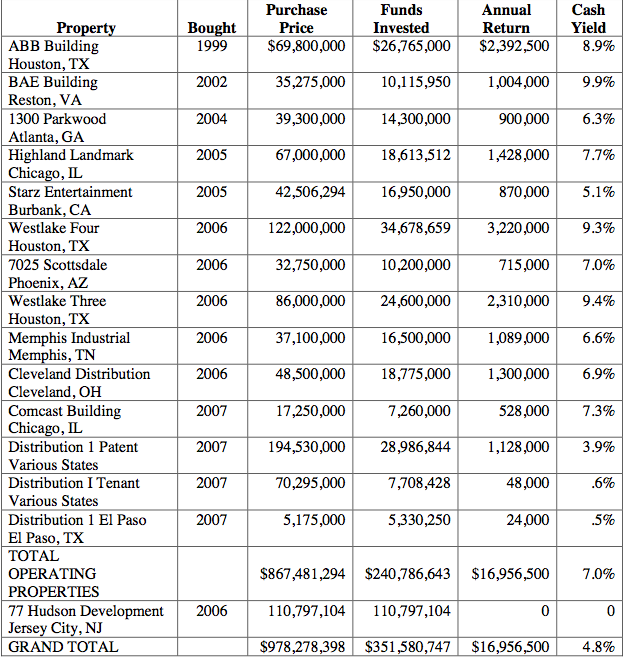
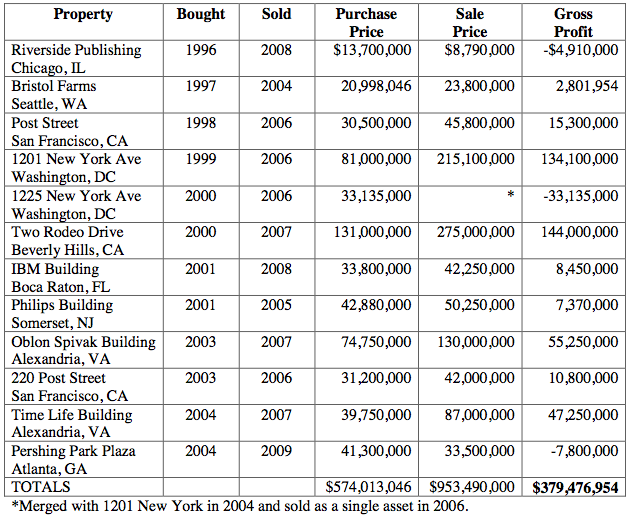
Turns out the Prince has owned several buildings in California including the Starz Entertainment building in Burbank; Two Rodeo Drive in Beverly Hills; and 220 Post Street in San Francisco.
Here’s a list of the property holdings:
Other properties formerly owned by the Prince and the Sheikh are:
The properties are managed by
- Dr. Abdulrahman Otaishan, a senior financial advisor to the Prince
- Dr. Andreas Limburg
- Pierre Rolin and his company Strategic Real Estate Advisors Limited, which was placed into administration in 2010 after losing a single client.
Brent Wilkes Is Unjailable
 This week, a federal judge ordered Cunningham briber Brent “The Enigma” Wilkes to go to jail, but once again Wilkes remains a free man while he appeals his case.
At this point, it’s a pretty safe bet that Randy “Duke” Cunningham, sentenced to more than eight years in prison, will be released from prison later this year to begin his new life in a cabin in the Ozarks before Wilkes really has to make sure he never, ever drops the soap in the prison shower.
Judge Larry Burns sentenced Wilkes to 12 years in prison back in February 2008. He served a few months and then the 9th Circuit Court of Appeals freed him on bail so he go off and play poker and steal from his employee pension funds to pay his living expenses.
Enough is enough, prosecutors said. But for those who now how to manipulate it, the justice system serves to delay and mitigate punishment rather than deal it out.
So it’s become a sad, familiar pattern for Brent-o:
He gamed the system as a defense contractor sucking on the taxpayer’s teat and flying around in private jets with the help of Randy “Duke” Cunningham, a congressman he corrupted with hookers, lavish vacations, and Hawaii scuba trips.
Today, a team of court-appointed (read: taxpayer funded) team of attorneys are delaying his day of reckoning, essentially buying Wilkes freedom with money lifted from the pockets of his victims.
It’s really just another form of welfare, but Wilkes is the worst kind of welfare bitch: a man who espoused a Republican ideology that sneered at big government and “socialism” and wrapped itself red, white and blue fantasies of a country that no longer exists, if it ever did, where the playing field was level, the rules were fair and hard work and determination won the day.
US: Brent Wilkes Is Still a Douchebag
In my last post on Cunningham briber Brent Wilkes, I noted that he has been playing poker and farting around while his team of court-appointed attorneys fights to keep him from serving a 12-year sentence for plying Duke with hookers, lavish trips to Hawaii in exchange for defense contracts.
In court papers filed ahead of a hearing granted by the 9th Circuit Court of Appeals, prosecutors say Wilkes has been doing more than that: Wilkes has been committing crimes by stealing more than $100,000 from the pension fund of his now defunct company to pay his living expenses.
Since Wilkes’s release from custody on January 5, 2009, Wilkes has engaged in additional fraudulent conduct: just as he once raided his children’s college funds to obtain operating cash, he has unabashedly raided the Wilkes’s Corporation’s employee benefit plan to obtain spending money for himself – while failing to reimburse the public for his taxpayer-funded attorneys.
Update: After a day-long hearing, Judge Larry Burns decided that Wilkes has to go to jail on Friday unless the 9th Circuit Court of Appeals saves his ass again. (U-T San Diego)
Brent Wilkes, enough is enough
Brent "The Enigma" Wilkes
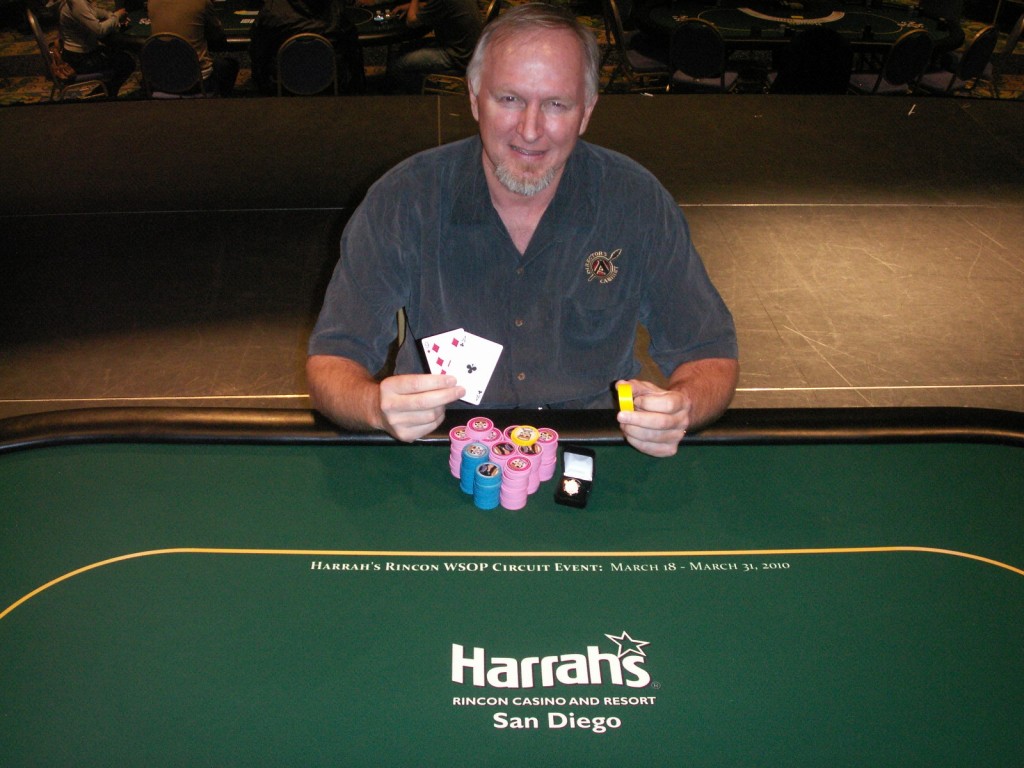
Defense contractor Brent “the Enigma” Wilkes was convicted in 2007 and sentenced to 12 years in prison for bribing former Rep. Randy “Duke” Cunningham with hookers, lavish vacations and the like, but his court-appointed lawyers have done a phenomenal job of keeping the guy out of prison so he can play poker and fart around.
He’s due for a hearing in a few days and the government calls his bluff in this footnote to a motion:
The government tips its hat to defense counsel who have adopted clever stratagems designed to prolong Wilkes’ day of reckoning almost five years since his 2007 conviction. Nevertheless, this latest attempt to prolong and confuse what should be a rather simple conclusion to this lengthy end-game should not be countenanced by this Court. Enough is enough.
Randy Duke Cunningham: I plan to live in a cabin in the Ozarks, hunt and write books
 Yes it’s true: Randy “Duke” Cunningham has written another sad, revealing jailhouse letter to the judge who sentenced him to 100 months in federal prison for low behavior in high office.
The Vietnam war hero and disgraced ex-Congressman, who is now 70, writes that he’s set to leave prison as his sentence comes to an end later this year. He says he plans to live in a cabin near Greer’s Lake in the Ozarks and write books. He will be “away from the (San Diego) Union-Tribune,” the newspaper that exposed his corruption in 2005, and there won’t be many people around to bother him, “but they do have a lot of black bears, cougars, and history of rabies.”
In his letter, Cunningham is at turns whining, boastful and self-pitying as he asks Judge Burns to restore his second amendment rights. “I flew aircraft that could disintegrate your building with a half-second burst and now can’t carry a .22-cal,” he writes.
The Duke says he needs a gun “to earn a little money so he can eat.” He’s poor now and homeless — thanks to the government, he writes. “Don’t guess we can do to (sic) much for our veterans after all,” Cunningham whines.
He says he will use the gun for hunting and competition and then adds in a handwritten postscript, “I will also hunt to supliment (sic) my food.”
To this mess of a letter, this mess of a man, Judge Burns’ response is understated elegance. Burns says he has no authority to restore Duke’s gun rights; that authority with the Bureau of Alcohol, Tobacco and Firearms:
You should be aware, however, that every year since 1992, Congress has refused to provide funding to the ATF to review applications from the federal firearm ban. And the United States Supreme Court has ruled that inaction by the ATF does not amount to “denial” of the application within the meaning of section 925(c) United States v. Bean 537 US 71, 75 (2002). So unless Congress changes course and decides to fund ATF’s review of applications for relief, it appears you are stuck.
Duke’s letter:
Randy "Duke" Cunningham May 16 letter to judge// < 
Not Having a Good Day
CalPERS tried to forestall this airing of its dirty laundry, but a federal judge blocked the pension’s request to stop the deposition from taking place.
Villalobos was paid more than $47 million in commissions by private equity and real estate investment managers to help them win CalPERS contracts to manage about $4.8 billion worth of the fund’s securities from 2005 to 2009, according to a lawsuit filed by the California Attorney General’s office.
One of those private equity firms was Aurora Capital Group of Los Angeles, which hired Villalobos in 2008. Parsky is Aurora’s chairman. He’s also a former assistant Treasury secretary, a UC regent and was George W. Bush’s major doom in California.
So politically connected is Parsky that ARVCO allegedly intervened with CalPERS staff to obtain investment money for Aurora, pointing out the political juice that Parsky brought with him, according to an independent law firm investigation of the matter. CalPERS coughed up $400 million for Aurora Resurgence in 2008, earning Villalobos and his firm, ARVCO, a $4 million fee. Another $150 million CalPERS investment in a different Aurora fund, netted nearly $2 million for ARVCO.
Today, Parsky is being deposed in Los Angeles. Tomorrow, Aurora’s general counsel, Timothy Hart, will get his turn.
Brent "The Enigma" Wilkes Continues to Drain Taxpayers
Another Winning Hand for "The Enigma"
It’s been a long time since we heard from Brent “The Enigma” Wilkes. But the Enigma is back, baby!
Last week, the 9th U.S. Circuit Court of Appeals granted Wilkes a new hearing in his case in San Diego federal court.
Wilkes, you may recall, was the sleazy defense contractor at the center of the Randy “Duke” Cunningham bribery trial. Cunningham steered defense contracts to Wilkes, who used the money to live high on the hog. He was poker buddies with Kyle “Dusty” Foggo, once the No. 3 guy at the CIA.
In 2008, Wilkes was convicted of bribing Cunningham with prostitutes and other goodies and sentenced to 12 years prison. By all rights, he should be there. But Wilkes, the master manipulator, continues to game the system.
The 9th Circuit allowed Wilkes to go free on bond pending his appeal. While Cunningham, Foggo and others do time, Wilkes runs around playing poker at San Diego casinos (where he goes by the nickname “The Enigma”). Meanwhile, his taxpayer-funded attorneys bombard federal prosecutors with reams of paper on his behalf. What a fucking waste.
Now it looks like the legal maneuvering by Team Enigma will drag into a fourth year. Your taxpayer dollars bought Wilkes more time because The Enigma’s lawyers argued successfully that the judge presided over Wilkes jury trial failed to read the minds of the judges 9th Circuit Court of Appeals.
The trial judge, Larry Burns, declined to grant immunity to one of the government’s witnesses that Wilkes wanted to call for his defense. According to the 9th Circuit, this was a no-no because Burns failed to apply the 9th Circuit’s holding in a separate, unrelated case that was decided after Burns made his ruling. Wow. Just wow.
All of Wilkes other arguments were brushed aside, including one that I found particularly interesting: Why was Cunningham never called to testify. According to prosecutors, “one of the reasons the Government did not call Cunningham at trial was because prosecutors did not trust him to refrain from fabricating testimony that he believed would help the prosecution (and thus enhance his chances for a reduced sentence).”
Who is Jim McCarthy of CounterPoint Strategies?
If you’ve found your way to this page, there’s a good chance that you’re a journalist who has just had the pleasure of meeting an unusually aggressive PR flak named Jim McCarthy.
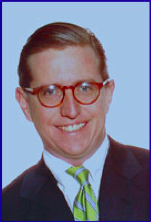
Don’t let me scare you
First off, relax. If anything, the fact that you’ve run into Jim may be a good thing. This guy has represented some major league Wall Street crooks, so there’s a chance that you’re on to something.
CounterPoint’s current and former clients include:
- Elliott Broidy, a wealthy California investor who pleaded guilty to paying $1 million in bribes to influence former New York State Comptroller Alan Hevesi.
- Ira Rennert’s Renco Group and its Doe Run subsidiary St. Louis, the largest lead producer in the Western hemisphere. Jim does not want you to watch this video about the company’s operations in Peru.
- The Formaldehyde Council
- The National Fisheries Institute (Think mercury)
- Bond insurer MBIA.
- The College Sports Council
- Hedge fund founder Raj Rajaratnam, who was convicted of securities fraud. (Update: Raj Rajaratnam was sentenced to 11 years in prison.)
- Dallas-based Kosmos Energy, majority-owned by private-equity firms Blackstone Group and Warburg Pincus.
I had the pleasure of dealing with Mr. McCarthy a few times when I was investigating one of those crooks, a guy named Elliot Broidy, so I decided to put together this handy-dandy guide for the perplexed:
Jim is president of CounterPoint Strategies, a public relations firm in Washington, D.C. that specializes in an aggressive, combative style of crisis management. Jim is the real-life version of the fictional tobacco flak in Christopher Buckley’s novel Thank You For Smoking. His job is to make your story about you.
He’s the son of liberal journalist and peace activist Colman McCarthy. The acorn fell pretty far from the tree in this case, although the dynamics of that relationship must be pretty interesting. Young Jim registered as a Republican at age 18.
Early in his PR career, Jim handled a variety of Fortune 500 and foreign government accounts for two public relations agencies in Washington, Ruder-Finn and Nichols-Dezenhall, the “brass-knuckled boys” of DC’s PR world.
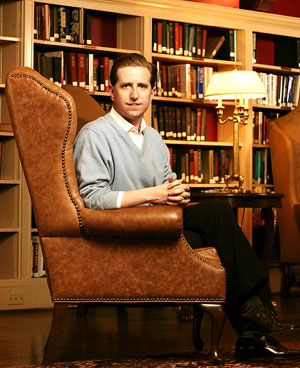
Ready to pounce
In 1994, McCarthy started a boutique public relations agency, McCarthy Communications. McCarthy Communications reportedly billed one client, the Saginaw Chippewa Indian tribe of central Michigan, $280,000 for a media campaign designed to force out the head of the Bureau of Indian Affairs. Replying to a BIA spokesman who said he had never seen such tactics, McCarthy said, “I say to Mr. Hackler, welcome to the Beltway.”
A confidential McCarthy Communications proposal was obtained by The Washington Post. (See William Claiborne, “Tribe PR Drive Targeted BIA Head”, The Washington Post, Aug. 16, 1999)
McCarthy was hired by the Augusta National Golf Club in 2002 when the men-only club was under pressure by activist [[Martha Burk]] to admit women. McCarthy advised a “pugnacious” approach. “My clients appreciate that I like to get in the arena, take off the gloves and throw down,” McCarthy told Alan Shipnuck, who wrote a book about Augusta’s battle to keep women out. (See Taking on the Times”, Sports Illustrated, April 6, 2004.)
It’s the first time I’ve done this kind of media criticism as part of an overall strategy for a client, and I don’t know of any other PR firm that has done it. It’s pretty cutting-edge. Big PR firms are like large corporations in that they have always been afraid to take on the press directly, because there is this belief if you create an adversarial relationship, you will never be treated fairly again. But for a venerable institution like Augusta National to embrace that strategy, well, that has certainly opened some eyes. Now I’m trying to build media-crit-driven crisis management into stand-alone business. Who knows? Maybe I’ll be snapped up by a big, deep-pocketed PR firm.
In 2004, McCarthy co-founded Public Interest Watch, a Washington nonprofit heavily funded by Exxon Mobil. According to BusinessWeek, McCarthy’s ex-employer, renamed Dezenhall Resources, helped create PIW in 2002 specifically to prod the IRS to go after Greenpeace.
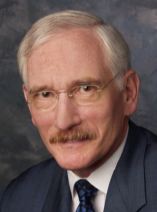
David “Nick” Nichols
Just as McCarthy had hoped, deep pockets did find him. McCarthy Communications was hired in 2004 to represent investor Kenneth Langone, who was named in a lawsuit by then-New York State Attorney General Elliot Spitzer. On Langone’s behalf, McCarthy has repeatedly attacked the credibility of Gretchen Morgenson, a Pulitzer Prize winning business journalist for The New York Times, saying businesspeople regarded her with “pure contempt.” Apparently, Langone didn’t like it that Morgenson pointed out how Langone was a poster boy for executive overcompensation.
In 2008, McCarthy co-founded CounterPoint Strategies. McCarthy is the oversized face of CounterPoint, but behind the scenes is CounterPoint’s chairman, David “Nick” Nichols, a former investigative journalist who went on to found Nichols-Dezenhall, McCarthy’s old stomping grounds.
Before forming Nichols-Dezenhall, Nichols served as a campaign press secretary for New York City Mayor John Lindsay and then headed to Wisconsin where he served as a legislative staffer. Nichols also served for several as a senior media spokesperson for the Cuban-Haitian Task Force, which was charged with dealing with the thousands of refugees from Castro’s Cuba in the Mariel boat lift.
Share your McCarthy horror stories below:
Did an LA money man give up ex-NY Comptroller Alan Hevesi?
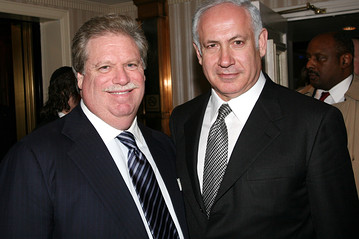
Broidy and Bibi
Broidy, former chairman of Markstone Capital Group, pleaded guilty in December to a felony and admitted showering officials at the New York state pension fund with nearly $1 million in exchange for a $250 million investment in Markstone. As part of his plea, Broidy agreed to cooperate with investigators with the New York State attorney general’s office.
The news today is that Alan Hevesi, the New York comptroller who oversaw the pension fund, reportedly intends to plead guilty apparently for taking Broidy’s “gifts.” Broidy paid $75,000 to send Hevesi and his relatives on five trips to Israel, including first-class airfare, luxury hotel accommodations and a security detail, according to several reports.
According to the Wall Street Journal:
A person familiar with the matter at the time said Mr. Hevesi had long expressed a desire to stay at the historic King David hotel, which overlooks Jerusalem’s Old City. Mr. Broidy paid for a stay there, this person said.
Readers of this blog might note how similar this is to the $63,000 trip CalPERS investment officer Leon Shahinian made to New York in 2007. Shahinian’s private jet and his lavish hotel suite were paid for by billionaire Leon Black. At the time, Black and his agent, Al Villalobos, CalPERS was considering investing $700 million Black’s Apollo Global Management. Guess Jerry Brown isn’t as determined to root out pension corruption as Cuomo.
But I digress.
Broidy used his New York connections to leverage an investment in CalPERS. At the time of Broidy’s guilty plea, the LA Times reported that:
In 2003, Broidy mounted a major selling effort to get CalPERS to invest in his firm, according to documents released by CalPERS that report meetings between investment pitchmen and board members. Letters from Broidy to board members indicate that Markstone sought to leverage the New York investment into business with CalPERS, which eventually agreed to invest $50 million in Markstone.
Broidy even brought New York state Comptroller Alan Hevesi with him to a meeting in Sacramento with CalPERS staff to pitch Markstone in 2003. One of those meetings was with then-state Treasurer and CalPERS board member Phil Angelides. Broidy offered to bring Angelides and other California officials to Israel to see its economic strength.
Broidy also cultivated another influential ally at CalPERS, then-state Controller Steve Westly, who also was on the CalPERS board. Broidy had met privately with Westly at least half a dozen times by October 2004, according to Westly’s desk calendar. One of those meetings was at Broidy’s office in Tel Aviv.
Broidy once hosted fundraisers for President Bush and other lavish parties in his Bel Air manse. Bush appointed him to the Kennedy Center’s board and U.S. Homeland Security Advisory Council. He was a trustee of the Los Angeles Fire and Police Pension fund from 2002 until he resigned in May 2009.
He also has ties to San Diego, serving in the 1980s as a money manager for Glen Bell, the late Taco Bell founder and Rancho Santa Fe resident. That a relationship that ended acrimoniously, with Bell accusing Broidy in court papers of cheating him while he suffered from Parkinson’s disease.
RICO lawsuit filed in SD over NY pension corruption
Pacific Corporate Group of La Jolla, the long-time adviser to CalPERS and other big U.S. pension funds, is accusing one of its former employees “racketeering, illegal kickbacks, betrayal and deceit” for his role in a corruption scandal at the New York State Common Retirement Fund.
PCG and its former officer, Stephen J. Moseley, have locked horns in San Diego County Superior Court, trading charges and counter-charges in an unusually public spat in the staid world of pension management. I’ve posted the documents here.
Moseley fired the first shot by suing his former employer for refusing to pay the amounts he claims he is owed as a former officer. In his complaint, Moseley and his attorneys at Gordon & Rees accuse PCG and its founder, Christopher Bower, of misleading clients:
Defendants, through Christopher Bower, have engaged in a systematic scheme of hiding and concealing material facts from clients regarding investment opportunities which were sponsored by PCG. Once discovered, Defendants’ conduct contributed to the subsequent resignations of all partners in PCG Asset Management, including Plaintiff. In addition, Defendants, through Bower, have made a practice of misleading key PCG clients regarding staff size and turnover of PCG personnel, all in an effort to influence investment decisions in favor of PCG. Moreover, Defendants, through Bower, have fraudulently concealed Bowers’ interactions and relationships with various placement agents and intermediaries; fraudulently concealed Bowers’ interactions and relationships with current and former CalPERS board members including Alfred J. Villalobos; and denied and/or concealed the existence of material conflicts of interest. Defendants, through Bower, have used such acts to influence investment valuations and investment decisions, in order to advance the personal interests of Bower and certain unregistered placement agents in contravention of PCG’s fiduciary obligations.
PCG responded a few months later with guns blazing. It was Moseley, PCG says, who misled his employer by secretly paying kickbacks to officials at the New York state pension fund as a reward for in exchange for participating in a joint venture seeded in 2006 with $750 million from the New York State Common Retirement Fund. Moseley resigned shortly before the money was committed.
PCG last year settled with New York Attorney General Andrew Cuomo by forfeiting $2 million in fees that it earned from the New York state pension fund. The La Jolla money management firm says it settled because it can be held liable for an employee’s actions even if it was unaware of them.
Moseley’s allegations, PCG says, are the most recent example of a competitor seeking to do it harm by making false and defamatory allegations. According to PCG’s lawsuit, Moseley’s greed was the real reason he left the firm and if anything, he has been overpaid. Moseley threatened his former employer with “adverse publicity and injury to its reputation” if he wasn’t paid what he says he was owed.
PCG and its law firm, Sullivan, Hill, Lewin, Rez & Engel, filed its counter-claim under the Racketeering and Corrupt Organizations statute. The RICO statute carries the threat of treble damages, punitive damages and the right to recover attorney fees and litigation costs. Very few of these cases ever make it to trial because of the tremendous sums that are at stake for both sides.
Moseley’s conduct resulted in “tens of millions of dollars in damages,” and those damages would potentially be trebled under the RICO statute. In addition, PCG says it will seek punitive damages and attorney fees from Moseley.
You can decide for yourself by reading Moseley’s first amended complaint and PCG’s counterclaim:
A Good Dose of Schadenfreude
Subject: PCG / CalPERS
From: A Reader
To: seth@sethhettena.com
Just wanted to say keep up the good work. Not sure how many people are picking up on the coverage but it is good for a dose of schadenfreude for those of us that have dealt with these people.
The anonymous email saying you are on to more than you realize was not exaggerating. This behavior has gone on for years at PERS before Leon as well as plenty of other pension plans and their consultants.
Pacific Corporate Group Disclosure Letter to CalPERS
Cleaning House, CalPERS Dumps Pacific Corporate Group as Advisor
Dale Kasler reports in Sunday’s Sacramento Bee that CalPERS is “rethinking” its ties to Pacific Corporate Group of La Jolla, which screened private equity deals for the pension fund for the past 20 years.
For 20 years, when CalPERS needed advice on a big investment, it often called on Christopher Bower, founder and chief executive of a firm called Pacific Corporate Group.
Now this confidant from La Jolla might get pulled into the bribery scandal at the nation’s largest public pension fund.
Alfred Villalobos, the man at the heart of the scandal, worked on deals for Bower. And when CalPERS was thinking of firing Bower’s firm in early 2007, Villalobos – a former CalPERS board member – stepped in and negotiated a delicate agreement that saved the relationship.
Months later, Pacific Corporate advised CalPERS on two investments that earned Villalobos fees totaling $17 million.
Bower never hid his relationship with Villalobos. He sent CalPERS a letter about it before the investments with Villalobos’ clients were made. CalPERS concluded the arrangement was fine.
As of June 30, the firm no longer screens deals for CalPERS, ending a role it filled since 1990.
“Their contract expired and it was allowed to lapse,” said CalPERS spokesman Brad Pacheco.
Bower’s firm still directly manages about $1 billion of CalPERS’ money. But that’s being examined, too, as part of a larger review of CalPERS’ investment partners, said Joseph Dear, chief investment officer at the California Public Employees’ Retirement System.
Leon Shahinian's $63k Big Apple visit
“I believe you’re on to more than you realize.”
So reads an e-mail redirecting my attention to some of the CalPERS court documents I posted online last month.
My anonymous correspondent is a former advisor to the CalPERS board who points out some interesting details buried in the hotel bills from CalPERS senior investment official Leon Shahinian’s $63,000 trip to New York City in 2007.
California Attorney General Jerry Brown’s office has cited this trip as an example of the corrupt practices of Al Villalobos, a former CalPERS board member who went into business as a lobbyist for money managers seeking to do business with the giant California pension fund. One of Villalobos’ clients was Leon Black, the billionaire founder and controlling shareholder of Apollo Global Management.
In 2007, while Villalobos was trying to persuade CalPERS to purchase a 10 percent equity interest in Apollo Global Management for $700 million, Shahinian accepted Villalobos’ invitation to travel by private jet to New York City to attend a fund-raising event hosted by none other than Leon Black.
Apollo covered the $63,000 cost for Shahinian’s New York trip. The following month, Shahinian, who oversaw the CalPERS private equity portfolio, urged the pension board to approve the investment in Apollo, which it did.
When their private jet touched down in New York, Villalobos and Shahinian were met by a limousine arranged for by Aurora Capital, a private equity fund headed by Villalobos’ client, Gerry Parsky, a GOP heavyweight and Bush’s California majordomo.
The limousine ferried Shahinian and Villalobos to a ridiculously overpriced $7,000-a-night two-bedroom suite at the Mandarin Oriental hotel in New York.
Here’s what my sharp-eyed reader has called my attention to:
- The hotel bill shows that calls were placed from the $7000-a-night suite to the Dallas offices Unity Hunt Inc., the private investment firm of billionaire Lamar Hunt. These also were the offices of Barrett Wissman, a hedge fund manager, “classical music impresario” and friend of the Hunts and their fortune who pleaded guilty last year in a kickback scheme involving the New York state retirement fund.
- The Mandarin Oriental bill also shows that several calls were placed to the phone of another Villalobos client, Chris Bower at Pacific Corporate Group as well as a call to Bower’s staff. What’s troubling about this is that in 2007, CalPERS was relying on PCG to independently vet investments in Apollo and Aurora. Bower would go on to urge the CalPERS board to invest in Apollo the next month. Also in mid-2007, Bower and Villalobos were trying to get CalPERS to buy into Pacific Corporate Group.
- The day after meeting Black at the MOMA, a limousine (courtesy of Parsky) ferried Shahinian and Villalobos for lunch the next day to Dock’s Oyster Bar & Seafood Grill at 633 Third Ave. The location of this restaurant is worth noting, my source points out: It also happens to be in the lobby of the building housing the executive offices of New York State Comptroller who single-handedly oversaw the New York state retirement fund. The NY CRF has been a target of an ongoing pay-to-play investigation of former Comptroller Alan Hevesi.
In other words, the records of the Shahinian/Villalobos trip shows how the pension world truly operates:
- a) CalPERS staff were bribed with lavish, travel and perks paid for by the money managers seeking the pension’s money;
- b) CalPERS’ supposedly independent consultant, Pacific Corporate Group may have been pursuing its own self-interest instead of the pension’s; and
- c) if the links to Wissman/the Hunts and the New York pension fund are more than just coincidence, it places Shahinian or Villalobos in a corrupt nexus that extended from coast to coast.
Duke to Judge: "You can only push a man so far, your honor"
 The gigantic ego that is former Rep. Randy “Duke” Cunningham has written an angry letter to his sentencing judge, complaining that the IRS is “killing” him and his family by seizing his remaining savings. Cunningham insists that as a highly decorated veteran, he deserves far better.
Writing from his minimum security Arizona prison, Cunningham tells Judge Larry Burns that he never would have pleaded guilty to taking bribes from a defense contractor and evading taxes in 2005 had he known the IRS — which he refers to at one point as the “KGB IRS” — would “renig” (sic) on the agreement and “keep me in poverty for the rest of my life.”
The IRS has taken everything I have worked for during my nearly 70 years. They have taken over or we have paid over 2.75 million dollars in assets, cash homes, cars, earnings and retirement. After 40 years teaching, my wife is living hand to mouth & staying in her 2-bedroom grandmother’s home. You can only push a man so far your honor. As one of the most highly decorated veterans in the history see note of this nation and a lifetime of service yes I made mistakes but that does not include killing me and my family.
Judge Burns responded to Cunningham in a letter dated Aug. 4, explaining that the money confiscated from Cunningham’s retirement and congressional pension was seized by the IRS to collect back taxes owed on the bribes he received in 2003 and 2004.
Duke’s defense attorney, K. Lee Blalack, had no comment.
The IRS found that Cunningham owed more than $1.13 million in back taxes, penalties and interest. The IRS is collecting this in 686 installments of $1,647 seized from Cunningham’s congressional and navy retirement benefits, his Social Security check, and his savings account, which contained $84,423.64.
Cunningham must also pay an additional $1.8 million in restitution to the IRS.
In the letter, Duke also accuses prosecutors in San Diego of lying over the reasons why he was never called to testify at the 2007 trial of defense contractor Brent Wilkes, who was convicted regardless of bribing Cunningham with cash, luxury travel and prostitutes. Wilkes is out on bond and playing poker while he appeals his 12-year sentence.
Duke’s missive to the judge follows his unsuccessful effort earlier this year to have his 100 month sentenced reduced for the “substantial assistance” he provided to the government. Defense lawyers say this assistance includes Duke’s willingness to phone to a co-conspirator, Thomas Kontogiannis, in calls that were recorded by the FBI and a willingness to testify at Wilkes’ trial.
In a July 28, 2008 letter to Blalack, U.S. Attorney Karen P. Hewitt acknowledged that Duke and his attorneys met repeatedly with federal authorities. Prosecutors say that they too did their best to extract substantial assistance from Cunningham. “Time and time again, however, he fell short of this goal,” prosecutors wrote.
Part of the problem was Cunningham’s inability to tell the truth without exaggerating, embellishing or minimizing his own conduct:
Moreover, Mr. Cunningham’s efforts were greatly tempered by the fact that many of our meetings with him were necessitated by his apparent retreat from the factual basis of his own plea agreement. See e.g., Letter to Wayne Winters, dated May 2, 2006, (“not all of what the press claimed was true or what I had to plead to — But [I] had to take the whole plea or nothing.”) At the opposite end of the spectrum, we were concerned that he would embellish facts if he thought doing so would improve his prospects for a sentencing reduction, as he did on at least one occasion…. In addition, his lack of candor before and after his plea (one example of which was the $50,000 in cash he left for his wife on the eve of his sentencing hearing) and the egregiousness of his crimes, presented the real risk that whichever side called him as a witness would be irreversibly tainted by such association. This may explain why Wilkes did not call him either, notwithstanding his counsel’s promise to do so.
Footnote:
Back to post This is yet another example of Cunningham’s well-known propensity to exaggerate his own accomplishments. He is NOT one of the most highly decorated veterans in U.S. history. He is not among the 3,446 recipients of the Medal of Honor, the highest award given for valor in combat. He received the Navy Cross, the second highest such honor.
Brent "The Enigma" Wilkes surfaces in attack ad
Free on bond, Brent “The Enigma” Wilkes is spending time at the poker table these days, but his scandalous past is featured in a new attack ad in Missouri’s Senate race.
Wilkes is referred to in the ad by Missouri Democrat Robin Carnahan he “defense contractor convicted of bribery” who provided private jet trips for her GOP opponent, Rep. Roy Blunt, the former House whip.
PoliticMo.com has the story here:
“One of the examples we touch on in the ad is the example of Brent Wilkes, the California defense contractor and lobbyist,” said Mindy Mazur, campaign manager for Robin Carnahan, in a conference call with journalists Wednesday. “Blunt – while he was there – helped whip the vote in favor of one of his companies.”
Mazur says, “Eight days later, Congressman Blunt received $14,000 from people associated with Brent Wilkes.”
While she says “he spent over 100,000 in legal fees related to the Wilkes case,” Mazur wasn’t sure if he had actually done anything illegal. “I would have to say the more we’ve learned about what congressman blunt’s been up to in washington, the more we’ve asked the same question [of legality].”
Wilkes was sentenced to 12 years in prison in 2008 following his conviction on charges of bribery, money laundering and fraud. He was freed while his case is being appealed to the 9th U.S. Circuit Court of Appeals.
Dana Perino Out as Mina Lobbyist
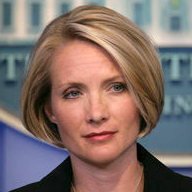
Dana Perino
My scoop was very short-lived. Two days later — and one day after The Washington Post’s SpyTalk picked up the item — Perino’s employer, Hamilton Place Strategies LLC filed notice that it was no longer taking up the cause of the mysterious Mina Corp./Red Star.
Congress wants to know whether the sole-source, classified contracts awarded to Mina Corp., Ltd., and Red Star Enterprises Ltd., were a vehicle for the U.S. government to deliver payoffs to the family of Kyrgyzstan leaders who were ousted amid charges of corruption linked to the Manas air base.
Senate lobbying disclosure forms show that on July 12 Mina Corp. hired public affairs firm Hamilton Place Strategies to lobby Congress and the Defense Department. Hamilton Place filed its notice of termination on July 28. The firm’s income from Mina was less than $5,000.
Mina also lost the services of Tony Fratto, another former Bush White House spokesman, and W. Taylor Griffin, a McCain/Palin adviser.
Seriously, WTF?
The Yacht Always Gets Them
A $1.8 million yacht purchased in Chula Vista figures in a U.S. bribery investigation of a senior official at Mexico’s state-run national electric utility.
The Mexican official, Nestor Moreno, received the yacht sold by the now-defunct South Shore Yacht Sales in Chula Vista.
South Shore Yacht Sales was registered to a Robin Goodman. County records show the business racked up tax liens in 2006 and 2008. An absentee judgement was recorded against Goodman and South Shore last year.
In addition to the yacht, Moreno allegedly received a $300,000 Ferrari Spider, and perhaps millions of dollars in cash in exchange for awarding a large contracts to firms in California and Texas, according to U.S. prosecutors.
Moreno’s name surfaced last week in U.S. District Court in Houston following the arrest of Angela Gomez Aguilar, a Mexican citizen.
Prosecutors say Gomez and her husband set up a company in Mexico that acted as an intermediary between Moreno and ABB Inc., the Swiss electrical engineering giant. Gomez also represented Lindsey Manufacturing of Azusa, California.
Moreno went on unpaid leave last week from Mexico’s national electricity monopoly, the Federal Electricity Commission, known as the CFE, after the allegations were published in the Houston Chronicle.
Relational Investors wants seats on Occidental's board
CalSTRS’ pay czar Ralph Whitworth wants to unseat the Occidental Petroleum board that made CEO Ray Irani one of the highest paid executives in the nation.
Irani made $857 million over the past decade, according to a Wall Street Journal analysis.
So Whitworth, who heads San Diego’s Relational Investors LLC, is teaming up with the California Teachers retirement system to knock some heads at OXY, according to the Journal.
The New York Times’ DealBook obtained CalSTRS and Relational’s letter, which you can read here.
Relational and Calstrs Letter to Occidental Petroleum
Whitworth tells DealBook that he senses “a palpable level of disgust among investor base here.”
Really? Where is “here?” Are we talking Ralph’s posh Rancho Santa Fe neighborhood?
Yes, Irani is overpaid. But Occidental shares returned 873 percent over the past decade.
What about Oracle? CalSTRS has 6.7 million shares in Oracle, whose CEO Larry Ellison, is the No. 1 most overpaid executive at a publicly-traded firm in the US, if not the world.
Ellison earned $1.85 billion in compensation over the past decade (more than double Irani’s pay), while Oracle’s shares returned far less. Why not kick up a fuss on the Oracle board?
Or what about Barry Diller who actually lost money for shareholders over the past decade (including CalSTRS) while taking home $1.1 billion in compensation.
And how about Whitworth, the man who paid Paul McCartney $1 million to sing at his now ex-wife’s Rancho Santa Fe birthday party? How much does he make? He won’t tell us, and since he works for a private company, he doesn’t have to.
Well, what about the money Whitworth paid to middlemen like Tullig Inc. to land CalPERS as his biggest investor?
And how much has this “activist” style of investing generated for CalSTRS?
Far, far less than Occidental Petroleum did.
Who is Doug Edelman?

"Billy: The Early Years," a Rev. Billy Graham biopic produced by an employee of a secretive UK firm under congressional inquiry.
Doug Edelman is the Californian at the center of a congressional investigation into a $1.4 billion contract to supply aviation fuel at the U.S. air base in Kyrgyzstan, a critical hub for the war in Afghanistan.
Congress wants to know whether the sole-source, classified contracts awarded to Mina Corp., Ltd., and Red Star Enterprises Ltd., were really a vehicle for the U.S. government to deliver payoffs to the family of two corrupt former Kyrgyzstan presidents.
Edelman’s name first surfaced in May in London’s Daily Telegraph newspaper, which tracked Mina and Red Star to an address in London’s posh Mayfair district.
“Inside, Mina Corp and Red Star’s logos are clearly displayed,” Richard Orange wrote. “Senior staff include Chuck Squires, a former US defence attache, and Doug Edelman.”
Jeff Stein at The Washington Post’s SpyTalk blog describes Edelman as “a Californian with extensive business experience in Moscow and Central Asia.” Deirdre Tynan of Eurasianet.org and Paris-based Intelligence Online have dug deep into Edelman’s corporate affiliations. Edelman controls a network of a companies organised around an offshore financial consultancy, Aspen Wind Corporation, according to Intelligence Online. Aspen Wind Corp. registered in 2002 with New York State, listing principal executive offices in Nicosia, Cyprus.
No one seems to have yet connected the 58-year-old native of Stockton, California to the most interesting part of his biography: his role as one of the executive producers of a feature film on the life of evangelist Billy Graham.
Billy: The Early Years features Arnie Hammer, great-grandson of Armand Hammer, who led Occidental Petroleum in Los Angeles and forged close ties with the Soviet Union.
Doug Edelman’s name appears in the credits and virtually nowhere else, although there were some side benefits. One of his daughters is credited with a small role; another daughter performs a song on the film’s soundtrack.
Though a host of endorsements were offered on the film’s web page (www.billytheearlyyears.com), Franklin Graham, president of the Billy Graham Evangelistic Association, released a statement saying that BGEA “has not collaborated with nor does it endorse the movie, Billy: The Early Years.” The film, released in 2008, bombed at the box office, grossing less than $350,000, according to boxofficemojo.
Billy: The Early Years was financed by Solex Productions, which describes itself in press materials as a “sister company” of Mina Media.
Mina Media, with an address of 15 Agiou Pavlov Street, Nicosia, Cyprus, is a subsidiary of UK-based Mina Corp. Ltd. (Click here for Mina Media’s corporate records)
It owns and operates MTV Adria in Slovenia, which broadcasts in Macedonia, Slovenia, Croatia, Serbia, Montenegro and Bosnia and Herzegovina. Mina Media’s Stephen MacSearraigh was a director of Mina Corp. He also served as publisher of Iraq Today, a defunct English-language newspaper financed by Mina Corp that was published in Baghdad after the U.S. invasion. (Mina Corp/Mina Media did not respond to a request for comment.)
Edelman isn’t the only Mina employee with a movie connection. MacSearraigh is credited as a consultant to the geopolitical thriller Syriana.
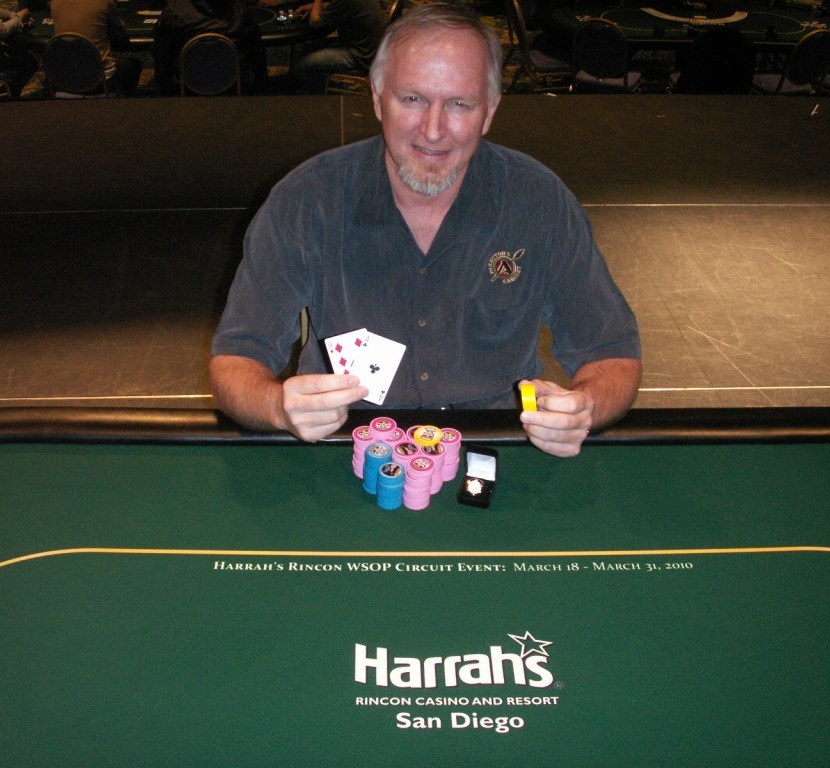
The Enigma Impresses the Poker World
Poker writer Peter Sharkey is impressed by Brent “The Enigma” Wilkes’ power of concentration at the card table:
Brent Wilkes should exploit a gap in the market – for poker players’ benefit
Just how good are you at blanking everything out and concentrating fully upon your poker?
The level of concentration necessary to be successful is startling as you need to keep a constant eye on how play progresses and how individuals react to winning as well as to defeat. If you’re having problems away from the table and they begin to prey on your mind, it’s invariably curtains for your game.
Of course, there are short cuts to achieving a level of focus few other pursuits require. Switching on an mp3 player or donning those mirrored lens shades are two of the most popular – and effective, but there’s no substitute for heading to the felt with a clear mind.
So imagine you had been convicted for bribing a government official and received a 12-year prison sentence. That’s bad enough, but assume you’ve been free on bail for more than two years, pending an appeal against your sentence. Seems you would have your plate pretty full eh? And probably not much time to partake of a few hands of poker.
Not Mr Brent Wilkes, a 56 year-old former defence contractor who was convicted of conspiracy, bribery, money laundering and wire fraud in 2007. Mr Wilkes was freed from prison in February 2008 pending an appeal, which finally got under way on Monday.
Teddy Bear Collector Admits Stealing San Diego County Pension $

Paul Greenwood
Bow-tie wearing hedge fund founder Paul Greenwood has pleaded guilty to defrauding San Diego County’s pension and other big institutional investors of at least $331 million.
Greenwood and partner, Stephen Walsh, ran WG Trading, which collapsed with $78 million of San Diego County retirees’ money.
Former Clinton official Mark Lindsay is "educating" Congress on Mina/Red Star
Add another name to the troupe of lobbyists that the super-secret U.S. defense contractor Mina Corp/Red Star has dispatched to Capitol Hill.
Mark F. Lindsay has registered with both houses of Congress as a lobbyist for the company at the center of a congressional inquiry over $1.4 billion in contracts awarded to supply jet fuel to the U.S. airbase in Kyrgyzstan.
Lindsay describes his job as “work[ing] with the Administration and Congress to educate them on the mission of Mina Corp./ Red Star Enterprises Ltd.,” according to the registration form received by the House and Senate July 26.
Congress is investigating whether Mina/Red Star’s “mission” involved payments to the family of a corrupt former Kyrgyz president.
Lindsay was hired by Weil, Gotschal & Manges, which appears to be coordinating Mina Corp.’s response to the dirt kicked up by the Rep. John Tierney and his Subcommittee on National Security and Foreign Affairs of the House Committee on Oversight and Government Reform.
The registration was made in Lindsay’s role as president of White House Consulting Inc., which shares the address of of Lindsay’s employer, The Livingston Group. Lindsay joined the The Livingston Group to run its health care practice last year.
Lindsay was a member of the Obama transition team and ran the Office of Management and Administration in the Clinton White House.
The lobbyist filings exempt Mina, a foreign corporation seeking to influence the U.S. government, from the much more stringent filings required by the Foreign Agents Registration Act.
Under FARA, Mina would be required to reveal the names, residences and nationalities of its directors and officers — the precise information it has worked so hard to conceal.
However, FARA provides an exemption for foreign corporations whose agents register under the weaker Lobbying Disclosure Act.
As a senator, Barack Obama in 2008 co-sponsored a bill that would have eliminated this exemption, the “Closing the Foreign Lobbying Loophole Act.” The bill died in the Foreign Relations Committee.
Palin spokesman also part of the Mina/Red Star team
McCain/Palin campaign spokesman W. Taylor Griffin is coordinating the public relations response to Mina Corp., the secretive defense contractor that is the subject of a congressional investigation into its fuel contracts for a U.S. airbase in Kyrgzystan.
Griffin is a partner in Hamilton Place Strategies LLC, the PR firm that, as I reported yesterday, employs former White House Press Secretary Dana Perino and her former colleague, Tony Fratto.
As part of the Palin team, Griffin led a crisis communications team that dealt with the “Troopergate” affair.
Griffin was part of the communications team for the 2000 and 2004 Bush presidential campaigns, and did a stint in the Treasury Department’s Office of Public Affairs and the Senate Foreign Relations Committee.
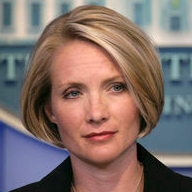
EXCLUSIVE: Secretive defense contractor hires Dana Perino in DC lobbying push
A secretive defense contractor that is at the center of a congressional investigation of a $1.4 billion contract to supply aviation fuel at the U.S. air base in Kyrgyzstan has hired a powerhouse D.C. lobbying team that includes Dana Perino and others from the Bush White House.
Congress wants to know whether the sole-source, classified contracts awarded to Mina Corp., Ltd., and Red Star Enterprises Ltd., were a vehicle for the U.S. government to deliver payoffs to the family of Kyrgyzstan leaders who were ousted amid charges of corruption linked to the Manas air base.
Mina Corp.’s fuel contract, awarded last year, is worth up to $730.9 million over three years for services at the Manas, the only U.S. airbase in Central Asia outside of Afghanistan.
Kyrgyzstan has also opened its own investigation, prompting the U.S. Embassy in Bishkek to say that the contract was issued in accordance with U.S. and local laws. Mina Corp has told both governments that it has never directed U.S. government funds to Kyrgyz officials.
As Congress turned up the heat on Mina and Red Star in July, the companies sent Washington lobbyists to the Hill to plead their case.
Senate lobbying disclosure forms show that on July 12 Mina Corp. hired public affairs firm Hamilton Place Strategies LLC to lobby Congress and the Defense Department.
Senate filings show the Hamilton Place team includes Perino, now a Fox News political commentator, W. Taylor Griffin, a spokesman for the McCain/Palin campaign who handled the “Troopergate” affair, and Tony Fratto, who spoke for the president on issues including intelligence matters, terrorist financing and financial crimes.
Also joining the Mina Corp. team this month were McLean, Virginia-based Dudinsky, Lisker & Associates, which says it is “monitoring and reporting Congressional activity” on behalf of Mina.” Principal Joel Lisker is a former FBI agent who headed the Justice Department’s foreign agent registration unit in the Carter years. His investigation led the president’s brother, Billy, to register as a foreign agent for Libya.
Barbour, Griffith & Rogers’ Ed Rogers, a Reagan and Bush I White House veteran, and Morris Reid, registered July 20 as lobbyists for Mina to handle a House investigation regarding Department of Defense contracts to provide jet fuel to U.S. military base in Bagham, Afghanistan.
Jeff Stein at The Washington Post’s SpyTalk blog reported last wek that after weeks of tense negotiations, a House oversight subcommittee has gotten promises of cooperation from Mina and Red Star.
“The heart of the investigation,” a source told Stein, “is why Red Star and Mina Corp. were not investigated under” the Foreign Corrupt Practices Act, which forbids U.S. companies from paying bribes or kickbacks to foreign officials.”
Mina Corp. has also hired the D.C. law firm, Weil, Gotschal and Manges LLP. The Weil team includes partner William Burck, who served in the Bush White House Counsel’s office. Burck specializes in FCPA investigations among other things, according to his law firm biography.
In a press release announcing last week’s agreement between Mina, Red Star and the National Security and Foreign Affairs Subcommittee of the House Committee on Oversight and Government Reform, Burck said maintaining his client’s secrecy was a key to the deal.
“We’ve worked closely with staff to make sure the Subcommittee obtains the information it seeks while preserving the confidentiality of the companies’ operations and the privacy of its personnel. Confidentiality is essential to permit the companies to meet the U.S. military’s needs in volatile areas of the world and supply vital fuel to our troops in the field.”
Burck and Perino have a close working relationship. They have penned regular columns critical of the Obama administration for National Review Online.
The Senate lobbying forms also raise fresh questions about who or what is behind Mina and Red Star.
The Defense Department has identified to Mina and Red Star Enterprises as companies based in Gibraltar. Mina Corp. was registered in London in 2003, records show.
The Senate lobbying disclosures identify Mina as a Dubai firm affiliated with “Mina Petroleum FZE” with an office in the Dubai Airport Free Zone. Companies operating within the free zone are treated as offshore, outside the United Arab Emirates.
Adding to the confusion, Mina’s webserver, minacorp.com, is registered in Vernier, Switzerland.
Steinbrenner the Felon
Who dropped the dime on Yankees owner George M. Steinbrenner for making illegal campaign contributions to the Nixon campaign?
According to Steinbrenner it was Nixon. Steinbrenner told baseball writer Roger Kahn for his book October Men that he wasn’t really a Republican at all and had been shaken down by the president’s men.
Steinbrenner was buddies with House Speaker Tip O’Neill and Ted Kennedy. He had raised about $2 million for Democrats running for Congress in the Cleveland area. That didn’t sit well with Nixon aides Bob Haldeman and John Erlichmann. “The Nixon people were very annoyed at my Democratic fund-raising,” Steinbrenner told Kahn.
As the 1972 presidential election approached, Nixon’s henchmen demanded dirt on Kennedy and other Democrats from Steinbrenner. “Rough stuff,” Steinbrenner told Kahn, “not only stories about the politicians but about their wives. Drinking. Sex. Very damn distasteful, if you ask me.”
Nixon’s men threatened an antitrust investigation of American Shipbuilding, Steinbrenner’s company, and punitive IRS audits. Steinbrenner decided to buy his way out with campaign contributions to CREEP, Nixon’s reelection campaign. But when he refused to squeal on his Democratic buddies, the Nixon campaign responded with a 14-count indictment in April 1974.
That’s Steinbrenner’s self-serving version anyway. As a prosecutor’s memo makes clear, Steinbrenner had no trouble squealing on Nixon’s people, Teamsters, Merrill Lynch or anyone else who might get him out of trouble.
When George Steinbrenner ratted out Merrill Lynch, Teamsters
The obituaries for Yankees owner George Steinbrenner, who died this week at age 80, all refer to his 1974 conviction for illegal campaign contributions to the Nixon campaign and the pardon Steinbrenner received from Ronald Reagan.
Steinbrenner’s defense attorney was the legendary trial lawyer Edward Bennett Williams. Steinbrenner wasn’t impressed. “I paid him $100,000” Steinbrenner once reportedly said, “and all he did was a cop a plea.”
That’s true, but Williams did the best he could for a client who had dug a mighty deep hole for himself. The issue wasn’t the illegal contributions, per se. The problem was Steinbrenner, the chief executive of American Shipbuilding, had funneled the contributions through his employees (disguised as “bonuses”) and then instructed them to lie to a grand jury. That’s suborning perjury and people go to jail for it.
According to The Man to See, Evan Thomas’ splendid 1991 biography of Williams, the attorney told prosecutors that Steinbrenner could implicate others in exchange for leniency.
“Steinbrenner could provide us with more than a dozen companies which had been involved in 610 [illegal corporate contribution] violations. … Williams indicated that Merrill Lynch had substantial difficulties in the campaign finance area. … Williams indicted that Steinbrenner had heard that the Teamsters had given more than a million dollars, that the million dollars had been kept at the Hotel Pierre, and that someone from the Teamsters had stolen it back again,” prosecutor John Koetl wrote following a meeting with Williams on October 18, 1973.
Ultimately, on the obstruction of justice charge, the government allowed Steinbrenner to plead guilty to being an accessory after the fact, a misdemeanor and the sentencing judge let him off with a fine. The commissioner of baseball wasn’t so merciful; he suspended Steinbrenner for two years.
Update: The Smoking Gun beat me to the punch on this one. Here’s a copy of the memo
CalPERS: A Legal Ponzi Scheme
California’s lame-duck Gov. Arnold Schwarzenegger likes to remind us, as he did last week, that California is facing an “unsustainable path that has taxpayers on the hook for $500 billion.”
Exhibit A is SB 400 of 1999, which increased benefits for California state government employees between 20% and 50% — without the money to pay for them.
This is in essence a legal version of a Ponzi scheme where new investors pay old ones until the whole thing collapses.
Schwarzenegger aide David Crane has called SB 400 “the largest non-voter approved debt issuance in California history.”
The bill was signed during the dot-com boom and the legislature relied on vague promises that the investment wizards at California’s giant pension system would generate the money out of thin air.
Needless to say, that hasn’t exactly worked out.
On June 16th, Schwarzenegger struck a deal with four unions representing 23,000 of the state’s 170,00 unionized workers to roll back the benefits that were given away in SB 400. If similar agreements are reached with the state’s eight other employee unions, state savings in FY 2010-11 would total $2.2 billion, $1.2 billion General Fund.
Even with the cuts, Calpensions’ Ed Mendel notes, pension benefits for CHP officers are still more generous than the days before SB 400.
Democrats led by Gov. Gray Davis signed SB 400 as a thank-you to the unions that helped end 16 years of Republican rule in California the previous November.
Even though the legislature is controlled by Democrats. It needs to be said that the bill was supported by both parties. It passed unanimously in the Senate. Only seven members of the 80-member California Assembly voted against it.
The most notorious passage in the bill provided highway patrolmen with 3 percent of final pay for each year served at age 50, a significant improvement of the pre-SB 400 formula of “two at 50″ — 2 percent of final pay for each year served at age 50.
This is much, much more than 1 percent increase.
Before SB 400, a highway patrolman had to work 45 years before he could retire with 90 percent of pay. The bill shaved 15 years off that time, allowing them to retire with 90 percent of pay after 30 years on the job.
In 2008-2009, a full third of the payroll for all highway patrolman now goes into their retirement accounts.
CalPERS believed they could cover the additional costs through “continued excess returns” and said it expected that contributions from the state would hold steady at $350 million.
Instead, the compound annual growth rate of CalPERS investments grew a pathetic 1.6 percent from 1999 to the end of 2009. On June 16th, the same Schwarzenegger announced his deal with the unions, CalPERS announced that it was raising the state’s contribution to $3.9 billion.
CalPERS unfunded liability, the percentage of benefits promised that can be covered by the fund’s assets, has risen from $158 billion in 1999 to $238 billion last year.
With its myriad accounting trips, CalPERS can “smooth” (hide) losses for generations. Some day the bill will come due.
It’s looking increasingly doubtful that there will be anybody left to pay it.
Brent Wilkes, Master of Delay
The appeal of Brent Wilkes, who was convicted in 2007 of bribing former Rep. Randy “Duke” Cunningham, has been delayed again.
The former defense contractor remains free on $2 million bail.
The 9th U.S. Circuit Court of Appeals said earlier this month that it won’t hear the appeal until the U.S. Supreme Court issues its rulings in the appeals of former Enron CEO Jeff Skilling and former Rep. Bruce Weyrauch.
Those cases involve the crime of depriving the public of the right to “honest services,” the same law federal prosecutors in San Diego used against Wilkes.
Wilkes’s briefing papers now are due before the 9th Circuit about a month after the Supreme Court issues its rulings in Skilling and Weyrauch. The earlier deadline was today.
With more arguing back and forth and the average wait of a year for a ruling from the court, it will be a long time before Wilkes sees the inside of prison again.
It’s a pretty sweet deal for Wilkes, who is being represented by the federal public defender’s office in San Diego.
Cunningham is due to be released in 2013, according to the U.S. Bureau of Prisons website.
Amazingly, it’s looking increasingly likely that Duke may finish serving his sentence before Wilkes starts serving his.
SBInet: "Can we Get a Refund?"
Two House subcommittees held a hearing today on the ongoing problems with the multi-billion dollar “virtual border fence” being built by Boeing Corp. along the U.S.-Mexico border.
Earlier this week, DHS Secretary Janet Napolitano froze funding out of concerns that the program, called SBInet, was plagued with problems. More than $1b has already been spent but the system has only been installed along 28 miles of the 2,000-mile border.
At the current rate of 28 miles every 4.5 years, it would take 320 years – or until the year 2330 – to deploy SBInet technology across the Southwest border.
The GAO’s latest findings reveal that 1) he number of problems in the program are outpacing those being fixed and 2) about 70 percent of SBInet testing procedures apparently were changed at the last minute to “pass the test” rather than qualify the system.
Asked Chairman Chris Carney, D-Pa., “Can we get a refund?”
DHS Halts Border Security Boondoggle
The U.S. Department of Homeland Security has ordered an immediate freeze on all funding of an expensive “virtual fence” of tower-mounted cameras and sensors along the U.S.-Mexico border called SBInet.
The program has been “plagued” with cost overruns and missed deadlines, DHS Homeland Secretary Janet Napolitano said today in a statement.
The delays mean that Border Patrol agents have had to use existing cameras that don’t work well. Thanks mostly to the Senate ,the Border Patrol also has no leader, but that’s another story.
As of July, the government had given $1.1 billion to SBInet contractor Boeing Co. according to this GAO report.
A 2006 DHS strategic plan estimated that installing the system along the Southwest border would cost $7.6 billion through fiscal 2011.
SBInet is really another name for C3I or C4I (command, control, computers, communications, and intelligence) — an Orwellian integrated surveillance system that can cover a huge area.
Greece hired a consortium led by SAIC to install a similar system for the 2004 Olympic games, but the system was delivered in time for the Beijing Olympics in 2008.
The DHS says it is re-allocating $50 million of $100 million in Recovery Act funding slated for SBInet to off-the-shelf cameras, light detectors, radios, cameras, laptops.
It’s unclear to me what prolonging a wasteful program has to do with economic recovery. Update: If you take a look at Recovery.gov, you’ll find one of the reasons — I’m not making this up — is helping the steel industry by building all those towers.
The Boeing SBInet core team includes
- Centech — Arlington, Va.
- DRS Surveillance and Reconnaissance Group — Palm Bay, Fla.
- Kollsman Inc. (an Elbit Systems of America company) — Merrimack, N.H.
- L-3 Government Services Inc. — Washington, D.C.
- L-3 Communication Systems West — Salt Lake City, Utah
- Lucent Technologies — Murray Hill, N.J.
- Perot Systems — Plano, Texas
- Unisys Global Public Sector — Reston, Va.
- USIS — Washington, D.C.
What Happened At La Jolla Bank? Part II
La Jolla Bank, which failed last week amid allegations of possible fraud, is the subject of a Nevada lawsuit that has a great cast of characters.
It involves a Republican Senate candidate, a flamboyant San Diego real estate broker, a basketball coach known for chewing towels, a horse farm that once belonged to Don Drysdale, and allegations of fraud.
The Tarkanian family sued La Jolla Bank in January to stop it from foreclosing on 13 acres of vacant land on south Las Vegas Boulevard. (See 1 and 2.)
The Tarkanians are a prominent Las Vegas family: Danny Tarkanian is a Republican who’s trying to unseat Senate Majority Leader Harry Reid. His dad, Jerry, is the former towel-chewing men’s basketball coach at UNLV; his mom, Lois, is a Las Vegas councilwoman.
La Jolla Bank lent $25.5 million in 2005 to the Tarkanians and their partners, with the Las Vegas land as security.
The Tarkanians planned to loan some of that money to Solana Beach broker-turned-developer Robert A. Dyson Jr. for an “equestrian destination resort” in Anza, California on land once owned by Dodgers great Don Drysdale.
Unbeknownst to the Tarkanians, however, Dyson already owed money to La Jolla Bank for the Anza project. He paid off some of his La Jolla Bank loans with the money that the Tarkanians borrowed from the same bank.
The North County Times reported last year that Dyson and his wife made a fortune selling high-end coastal real estate only to file for bankruptcy in 2008. Some juicy details:
“The trustee supervising their bankruptcy recommended in December that the couple abandon the Rancho Santa Fe home that they bought in June 2005 because debt and liens account for nearly its entire $7 million value. A later filing by the trustee recommended they give up a $90,000 leased Porsche sports car and their $3.2 million home in Palm Desert, which is in foreclosure.”
The Tarkanians’ lawsuit describes Dyson as friends with Rick Hall, La Jolla Bank’s president, and says he attended regular meetings and events at the bank.
The bank’s “main owner,” Frank Warren, served as the landlord for several of Dyson’s real estate offices, according to the Tarkanians’ lawsuit.
“Because of the close connection between Mr. Dyson and La Jolla Bank, La Jolla Bank was well aware of the perilous web created by Mr. Dyson in which it aided Mr. Dyson,” the suit states.
What Happened At La Jolla Bank?
“Fraudulent activity was recently discovered” at La Jolla Bank, FDIC spokesman Greg Hernandez tells City News Service in a story today.
On Friday, the Office of Thrift Supervision shut the bank down and noted “deficient corporate oversight by the Board and management.”
Frank R. Warren established the bank in 1985. He remained chairman of La Jolla Bancorp, the parent holding company, which was controlled by Warren family trusts. The bank’s president and chief executive was Rick F. Hall.
La Jolla Bank grew incredibly fast in recent years. Assets (loans) had doubled in three years, rising from $1.6 billion in 2004 to $3.3 billion in 2007. This growth was concentrated in commercial and residential construction, land developing, and multi-family and commercial real estate lending, according to federal regulators.
The bank’s fall was even faster. Non-performing assets (90 days past due) increased from $71 million at year-end 2008, to $777 million at year-end 2009.
The Rancho Santa Fe-based bank had 124 employees, nine branches in Southern California and one in Dallas, Texas.
The bank was closed on Feb. 19 and deposits were transferred to OneWest Bank of Pasadena (formerly IndyMac). OneWorld investors include J. Christopher Flowers, George Soros and John Paulson.
Coughlin Stoia's Money Machine
A move is underway to clamp down on the massive fees earned by plaintiffs lawyers suing behalf of public pension funds.
Florida recently capped the fees its lawyers can earn at $50 million per case. Alabama, Iowa, Mississippi, and Oklahoma have introduced bills that would force states to disclose their contracts for legal services. Several states have already enacted similar measures.
This movement could be bad for business at San Diego’s Coughlin Stoia Geller Rudman & Robbins LLP, a politically-connected firm that has extracted huge settlements in class-action corporate lawsuits.
As I noted last week, Coughlin Stoia is cozy with Phil Angelides, the former California treasurer who is now leading a congressional inquiry into the causes of the financial crisis.
Byron Georgiou, of counsel to Coughlin Stoia, is a member of the Angelides commission.
For an excellent example of how the firm operates, there are few better examples than Coughlin Stoia’s 2006 lawsuit against UnitedHealth Group on behalf of CalPERS, the giant California pension fund.
The firm — known then as Lerach Coughlin — sued UnitedHealth over the company’s practice of backdating stock options granted to its executives.
A month after filing suit, Coughlin Stoia and its attorneys contributed $107,000 to Angelides’ gubernatorial campaign. Angelides was an influential member of the CalPERS board.
CalPERS became lead plaintiff in the lawsuit and Coughlin Stoia became lead counsel.
CalPERS’ general counsel, Peter Mixon, and Lerach Coughlin negotiated the firm’s compensation a year later.
The deal anticipated a billion-dollar settlement. Lawyers on the case were to receive 11 percent of the first $250 million recovered; 12 percent of the next $250 million; and 13 percent of anything exceeding $750 million.
Sure enough, UnitedHealth Group settled in 2008 for $925 million — the largest settlement ever in a stock options backdating case.
Under its fee arrangement, CalPERS’ attorneys were entitled $110 million, most of which would have gone to Lerach Coughlin.
Judge James S. Rosenbaum wouldn’t allow it. He cut Lerach Coughlin’s golden egg nearly in half to $65 million.
In his ruling, Judge Rosebaum said that while Lerach Coughlin may have been pursuing in its own interests, CalPERS was not. The judge found no signs that the pension had used its enormous leverage to shop around for another law firm. Nor had it tried to negotiate a lower fee before filing the complaint.
Another problem was that the firm’s lead attorney, William Lerach, hadn’t bothered to tell the judge that he was under federal investigation. Lerach is serving two years in prison for paying kickbacks to his clients.
In fact, Lerach’s firm told Judge Rosenbaum in 2006 that the government “has notified Mr. Lerach that it does not intend to take any action against him.”
“Had the truth been timely and fully disclosed to the Court, in all likelihood the Court would never have appointed his firm as lead counsel,” Judge Rosenbaum wrote.
It could also be said that had the truth been fully disclosed, Lerach Coughlin/Coughlin Stoia wouldn’t have been able to bill $900 an hour for the services of prisoner Bill Lerach.
Former Rep. Charlie Wilson Dead at 76
First John Murtha. Now former Texas Rep. Charlie Wilson has died at 76.
The ethically-challenged Wilson was made famous by the excellent book by the late George Crile (and the movie) Charlie Wilson’s War, which revealed how he secretly supplied the funds for the CIA’s covert war in Afghanistan in the 1980s.
He appears a couple of times in my book, Feasting on the Spoils, most memorably in a a scene at a poker game at the Watergate Hotel. The Watergate was a home away from home for San Diego defense contractor Brent Wilkes and his CIA buddy, Kyle “Dusty” Foggo.
Wilkes and Foggo continued their long-standing tradition of weekly card games in Washington. Foggo would invite along friends from the CIA, and Wilkes would bring the congressmen. One of the congressional guests was Charlie Wilson, who had in 1993 received the CIA’s Honored Colleague Award, the first time it was ever awarded to anyone outside the agency. At one game, Wilson invited along his friend from Texas Joe Murray, a columnist for The Atlanta-Journal Constitution. Murray met Wilson in the hotel lobby. “I’m not sure how they chose the Watergate,” Murray wrote in a May 20, 1994 column, a few days after the poker game. “Perhaps because a sense of history. Either that or a sense of humor.”Murray followed Wilson into the suite, which was filled with cigar smoke. Wilson knew a few of the CIA personnel at the game. One was Brant Bassett, a well-regarded officer who spoke fluent Russian, German, and Hungarian. Bassett was known as Nine Fingers after a motorcycle accident had cost him a finger. Wilson brought gifts, a sack full of guns that included a Soviet automatic used by Russian paratroopers. Wilson had a special pen for everyone, one that with a click fired a .32-caliber bullet. Everyone in the room started clicking his pen.
“Boy, I wish I’d had it this afternoon,” someone said.
“If only Aldrich Ames were here.”
Murray and Wilson stayed only a short while, and as they were leaving, one of the agents offered Murry one of his cigars, a Dominican. Murray offered the agent one of his, a Cuban. The agent told him, “You know, of course, this is considered contraband. But you’ve done the right thing as a good citizen. You’ve turned it in to the proper authorities. Be assured that very shortly it will be destroyed by fire.”
Wilson insisted there was no hanky-panky the night he was there. “The only activities that took place there that would be considered illegal and unlawful was cigar smoking on a nonsmoking floor,” Wilson said. Cunningham was the only other congressman who ever attended the poker games, according to Wilkes.
The “hanky-panky” Wilson is referring to were the rumors that flew around Washington that congressmen were supplied with prostitutes at these games. The FBI never found any evidence of this (the government certainly would have used it against Wilkes if they had) but people still think it’s what happened anyway.
After my book came out, Wilkes’ nephew and right-hand man, Joel Combs, testified that Wilkes told his employees to lose to Duke at poker and he yelled at one man who wasn’t losing enough.
Wilkes was sentenced to 12 years for bribing Cunningham; Foggo is serving time in prison for steering CIA contracts to Wilkes.
As for Charlie Wilson, he didn’t remember Wilkes; Foggo, however, he remembered well when I interviewed him in 2006.
When I told Wilson that Foggo had a rather unsavory reputation, Wilson said that the CIA sometimes had need of people like that in the CIA to do the dirty work against the KGB. (Foggo was no James Bond, however; he was a logistics officer.)
Ah, well, I’m sorry Charlie is gone. He made Congress fun.
"King of Pork" John Murtha Dead at 77.
John Murtha, chairman of the House Defense Appropriations Committee who was considered one of the most corrupt members of Congress, died today.
The Defense Appropriations subcommittee is perhaps the most powerful in the House, funding not just the world’s biggest military, but the U.S. intelligence community as well.
President Obama signed the $636 billion 210 Defense appropriations bill into law in December. In it, Taxpayers for Common Sense counted 1,720 earmarks totalling $4.2 billion.
As chairman, Murtha cleaned up with 23 earmarks worth $76.5 billion.
With so much power and money flowing through it, the Defense Appropriations Subcommittee has become fertile ground for corruption on both sides of the aisle. One of its more infamous members was another Vietnam war hero like Murtha, Randy “Duke” Cunningham, R-Calif.
With Murtha gone, the lobbyists and defense contractors who fed at his trough for so many years are in mourning. At the top of that heap is lobbyist Paul Magliochetti, a former Murtha aide whose PMA Group was raided last year.
Johnstown, Pennsylvania will also need to find another sponsor for all the pet projects nurtured for years by Murtha, the representative since 1974. Things like the National Drug Intelligence Center. Or the John P. Murtha Johnstown-Cambria County Airport. Or the Johnstown Flood National Memorial.
The FBI captured Murtha’s bare-knuckled performance on videotape in 1980 during an undercover sting aimed at exposing corrupt lawmakers. Murtha turned down 50,000 cash from the representative for a phony Arab sheikh, but not before adding, “After we’ve done some business, I might change my mind.”
Murtha was never charged with a crime, and in Congress, Speaker Tip O’Neill protected Murtha, as George Crile revealed in Charlie Wilson’s War. Wilson shut down the House Ethics Committee’s probe before a special prosecutor could move on Murtha.
When Murtha was in the running for majority leader in the fall of 2006, someone leaked a copy of the FBI videotape to The American Spectator. (See here.)
The Embarrassing Case of Jesus Navarro (Updated)

(Note: I updated this post after a reader pointed out that the Border Patrol didn’t let Navarro go in 2007. What actually happened is even worse)
Now that a Mexican smuggler suspected in the murder of a U.S. Border Patrol agent is on his way to San Diego, maybe we can finally get some answers as to how and why the case went so horribly wrong.
The U.S. government’s bungling allowed the suspect, Jesus Albino Navarro-Montes, to get out of a Mexican jail. That part is well known, but what hasn’t gotten much attention is that U.S. officials let Navarro slip away not once, but twice.
Not long before the death of Border Patrol Agent Luis Aguilar, Navarro was caught by the Border Patrol with a half-ton of pot.
But he got away.
How?
According to a federal complaint, Navarro and his female passenger stole a Border Patrol vehicle and drove it back to Mexico.
This would laughable if the results weren’t so tragic.
A few months later, Navarro was allegedly behind the wheel of a Hummer H2 on Jan. 19, 2008 that illegally crossed the border near Yuma, Arizon.
Agent Aguilar, 32, was run over while trying to throw down a spike strip. The Hummer got away, but Navarro was arrested on January 28, 2008.
On June 18, 2008, he was released from jail by a Mexican judge.
Why?
The U.S. government never sought Navarro’s extradition. It never presented an arrest warrant. Without any evidence of a crime, Navarro had to be released.
“Although we had asked the U.S. government a couple of times before his release to help us deal with the matter so we could hold Mr. Navarro, we got nothing whatsoever,” embassy spokesman Ricardo Alday told a reporter for The Washington Times. “The U.S. response never came.”
Congress Brian Bilbray, a San Diego-area Republican, asked Attorney General Michael B. Mukasey and the White House for an explanation.
He got the brush off.
Disclosure would “inevitably compromise highly sensitive law enforcement investigative information,” Deputy Assistant Attorney General Keith B. Nelson wrote in a letter to Bilbray.
Navarro was re-captured near Zihuatanejo on Feb. 11, 2009 by Mexico’s Agencia Federal de Investigacion in an operation coordinated with the FBI and U.S. Marshal’s Service.
After Navarro’s re-arrest, authorities in San Diego unsealed a criminal complaint that showed that Border Patrol agents had captured Navarro on Sept. 23, 2007 following a chase east of San Diego.
(Click here to read the complaint and accompanying statement of facts.)
Border Patrol agents used a spike strip to successfully slow him down. Navarro ditched his pickup in the desert and fled on foot with an unidentified female passenger.
Border Patrol agents caught the pair and put them in their vehicle.
According to the statement of facts, “The female passenger was able to take control of the Border Patrol vehicle, and both the female passenger and NAVARRO-Montes absconded to Mexico in the Border Patrol.”
The agents were stuck in the desert with a Toyota pickup with three blown out tires and 979.7 pounds of marijuana inside.
San Diego's Relational Investors and CalPERS
CalPERS, the giant California state pension fund, is taking a close look at its investment with Ralph Whitworth, who heads Relational Investors, a shareholder activist firm based in San Diego.
A law firm hired by CalPERS is examining the nearly $17 million Relational paid an obscure middleman who helped secure business from the pension fund, The Wall Street Journal reports today.
Relational Investors is headed by Ralph V. Whitworth and David Batchelder, who met while working in the 1980s for Texas oilman and corporate raider T. Boone Pickens.
Relational buys up stakes in underperforming companies like Mattel and J.C. Penney for a turnaround directed by Whitworth.
CalPERS is Relational’s biggest investor. The pension fund has about $1.5 billion in Relational.
Huge fees are standard for middlemen who successfully line up investments from CalPERS, but Relational’s payment to Tullig Inc. stands out. No one earned more from a single client.
Tullig Inc. is an obscure New York firm headed by an obscure man named Donal Murphy. What he did to earn his rich paycheck is as clear as mud.
Essentially, these middlemen are lobbyists and operators. It’s a shady business — money buying more money — that is finally getting some attention following a massive kickback and bribery scheme at New York State’s public pension fund.
Whitworth is perhaps best known for paying Paul McCartney $1 million in 2003 to perform at his wife’s private birthday party at a restaurant Rancho Santa Fe. The couple filed for divorce less than a year later.
The Arrest of El Teo
In The Politics of Heroin, Alfred McCoy notes that we capture a drug lord only when he is no longer a drug lord.
So it is with news of the arrest of El Teo, a vicious Tijuana drug baron who is accused of having the bodies of his enemies beheaded or dissolved in caustic soda.
McCoy reminds us that a man like El Teo, or rather, the man authorities accuse him of being, can only be arrested when the drug traffic shifts, stripping him of the power, profits and protection he needs to stay in business. In other words, the arrest of El Teo was only possible because he was already irrelevant.
While the bloodbath in Tijuana attracts the attention, the Sinaloa carter and its leader, Joaquin El Chapo (“Shorty”) Guzman, quietly prospers, as The Economist noted this week:
Sinaloa, by contrast, has stuck to drugs and money laundering and is smarter and more sophisticated. It prefers anonymity to the ostentation of others (Mr Beltrán was undone by inviting a famous accordionist to play at a Christmas party). It eschews jobless teenagers, its rivals’ rank and file, in favour of graduates, infiltration and intelligence. Although all the gangs have penetrated local governments, only Sinaloa and the Beltráns have been discovered to have bribed senior officials. Officials complain that Sinaloa operatives receive warning of pending raids. Sceptics wonder whether success against other gangs comes from tip-offs from Sinaloa.
Forbes reckons that Guzman, who bribed his way out of prison in 2001, is now the 701st richest man in the world.
Mitch Wade lawyer nominated for US Atty
President Obama has nominated Ronald C. Machen Jr. to be U.S. Attorney in Washington DC.
Machen, 40, was part of the team at WilmerHale that defended defense contractor Mitchell Wade, briber of Randy “Duke” Cunningham.
Thanks to WilmerHale’s efforts, Wade is serving a 30-month sentence. That’s not bad, considering that Cunningham is serving more than eight years and Wade’s former boss and Cunningham briber, Brent Wilkes, is appealing his 12 year sentence.
Machen also represented another corrupt former congressman, Democrat William Jefferson and Christopher Ward, former National Republican Campaign Committee treasurer accused of stealing funds.
The U.S. Attorney is DC’s top law enforcement official, overseeing the largest federal prosecutors office in the country.
Machen served as an Assistant US Attorney in the Office of the United States Attorney for the District of Columbia, US Department of Justice, from 1997 to 2001.
Pakistani President Ali Zadari on Money Laundering
The International News in Pakistan reports today that President Asif Ali Zardari says he was cleared in a 10-year-old money laundering investigation by the US Congress.
The Presidency has officially claimed that the US Congressional Subcommittee on Money Laundering had cleared Asif Ali Zardari, as it had found no evidence that Citibank or any other private bank knowingly helped Mr Salinas (of Mexico), or any other criminals launder dirty money.
This official statement has been released by the spokesman of the president Farhatullah Babar in response to questions sent to him about the details provided by the Citibank’s top administration to the US Subcommittee on Money Laundering in November 1999.
This comes as a Pakistani anti-corruption agency found that Zardari had accumulated assets of $1.5 billion through illegal means. Zardari, who was known as “Mr. 10 percent,” is the notoriously corrupt widow of the late former Pakistani Prime Minister Benazir Bhutto.
An investigation in 1999 by the U.S. Senate Permanent Subcommittee on Investigations into private banking and money laundering examined that Zardari had three accounts at Citibank Switzerland private bank. Some of the accounts allegedly were used to disguise $10 million in kickbacks for a gold importing contract to Pakistan.
Another of Citibank Switzerland’s high profile clients was Raul Salinas, the infamous brother of former Mexican President Carlos Salinas.
Swiss authorities froze more than $100 million – allegedly linked to drug trafficking — in Salinas’ accounts. That included about $27 million Citibank Switzerland private bank.
The Senate subcommittee notes a striking coincidence between the two men: “The Zardari accounts in Switzerland were opened one day before Raul Salinas was arrested.”
Zardari’s accounts were opened February 27, 1995. Salinas was arrested and imprisoned in Mexico on suspicion of murder the following day.
According to the Senate subcommittee report:
On the day following the arrest, a number of telephone conversations took place between private bank personnel in New York, London and Switzerland. The telephone conversations to London were recorded on an automatic taping system. The tape transcripts indicate that the private bank’s initial reaction to the arrest was not to assist law enforcement, but to determine whether the Salinas accounts should be moved to Switzerland to make discovery of the assets and bank records more difficult. This suggestion was made by the head of the private bank at the time, Hubertus Rukavina, and discussed by several employees. It was not acted upon, apparently because it was agreed that London bank records would disclose the funds transfer to Switzerland. Private bank employees also tried to determine whether to require immediate repayment of an outstanding $3 million loan that had been made to Trocca (a Salinas family trust), so that if the funds in the Trocca accounts were frozen by authorities, Citibank funds would not be at risk.
Rukavina also played a role in the Zardari accounts. Specifically, he was involved in the decision to allow a Swiss lawyer to open three accounts on behalf of Zardari.
Rukavina told the Senate subcommittee staff that he did not make the decision to open the accounts but referred the matter to the head of private bank operations in Pakistan, Deepak Sharma. According to Mr. Rukavina, he never heard whether the accounts were ultimately opened.
A Swiss judge found in 2003 that Zardari was guilty of money laundering, and a Swiss prosecutor closed the investigation last year, saying there wasn’t enough evidence to bring Zardari to trial.
Who was Anton Surikov? (Updated)
 Several publications are reporting the passing of a former Russian intelligence officer named Anton Surikov, who died at the age of 48.
Axisglobe identifies Surikov as a shareholder of Far West LLC — reportedly a shadowy intelligence/military consulting group. Kavkaz Center, a Chechen website, reports that he was poisoned. Numerous reports link him to the CIA.
Surikov, born 1961 in Moscow, was the son of Victor Surikov, a designer of Soviet ICBMs. Anton Surikov was a man who at one time was apparently trusted by both sides in Russia’s bitter conflict with separatist rebels in Cechnya.
In the early 1990s, Surikov and Chechen rebel leader Shamil Basayev met when they both fought on behalf of separatists battling the Georgian government. Surikov commanded a detatchment of special forces for Russian military intelligence (GRU).
From 1990-1996, Surikov worked at the Institute of USA and Canada Academy of Sciences of the USSR (ISKRAN), a Russian think tank, according to an archived (Russian) copy of his bio.
In 1994, he was seconded to Department of Defense Studies at King’s College, London University, which published two of his books on various aspects of Russia’s domestic and defense policies. One of Surikov’s books, Crime in Russia: International Implications is based on documents collected by Russia’s Federal Counterintelligence Service (FSK).
While at the institute, Surikov become an advisor in 1995 for the Institute of Defense Studies.
In September 1996, Yuri Maslyukov, president of the Duma’s Committee on Economic Policy, hired Surikov as his assistant. When Maslyukov became first deputy prime minister two years later, Surikov went to work in the Kremlin.
In 1999, Surikov used his contacts with Basayev to arrange a meeting between the Chechen rebel leader and a top Russian official, Alexander Voloshin.
Surikov and the two men met in the south of France at the villa of Iran-Contra figure Adnan Khashoggi, a wealthy Saudi arms merchant.
The meeting was secretly recorded by French intelligence and later leaked to the press and been the subject of much speculation ever since. (See this 2004 paper (.pdf) from the Johns Hopkins School of Advanced International Studies.)
When Putin took over as president, Surikov briefly worked into Russia’s Aircraft Corporation, MiG and then became chief of staff to the Duma committee on industry, construction and high technology.
In 2001, Surikov accused Russian military officials of colluding with Afghan drug lords:
In an interview published last week (dated 29 May) in the “Moscow News” (“Moskovskie Novosti”) weekly, former Russian military intelligence officer Anton Surikov charged that a substantial portion of the drugs produced in Afghanistan had been directly shipped from the Tajik capital Dushanbe on board Russian military planes, helicopters, and trains.
Surikov said: “You can come to an arrangement [with custom officials] so that the search of military transport planes remains purely formal. The same goes for train convoys carrying military cargo [to Russia from Tajikistan].”
According to his account, Afghan opium producers usually sold drugs to Tajik citizens who smuggled them into Tajikistan with the active complicity of Russian border guards. The drugs were then put on board military planes or trains en route to Russia, where they were sold to local criminal gangs.
Surikov retired from government service in 2002, according to his bio. He was affiliated with the Institute for Globalisation Studies, a think tank headed by a leftist professor.
He also served on the board of the Swiss firm Far West Ltd., which was closely affiliated with the Internet news site, Pravda-info. Far West said it “specializes in consulting work on questions of security in conducting business in regions of the world with unstable environments and hiring personnel for foreign private military companies.” The company said it had offices in Dubai, Afghanistan, Colombia, Kosovo, Georgia, and Russia.
Most recently, Surikov was providing informed speculation to the Financial Times on the mystery the Arctic Sea, a cargo ship that vanished off the coast of Portugal:
But Anton Surikov, a Russian security expert and former military intelligence officer, advances the theory that smugglers, with the backing of elements in Russia’s security services, may have loaded ammunition and anti-tank missiles bound for Hizbollah in Lebanon, and four Kh-55 cruise missiles to be fitted to Sukhoi-24 bombers for Iran, on to the ship as it underwent repairs in Kaliningrad.
Mr Surikov says he believes that when the the ship was boarded in the dead of night on July 24 off Sweden, the attackers found the weapons cache, photographed it as evidence and left.
His scenario fits with initial reports conveyed by police in Sweden that the crew reported being attacked by about 10 men posing as Swedish policemen who searched the ship and departed in an inflatable dinghy.
The photos were then shown, thinks Mr Surikov, to the UK and US security services – which arranged a second incursion as the Arctic Sea disappeared on August 1. “A behind-the-scenes trade between state powers then began,” he says.
The Most Expensive Road in the World?

The scale of corruption in Russia is so mindboggling that it’s difficult to comprehend.
You can get an idea by looking at the watches that Russian officials wear.
Another way is to look at the cost of one kilometer of road in Moscow.
The Fourth Ring Road is under construction in Moscow at a cost of 7.4 billion rubles per ($250 million) per kilometer, according to opposition leader Boris Nemtsov, who’s quoted in Radio Free Europe’s series on corruption in Russia:
“If you compare the cost of Moscow’s roads to the Large Hadron particle collider in Switzerland,” he says, “the collider is cheaper, as is the Channel Tunnel [between Britain and France], another grandiose construction project.”
It’s far, far cheaper to build a road in Afghanistan. The Big Dig in Boston, the most expensive highway project in the United States that rerouted a major highway into a tunnel under the city, cost $188 million per mile, according to this report. (.pdf)
According to an AP story, City Hall put the costs at an exorbitant $209 million per kilometer and blamed demolition of residential housing in areas adjacent to the new ring road.
Nemstov blames the problem on Moscow Mayor Yuri Luzhkov and his inner circle. Luzkhov’s wife is on Forbes magazine’s list of the richest people on Earth.
The “corruption market,” officials tell RFE/RL, is estimated at $300 billion a year. Russia’s GDP was about $1.6 trillion last year, the World Bank says.
Even the government’s own figures show that the average bribe has tripled over the past year to $32,000.

