
Category: Spin Doctors
Lanny Davis and Metabolife
My Rolling Stone piece on Michael Cohen’s attorney Lanny Davis, who also represents a high-level Russian Mafia associate, is up. You can read it here.
[Apologies for repeating this post a second time, but after I posted an earlier draft, I realized, as I often do, that this might be something worth publishing.]
I’ve been aware of Davis for a long time, ever since his days representing a sleazy San Diego firm called Metabolife.
Metabolife was founded in 1995 by a man named Michael Ellis, an ex-cop who had a felony record for a meth lab bust in the San Diego suburb of Rancho Santa Fe. While on probation, Ellis had a brilliant idea. He realized that, thanks to a loophole in the law, he could sell speed legally. Thus was born Metabolife.
Metabolife’s pills contained ephedra, the herbal form of the stimulant ephedrine, which is a key ingredient in methamphetamine. It was legal to sell ephedra at the time, thanks to a law sponsored by Senator Orrin Hatch, the Utah Republican, who dabbled in the vitamin business as a young man.
Hatch’s law deregulated the dietary supplements industry. Dietary supplement makers no longer had to show their products were safe. Under the law, Metabolife had no duty to report even the deaths of its customers.
Sales took off. Revenues at privately-held Metabolife had soared to more than $360 million in four years, but the company had a problem: People who gobbled its pills sometimes wound up in the hospital — or worse. One user’s heart rate zoomed to 300 beats a minute. Some turned into psychotic speed freaks. A Government Accounting Office report found Metabolife’s pills caused 18 heart attacks, 26 strokes, 43 seizures and five deaths.
When Congress started to investigate whether Ellis“put sales above safety,” Metabolife hired Lanny Davis, who was then with the DC powerhouse firm of Patton Boggs. (Interestingly, Cohen worked for the same firm, now known as Squire Patton Boggs, after Trump’s election.)
I wrote a story for The Associated Press in 2004 pointing all this out:
“Patton Boggs earned millions helping project reassurances to Congress and its customers that Metabolife products were safe,” I wrote. “In mid 2002, Patton Boggs lobbyist Lanny Davis wrote a senator whose subcommittee was investigating Metabolife that the company had received only 78 ‘unproven, anecdotal allegations’ of strokes, heart attacks, seizures and deaths.”
Prosecutors alleged company founder Michael Ellis lied about Metabolife’s safety record in a 1998 letter to the U.S. Food and Drug Administration, which Patton Boggs attorneys helped him draft. (One former and four current Patton Boggs attorneys were subpoenaed by a federal grand jury in San Diego. A judge ruled they had to testify.)
Here’s a snippet of the FDA letter:

That wasn’t true. The FDA finally banned sales of ephedra in 2004, saying it was linked to 155 deaths, including 23-year-old Baltimore Orioles pitcher Steve Bechler. Ellis was eventually convicted of lying to the FDA; Metabolife pleaded guilty to tax evasion.
The conclusion is this: Davis and Patton Boggs helped Metabolife as it covered up a health crisis. Before I get a nasty letter from Mr. Davis, let me say that there’s no evidence that he did anything wrong or acted unprofessionally. But credibility matters, and after years of representing shady clients, Davis’ may find his credibility in short supply when he needs it most.
Obama and GCHQ tale is Russian disinformation
Note: This piece has been updated.
It anyone surprised that the allegation that President Obama used Britain’s GCHQ intelligence agency to eavesdrop on Donald Trump was first broadcast on RT, the Kremlin’s international propaganda outlet?
This allegation has gone in a few days from being a crackpot theory on social media to an international dispute. Britain was furious when White House spokesman Sean Spicer cited the GHCQ story as part of his defense of Trump’s claim that he was “wire tapped” by President Obama. The GHCQ, Britain’s version of the National Security Agency, issued a rare denial.
That this GHCQ allegation was first given life by RT shows the influence of the Kremlin-backed network, which has found a sympathetic ear in the White House. According to the U.S. intelligence community that Trump so openly distrusts, RT has the goal of undermining its viewers’ trust in US democratic procedures.
On March 5, the day after Trump tweeted that “Obama had my ‘wires tapped’ in Trump Tower,” RT broadcast an interview with Larry C. Johnson, once an analyst with the CIA.
In the clip, linked above, Johnson said “very good friends” had told him that information gathered by GHCQ on Donald Trump was illegally disseminated within the US government in an effort to destroy his candidacy. Obama, Johnson said, “gave the green light” to distribute the information from GHCQ in an improper way.
On his blog, Johnson goes into more detail about his sourcing. (Update: Johnson’s blog was taken off line shortly after this piece was published).
No one involved with the Trump campaign reached out to me and asked me to get involved with this. I spoke three months ago with a source that, if the source’s name was revealed, would be known and recognized as a reliable source of information. Based on that contact I reached out to friends in the intel community and asked them about the possibility that a back channel was used to get the Brits to collect on Trump associates. My sources said, “absolutely.” I later confirmed this via a cut out with a person who is a Senior Intelligence Service executive in the CIA.
Assuming that’s true, why would Johnson, a former CIA analyst, would go on a Russian propaganda network that presents anti-American views? CNN’s Brian Stelter put that question to Johnson on his show, Reliable Sources.
STELTER: Why is it appropriate for any American to appear on a Kremlin propaganda network?
JOHNSON: Well, it’s not a Kremlin propaganda network. … What I found the difference with Russia Today is they don’t do pre-interviews. I’ve done pre-interviews with your people. I’ve done pre-interviews in the past when I appeared on other networks.
Just two days ago, I did a pre-interview with BBC. They were going to have me on air. But once they heard what I had to say, they came back and said, oh, no, we don’t need to use you now. So, I’m —
Johnson’s point is that RT doesn’t censor its guests. Stelter’s point, which he presses later in the interview, is that anyone can go on RT and say whatever they want without bothering about details like sourcing and verification.
Johnson theories about GHCQ are likely to prove false: officials in Britain and Washington have called it ridiculous. For RT’s purposes it doesn’t matter whether Johnson is telling the truth, only that his information serves its broader goals.
RT’s GHCQ story is the textbook definition of disinformation:
false information deliberately and often covertly spread (as by the planting of rumors) in order to influence public opinion or obscure the truth.
So back on March 5, while former Director of National Intelligence James Clapper was knocking down Trump’s claims on Meet the Press, RT was quickly building a counter-narrative that besmirched the United States with Johnson’s help.
An outfit like Meet the Press needs a big audience to deliver ad dollars; since it strives to be objective, it has to present credible sources. That means it has guests like Clapper who as insiders know whether Obama really “wire tapped” Trump or not. If Meet the Press had people like Larry Johnson or RT’s Illuminati correspondent sitting around talking about what their friends supposedly told them, the audience would find something better to do and the ad dollars would dry up pretty quickly.
RT, on the other hand, is funded by the Russian government. It doesn’t need a big audience. So it can quickly disseminate poorly sourced, unverified information that drives home the message that Russia is not the bad guy and America isn’t so great, anyway.
Johnson sought to minimize his role in the GHCQ affair by telling Stelter that nobody watched RT.
STELTER: You’re saying Russia today is not that influential?
JOHNSON: I’m telling you that’s the truth. I mean, who watches it? The fact that I spoke about it two weeks ago and it didn’t even surface — it wasn’t even a blip anywhere in the U.S. news media. And so, I guarantee, if people like yourself who were very informed, very up to speed on things, don’t pick up on something like that, you expect a coal miner in Pennsylvania, an auto worker in Michigan, that they’re going to be on top of Russia Today?
But information warfare, as Johnson surely knows, doesn’t need a big audience to work.
It has just to plant a false idea that contradicts the conventional narrative. Johnson made a big fuss about how it took so long for his story to spread, but that’s how rumors work. And that’s what makes them so effective. They are spread person-to-person by social media and word-of-mouth until they reach a critical mass. If you wanted to drive a wedge between allies, there’s no way to do it better. It’s cheap, bloodless, and stunningly effective.
Johnson’s unsupported allegation was rebroadcast on right-wing Internet on blogs and websites until March 14 when it jumped into mainstream media. Fox contributor Andrew Napolitano repeated the allegation on the talk show “Outnumbered” and then repeated it again on Fox News. Johnson told The New York Times he was one of Napolitano’s sources.
On Friday, Trump refused to back down from the allegation, telling reporters, “All we did was quote a very talented legal mind.”
Did the president realize he was also quoting Johnson via Russian media?
Johnson, who is almost always referred to as a former CIA analyst, worked for the spy agency in the 1980s. After four years in the State Department’s Office of Counterterrorism, Johnson left government service in 1993.
Since then, he gotten embroiled in controversy such as his claim that Republican operatives possessed a tape of Michelle Obama railing against “whitey.” (Johnson claims he was manipulated by Clinton confidant Sidney Blumenthal.) Or that Bush White House advisor Karl Rove had been indicted.
Johnson has been a member of Veteran Intelligence Professionals for Sanity (VIPS), a group of intelligence professionals formed in 2003 to protest the use of faulty intelligence that was used as a grounds for the invasion of Iraq.
VIPS and Johnson have been critical of the US intelligence community’s findings that Russia hacked the U.S. election. On Dec. 15, Johnson co-signed a VIPS letter that stated the hacking allegations “have no basis in fact” and suggested an “inside leak,” not hacking, was behind the release of DNC emails. Not surprisingly, RT publicized the letter.
It’s worth noting here that Ray McGovern, a former CIA analyst and founding member of Veteran Intelligence Professionals for Sanity attended the now infamous 2015 RT 10th anniversary dinner in Moscow, where he sat at the same head table with President Vladimir Putin and former Gen. Michael Flynn. (link) It seems McGovern makes an annual pilgrimage to Moscow where we find him pontificating in RT’s studios.
Napolitano for his part has also peddled Kremlin disinformation before. On May 6, 2016, he reported that “there’s a debate going on in the Kremlin between the Foreign Ministry and the Intelligence Services about whether or not they should release the twenty thousand of Mrs. Clinton’s emails that they have hacked into and received and stored.” (archived link)
Now, mind you, this was days before hacked emails from the Clinton campaign began appearing on the Internet.
According to Malcolm Nance’s informative book, The Plot to Hack America, Napolitano’s source this go-around appeared to be a conspiracy website called Whatdoesitmean.com.
It appears that the source of the story emanated from a mythical figure, a journalist named Sorcha Faal. Sorcha Faal is widely believed to be a pseudonym for David Booth. Booth hosts a wild-eyed conspiracy theory website called Whatdoesitmean.com. Usually websites like this and the more popular and crazier Infowars.com are easily dismissed as tinfoil hat crowds who see government conspiracy everywhere. Yet in this case “Sorcha Faal” appears to be so well wired into the Kremlin that “her” work at this website was often copied by mainstream Russian information propaganda like Russia Insider’s Svobodnaya Pressa (“ Free Press”). This site pushes wild conspiracy theories such as the proposition that the US trains and directs ISIS, and writes op-eds about the dangers of European multiculturalism. It is a core component of the Russian propaganda system, and such news organs as Ren TV (a large, private, pro-Putin Russian television channel) and Sputnik News (a multinational propaganda organ of the Russian government)
We might as well learn the Russian word for this, folks.
Dezinformatsiya.
The Ben Stein-Ray Lucia Mutual Admiration Society
 Actor and corporate pitchman Ben Stein charges more than $50,000 for a single speech, according to his page at the Keppler Speakers Bureau.
If that’s the case, I would love to know how much he charges Ray “Buckets of Money” Lucia for making numerous appearances each year at Lucia’s free seminars and lauding him in The New York Times as a “guru.”
Let’s face it: it’s Stein, not Lucia, who is the big draw at the seminars. Stein has made a career out of being a bow-tied smartypants ever since he famously played a dull economics teacher in the movie Ferris Bueller’s Day Off. He even sued over his signature look in this lawsuit in which he describes himself as “the most famous economics teacher in the world.” In the public’s mind, Ben Stein is what an economist looks like.
The public doesn’t know or care that Stein is a securities lawyer by trade whose credentials as an economist amount to a famous economist for a father and a bachelor’s degree in economics. Never mind that to the folks I know in the finance world think Lucia and his buckets are a joke. Never mind that anyone at Goldman Sachs who starts blabbing about buckets of money will be shot at dawn.
I doubt that Stein truly believes that the “genius” of Ray Lucia is his bucket strategy. His genius such as it is lies in his salesmanship. Lucia understands that regular people don’t want to read financial reports and SEC filings. They want to see a man who plays an economist on TV. They want to hear jokes get some free advice about what to do with their retirement nest eggs. They want a show.
So they come for a show and they leave with a new money manager, Lucia’s son, Ray Jr. It will take a while before these unsuspecting investors realize that Lucia Jr. has drilled holes in their buckets with his company’s high fees and questionable investments such as non-tradeable REITs that earn Lucia huge commissions.
Stein provides his pal Lucia an additional, equally valuable service — repeatedly dropping Lucia’s name in his business columns in The New York Times and elsewhere. Stein’s shilling got him canned from the Times, so now he name drops Lucia in his American Spectator diary.
Stein will say almost anything if you pay him. He served as an expert witness for lawyers at Milberg Weiss until the firm went down under federal indictment for bribery and fraud. He has pitched Comcast, eye drops, cars, office equipment. So it’s no surprise that Stein praises Lucia as a “guru” or a “genius” in the same breath as Warren Buffet.
But this is a particularly insidious form of advertising. If you repeat something enough times, goes the old saw, it becomes truth. Especially when you can repeat it in The New York Times.
I happened to be sitting at Morton’s restaurant in Beverly Hills a few days ago with Mr. [Phil] DeMuth and with another financial adviser for whom I have high esteem, Raymond J. Lucia (for whom – full disclosure – I am about to give a speech or two urging people to save for retirement).
Ray and Phil said something like this to me: “You know there are not a lot of shows on TV that actually teach the viewer how to be a better investor. There is a lot of stock picking and predicting what can’t be predicted, but there is not a lot that tells the ordinary Joe or Jane how to save for retirement.”
Ray and Phil were right. And they will keep being right.
~ The New York Times, Feb. 27, 2005
I was recently on a panel with the stock guru Ray Lucia, who offered overwhelming data about how impossible it was to pick stocks, trade in and out of them and fare as well as the market. His data was terrifying.
~ The New York Times, Oct. 14, 2007
I checked with my investment gurus, Phil DeMuth, Raymond J. Lucia and Kevin Hanley. None of us could see how Mr. Madoff could do what his friends said he could do.
~ The New York Times, Dec. 26, 2008
I am to give a speech at a huge gathering hosted by my pal Ray Lucia. It is about investing. He has an immense crowd of well over 1,000 people today and my job is not really to sell them anything, but to give them a general overview of the economy.
~The American Spectator, May 2010.
Now, to pack and prepare to go see my pal Ray Lucia. Ray is simply the best wealth manager I know of. He knows more about personal finance than any other person I have ever met. His advice — lots of liquidity and very wide diversification — is so sensible it has saved me from suicide many a night. This guy is a lifesaver where managing money is concerned. We are colleagues, so I am not disinterested, but even before we were colleagues, I was learning from him and being guided by him.
~The American Spectator, June 1, 2010.
I have done the best I can, with the help of some true geniuses of finance like Phil DeMuth, Chris DeMuth, Ray Lucia, Anil Vazirani, J.W. Roth and, supreme above all of them, John Bogle and Warren Buffett, to invest wisely.
~The American Spectator, Aug. 12, 2011
If you don't care about your Facebook privacy then carry on
Update: “Mr Zuckerberg’s latest mea culpa is unlikely to be his last,” The Economist
Facebook settled with the Federal Trade Commission today, admitting that its repeated assurances to its 500 million users that it would puyour private information in a secure little box were lies. Mark Zuckerberg calls them “mistakes.”
I’m posting this because this news might well be overshadowed by a well-timed leak to The Wall Street Journal that Facebook is hoping for a $100 billion initial public offering later this year.
The FTC complaint lists a number of instances in which Facebook allegedly made promises that it did not keep:
- In December 2009, Facebook changed its website so certain information that users may have designated as private – such as their Friends List – was made public. They didn’t warn users that this change was coming, or get their approval in advance.
- Facebook represented that third-party apps that users’ installed would have access only to user information that they needed to operate. In fact, the apps could access nearly all of users’ personal data – data the apps didn’t need.
- Facebook told users they could restrict sharing of data to limited audiences – for example with “Friends Only.” In fact, selecting “Friends Only” did not prevent their information from being shared with third-party applications their friends used.
- Facebook had a “Verified Apps” program & claimed it certified the security of participating apps. It didn’t.
- Facebook promised users that it would not share their personal information with advertisers. It did.
- Facebook claimed that when users deactivated or deleted their accounts, their photos and videos would be inaccessible. But Facebook allowed access to the content, even after users had deactivated or deleted their accounts.
- Facebook claimed that it complied with the U.S.- EU Safe Harbor Framework that governs data transfer between the U.S. and the European Union. It didn’t.
Carry on!
Anwar al-Awlaki's Death
The US is announcing the death of Anwar al-Awlaki, a U.S. citizen who moved to Yemen where he waged jihad against his former homeland. Assuming this is true — and not a repeat of what happened in 2009 when Awlaki was falsely reported as dead — it’s a major blow against one of al Qaida’s superstars.
 What made Awlaki so dangerous wasn’t his so-called operational abilities, as the U.S. is now claiming, although no one is actually bothering to ask what that means. Awlaki was an intellectual, not a fighter. What made Awlaki so dangerous was his somewhat unique ability to inspire disaffected Muslims in the West to take up arms in the cause of jihad.
Awlaki may have rejected the West, but he knew how it worked. He spent many years here in San Diego and spoke both Arabic and English beautifully. Recordings of his sermons are very popular. He also knew how to use the Internet to reach people. I don’t think it’s a coincidence that U.S. counterterrorism officials started linking him to terrorism in the very same month that Awlaki started his now-defunct jihadist website.
What I always found fascinating about this so-called holy man got busted for prostitution twice in San Diego and was picked up by San Diego police for “hanging around a school.” Maybe that’s why he needed his martyrdom, so he could wash his sins away. (I’ve written about him before here. I also put together a comprehensive timeline.)
I won’t be shedding any tears for a man who plotted to kill Americans and praised the Fort Hood shooter Nidal Hasan as a “hero.” But Awlaki wasn’t Osama bin Laden. He wasn’t an Iraqi insurgent or a Taliban trying to kill U.S. troops. Awlaki a U.S. citizen.
He knew his death would point out the hypocrisy of a country with a constitution that guarantees its citizens due process of law and then goes out and assassinates them in Yemen with a drone strike. He knew we would succumb to our fears.
Like it or not, he was one of our own.
Who is Jim McCarthy of CounterPoint Strategies?
If you’ve found your way to this page, there’s a good chance that you’re a journalist who has just had the pleasure of meeting an unusually aggressive PR flak named Jim McCarthy.
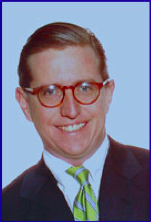
Don’t let me scare you
First off, relax. If anything, the fact that you’ve run into Jim may be a good thing. This guy has represented some major league Wall Street crooks, so there’s a chance that you’re on to something.
CounterPoint’s current and former clients include:
- Elliott Broidy, a wealthy California investor who pleaded guilty to paying $1 million in bribes to influence former New York State Comptroller Alan Hevesi.
- Ira Rennert’s Renco Group and its Doe Run subsidiary St. Louis, the largest lead producer in the Western hemisphere. Jim does not want you to watch this video about the company’s operations in Peru.
- The Formaldehyde Council
- The National Fisheries Institute (Think mercury)
- Bond insurer MBIA.
- The College Sports Council
- Hedge fund founder Raj Rajaratnam, who was convicted of securities fraud. (Update: Raj Rajaratnam was sentenced to 11 years in prison.)
- Dallas-based Kosmos Energy, majority-owned by private-equity firms Blackstone Group and Warburg Pincus.
I had the pleasure of dealing with Mr. McCarthy a few times when I was investigating one of those crooks, a guy named Elliot Broidy, so I decided to put together this handy-dandy guide for the perplexed:
Jim is president of CounterPoint Strategies, a public relations firm in Washington, D.C. that specializes in an aggressive, combative style of crisis management. Jim is the real-life version of the fictional tobacco flak in Christopher Buckley’s novel Thank You For Smoking. His job is to make your story about you.
He’s the son of liberal journalist and peace activist Colman McCarthy. The acorn fell pretty far from the tree in this case, although the dynamics of that relationship must be pretty interesting. Young Jim registered as a Republican at age 18.
Early in his PR career, Jim handled a variety of Fortune 500 and foreign government accounts for two public relations agencies in Washington, Ruder-Finn and Nichols-Dezenhall, the “brass-knuckled boys” of DC’s PR world.
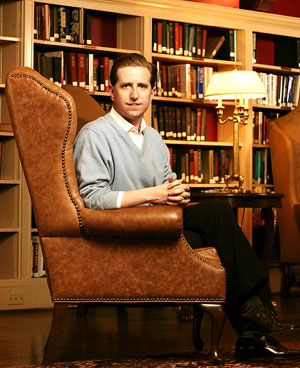
Ready to pounce
In 1994, McCarthy started a boutique public relations agency, McCarthy Communications. McCarthy Communications reportedly billed one client, the Saginaw Chippewa Indian tribe of central Michigan, $280,000 for a media campaign designed to force out the head of the Bureau of Indian Affairs. Replying to a BIA spokesman who said he had never seen such tactics, McCarthy said, “I say to Mr. Hackler, welcome to the Beltway.”
A confidential McCarthy Communications proposal was obtained by The Washington Post. (See William Claiborne, “Tribe PR Drive Targeted BIA Head”, The Washington Post, Aug. 16, 1999)
McCarthy was hired by the Augusta National Golf Club in 2002 when the men-only club was under pressure by activist [[Martha Burk]] to admit women. McCarthy advised a “pugnacious” approach. “My clients appreciate that I like to get in the arena, take off the gloves and throw down,” McCarthy told Alan Shipnuck, who wrote a book about Augusta’s battle to keep women out. (See Taking on the Times”, Sports Illustrated, April 6, 2004.)
It’s the first time I’ve done this kind of media criticism as part of an overall strategy for a client, and I don’t know of any other PR firm that has done it. It’s pretty cutting-edge. Big PR firms are like large corporations in that they have always been afraid to take on the press directly, because there is this belief if you create an adversarial relationship, you will never be treated fairly again. But for a venerable institution like Augusta National to embrace that strategy, well, that has certainly opened some eyes. Now I’m trying to build media-crit-driven crisis management into stand-alone business. Who knows? Maybe I’ll be snapped up by a big, deep-pocketed PR firm.
In 2004, McCarthy co-founded Public Interest Watch, a Washington nonprofit heavily funded by Exxon Mobil. According to BusinessWeek, McCarthy’s ex-employer, renamed Dezenhall Resources, helped create PIW in 2002 specifically to prod the IRS to go after Greenpeace.
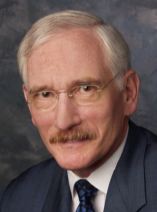
David “Nick” Nichols
Just as McCarthy had hoped, deep pockets did find him. McCarthy Communications was hired in 2004 to represent investor Kenneth Langone, who was named in a lawsuit by then-New York State Attorney General Elliot Spitzer. On Langone’s behalf, McCarthy has repeatedly attacked the credibility of Gretchen Morgenson, a Pulitzer Prize winning business journalist for The New York Times, saying businesspeople regarded her with “pure contempt.” Apparently, Langone didn’t like it that Morgenson pointed out how Langone was a poster boy for executive overcompensation.
In 2008, McCarthy co-founded CounterPoint Strategies. McCarthy is the oversized face of CounterPoint, but behind the scenes is CounterPoint’s chairman, David “Nick” Nichols, a former investigative journalist who went on to found Nichols-Dezenhall, McCarthy’s old stomping grounds.
Before forming Nichols-Dezenhall, Nichols served as a campaign press secretary for New York City Mayor John Lindsay and then headed to Wisconsin where he served as a legislative staffer. Nichols also served for several as a senior media spokesperson for the Cuban-Haitian Task Force, which was charged with dealing with the thousands of refugees from Castro’s Cuba in the Mariel boat lift.
Share your McCarthy horror stories below:
Dana Perino Out as Mina Lobbyist
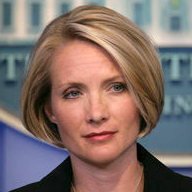
Dana Perino
My scoop was very short-lived. Two days later — and one day after The Washington Post’s SpyTalk picked up the item — Perino’s employer, Hamilton Place Strategies LLC filed notice that it was no longer taking up the cause of the mysterious Mina Corp./Red Star.
Congress wants to know whether the sole-source, classified contracts awarded to Mina Corp., Ltd., and Red Star Enterprises Ltd., were a vehicle for the U.S. government to deliver payoffs to the family of Kyrgyzstan leaders who were ousted amid charges of corruption linked to the Manas air base.
Senate lobbying disclosure forms show that on July 12 Mina Corp. hired public affairs firm Hamilton Place Strategies to lobby Congress and the Defense Department. Hamilton Place filed its notice of termination on July 28. The firm’s income from Mina was less than $5,000.
Mina also lost the services of Tony Fratto, another former Bush White House spokesman, and W. Taylor Griffin, a McCain/Palin adviser.
Seriously, WTF?
Carly Fiorina and the HP Pretexting Scandal

What's the pretext?
Did former chairman and chief executive Carly Fiorina play a role in the spying scandal that tarnished the once sterling reputation of Hewlett-Packard Corporation?
Revelations in 2006 that company investigators, using private and confidential information provided by HP, had posed as board members and journalists to obtain private phone records and e-mails created a public uproar. HP officials were hauled before Congress and California filed criminal charges against several company officials, including former Chairman Patricia Dunn.
There’s no evidence to suggest that Fiorina knew or condoned this practice, known as “pretexting” (aka lying). The HP board fired Fiorina more than a year before the scandal broke. Fiorina’s own phone records were obtained by HP investigators after she had left the company.
But that’s not the complete story. A look at the record shows that HP’s leak investigations began under Fiorina, who is now running as a Republican to unseat U.S. Senator Barbara Boxer, and employed the same security firm who worked for HP during Fiorina’s entire tenure as chairman. Furthermore, the board member Fiorina suspected as the source of the leak became the focus of the investigation.
In January 2005, Fiorina approached attorney Larry Sonsini, the board’s outside lawyer, for advice. Fiorina was extremely upset by a Wall Street Journal story that detailed sensitive internal board discussions about Fiorina’s performance.
Patricia Dunn, who succeeded Fiorina as chairman, testified under oath to Congress:
MS. DUNN: The first inquiry into leaks actually began under the administration of Carly Fiorina, who was Chairman and CEO until February of 2005. She asked Mr. Sonsini to talk with every director one-on-one about the functioning of the Board, and to seek the confession of whoever the person or persons were that were leaking this confidential information, as well as to reassert their commitment to confidentiality going forward. The reason why the Board, by the time I got involved, was so deeply concerned was because they knew that no one had come forward to admit their culpability.
After Fiorina’s ouster, seven of nine HP board members saw the case of the boardroom leak as “unfinished business” by a majority of board members, Patricia Dunn, who succeeded Fiorina as chairman testified to Congress.
Dunn enlisted the services of Security Outsourcing Solutions, a little-known private detective firm in Needham, Mass. SOS had done work for HP during Fiorina’s entire tenure as chairman. About half the company’s work came from HP.
The initial work done by SOS in the pretexting scandal, Dunn testified, “was authorized — by whom I do not know specifically — as an extension to a pre-existing work order under which he was performing various investigative assignments for Hewlett-Packard.” (emphasis added)
Did any of these assignments involved pretexting?
Fred Adler, head of IT security investigations at HP, testified that one of the company’s investigators involved in the pretexting scandal had complained to his manager on previous occasions about the practice.
In her 2006 book, Tough Choices, Fiorina doesn’t mention pretexting or whether she ordered spying on journalists and board members. She did write in Tough Choices that she remained deeply suspicious of another board member, George Keyworth, who was not the source for the Journal article.
A 20-year HP board veteran, Keyworth was a driving force behind the board’s divisive efforts to remove Fiorina, who had aggressively championed a bitterly contested $19 billion merger with Compaq in 2002 that led to a proxy fight, court battle, wrenching layoffs, some cost savings but little in the way of profits.
Keyworth subsequently became a target of the pretexting investigation in a move that likely reflected the lingering bitterness over Fiorina’s ouster.
Investoradio Interview
I’ll be on Investoradio this Saturday, Aug. 21, talking about Ray Lucia and high fees. You can listen online through this link. Just like Lucia, Investoradio hosts Tom Cock and Don McDonald run their own investment advisory, but their fees are less than 1 percent, compared to as much as 2.9 percent for RJL Wealth Management.
Here’s a link to the show.
Investoradio Interview
I’ll be on Investoradio this Saturday, Aug. 21, talking about Ray Lucia and high fees. You can listen online through this link. Just like Lucia, Investoradio hosts Tom Cock and Don McDonald run their own investment advisory, but their fees are less than 1 percent, compared to as much as 2.9 percent for RJL Wealth Management.
Here’s a link to the show.
Palin spokesman also part of the Mina/Red Star team
McCain/Palin campaign spokesman W. Taylor Griffin is coordinating the public relations response to Mina Corp., the secretive defense contractor that is the subject of a congressional investigation into its fuel contracts for a U.S. airbase in Kyrgzystan.
Griffin is a partner in Hamilton Place Strategies LLC, the PR firm that, as I reported yesterday, employs former White House Press Secretary Dana Perino and her former colleague, Tony Fratto.
As part of the Palin team, Griffin led a crisis communications team that dealt with the “Troopergate” affair.
Griffin was part of the communications team for the 2000 and 2004 Bush presidential campaigns, and did a stint in the Treasury Department’s Office of Public Affairs and the Senate Foreign Relations Committee.
EXCLUSIVE: Secretive defense contractor hires Dana Perino in DC lobbying push
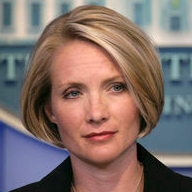
A secretive defense contractor that is at the center of a congressional investigation of a $1.4 billion contract to supply aviation fuel at the U.S. air base in Kyrgyzstan has hired a powerhouse D.C. lobbying team that includes Dana Perino and others from the Bush White House.
Congress wants to know whether the sole-source, classified contracts awarded to Mina Corp., Ltd., and Red Star Enterprises Ltd., were a vehicle for the U.S. government to deliver payoffs to the family of Kyrgyzstan leaders who were ousted amid charges of corruption linked to the Manas air base.
Mina Corp.’s fuel contract, awarded last year, is worth up to $730.9 million over three years for services at the Manas, the only U.S. airbase in Central Asia outside of Afghanistan.
Kyrgyzstan has also opened its own investigation, prompting the U.S. Embassy in Bishkek to say that the contract was issued in accordance with U.S. and local laws. Mina Corp has told both governments that it has never directed U.S. government funds to Kyrgyz officials.
As Congress turned up the heat on Mina and Red Star in July, the companies sent Washington lobbyists to the Hill to plead their case.
Senate lobbying disclosure forms show that on July 12 Mina Corp. hired public affairs firm Hamilton Place Strategies LLC to lobby Congress and the Defense Department.
Senate filings show the Hamilton Place team includes Perino, now a Fox News political commentator, W. Taylor Griffin, a spokesman for the McCain/Palin campaign who handled the “Troopergate” affair, and Tony Fratto, who spoke for the president on issues including intelligence matters, terrorist financing and financial crimes.
Also joining the Mina Corp. team this month were McLean, Virginia-based Dudinsky, Lisker & Associates, which says it is “monitoring and reporting Congressional activity” on behalf of Mina.” Principal Joel Lisker is a former FBI agent who headed the Justice Department’s foreign agent registration unit in the Carter years. His investigation led the president’s brother, Billy, to register as a foreign agent for Libya.
Barbour, Griffith & Rogers’ Ed Rogers, a Reagan and Bush I White House veteran, and Morris Reid, registered July 20 as lobbyists for Mina to handle a House investigation regarding Department of Defense contracts to provide jet fuel to U.S. military base in Bagham, Afghanistan.
Jeff Stein at The Washington Post’s SpyTalk blog reported last wek that after weeks of tense negotiations, a House oversight subcommittee has gotten promises of cooperation from Mina and Red Star.
“The heart of the investigation,” a source told Stein, “is why Red Star and Mina Corp. were not investigated under” the Foreign Corrupt Practices Act, which forbids U.S. companies from paying bribes or kickbacks to foreign officials.”
Mina Corp. has also hired the D.C. law firm, Weil, Gotschal and Manges LLP. The Weil team includes partner William Burck, who served in the Bush White House Counsel’s office. Burck specializes in FCPA investigations among other things, according to his law firm biography.
In a press release announcing last week’s agreement between Mina, Red Star and the National Security and Foreign Affairs Subcommittee of the House Committee on Oversight and Government Reform, Burck said maintaining his client’s secrecy was a key to the deal.
“We’ve worked closely with staff to make sure the Subcommittee obtains the information it seeks while preserving the confidentiality of the companies’ operations and the privacy of its personnel. Confidentiality is essential to permit the companies to meet the U.S. military’s needs in volatile areas of the world and supply vital fuel to our troops in the field.”
Burck and Perino have a close working relationship. They have penned regular columns critical of the Obama administration for National Review Online.
The Senate lobbying forms also raise fresh questions about who or what is behind Mina and Red Star.
The Defense Department has identified to Mina and Red Star Enterprises as companies based in Gibraltar. Mina Corp. was registered in London in 2003, records show.
The Senate lobbying disclosures identify Mina as a Dubai firm affiliated with “Mina Petroleum FZE” with an office in the Dubai Airport Free Zone. Companies operating within the free zone are treated as offshore, outside the United Arab Emirates.
Adding to the confusion, Mina’s webserver, minacorp.com, is registered in Vernier, Switzerland.
Ray Lucia Defamation Threat
For more visit: A Professional’s View of Ray Lucia’s Non-Traded REITs
Investor and local radio talk show host Ray “Buckets of Money” Lucia has threatened to sue me for $300,000 for defamation over a blog post I wrote last month.
Robert K. Butterfield, a San Diego attorney, is outraged that I dared to besmirch the good name of Raymond J. Lucia, who dispenses financial wisdom on a daily radio show in several big media markets. This is after all the same man actor Ben Stein recently described in an opinion piece in The New York Times as a “stock guru.”
Attorney Butterfield insists that I must stop pointing out Lucia’s relationship to San Diego-based First Allied Securities, which recently agreed to pay nearly $2 million to settle U.S. Securities and Exchange Commission charges that it failed to supervise one of its employees.
He also demands that I never again repeat the blasphemy that fees for Lucia account run as high as 2 percent, paid quarterly in advance. (Lucia Defamation Threat Letter)
Your statement that Mr. Lucia’s company has never charged a management fee of 2% is completely false and another intentional malicious act. His company has never charged a management fee of over 1% even though they have the ability to charge up to 2% — but you did not bother to check this — did you?
Even though Lucia’s own SEC disclosure plainly states “The standard annual managed fees for RJL [Raymond J. Lucia] Adviser Directed accounts are 2 percent,” Attorney Butterfield has a point. Fees for one “wealth management” program pushed by Lucia actually run as high as 2.9 percent
That is an eye-popping number. It’s about half of the compound rate of return of the Dow Jones Industrial Average for the past 50 years. That fee is assessed on the entire value of whatever you invest with Lucia, even if he loses money. It makes me wonder whose wealth is really being “managed” here.
Ex-UT Veteran Edits A Second Pulitzer Story
If they gave out Pulitzers for editing, Susan White, who left The San Diego Union-Tribune in 2007, would have collected her second yesterday.

Susan White
White is now in New York at ProPublica, the online investigative site, where she edited Sheri Fink’s story that claimed a Pulitzer for investigative reporting. This is the first time an online site has won journalism’s top honor.
Listen, Read, Watch
What it feels like spend 25 minutes in a runaway Toyota Prius on a San Diego interstate — KGTV (.mp3)
Stu Segall once made porn films like this. Now he trains U.S. troops at his studio in San Diego — WSJ
Laura Duffy, Obama’s nominee for U.S. Attorney in San Diego, is one tough lady — Main Justice.
Forget Elmo. Tickle me, ex-Rep. Massa! (A proud former San Diegan) — Gawker
Lerach is back — Reuters
Editorial Writing At Its Most Pathetic
It might seem incongruous for the conservative San Diego Union-Tribune to advocate putting public pension dollars in Iran.
But that’s exactly what it called for in this overheated editorial in today’s newspaper.
The subject of the newspaper’s ire is a 2007 California law that prohibits CalPERS and CalSTRS, the giant state pension funds, from investing in a company with business operations in Iran.
The fact that CalPERS hasn’t complied with the law was brought to the public’s attention through the efforts of Dave Maass in San Diego CityBeat.
The U-T calls the California Public Divest from Iran Act “political posturing, pure and simple.” The stated goal of the bill’s author La Mesa Assemblyman Joel Anderson — punishing Iran for its support of international terrorism — is dismissed as “nonsense.”
The real targets of the editorial are Jerry Brown and Steve Poizner, two state officials who are running for governor. Brown is guilty of “unadulterated folly” for demanding the giant state pensions comply with state law.
The U-T is entitled to its opinion, but the editorial is misleading, distorting, and just plain wrong on a number of fronts:
The California Public Divest from Iran Act requires CalPERS and CalSTRS “to sell stock holdings in international companies that did business with Iran.”
Not quite. The law bars companies that invest or operate in Iran’s defense and nuclear sectors or develop oil and natural gas resources.
You can still sell soap and medical equipment to Iran.
Is this really so unreasonable?
“And if we believe that the state government should deter investments in nations that are at geopolitical risk, why would Iran be the only nation on the list?”
Well, it’s not.
Current law also requires CalPERS and CalSTRS to sell or transfer investments in Sudan. In the 1980s, the state approved similar measures to allow state entities to divest in South Africa in order to protest its apartheid policies.
“The professionals advising CalPERS and CalSTRS on portfolio strategies were obviously better qualified to evaluate investment danger.”
What professionals are they referring to?
The professionals who lost $1 billion by investing CalPERS assets in LandSource Communities, a bankrupt company that owns raw land in California. Or the professionals who advised the pension fund to put $500 million in Peter Cooper Village in New York, now in foreclosure?
Perhaps they mean the shady, unregistered professional placement agents who collected millions of dollars in payments from fund managers seeking business from CalPERS?
“Among the many respected international firms whose affiliates do business with Iran are Royal Dutch Shell, Siemens AG, Hyundai and Alcatel. Their operations are perfectly legal under U.S. and international law.”
First off, Hyundai no longer has active business operations in Iran, as CalPERS notes in its 2009 report on its Iran investments. Siemens recently announced it is pulling out by mid-2010.
Second, “respected” Siemens AG settled a U.S. Justice Department investigation into the company’s bribery of foreign officials by paying a record fine and admitting systemic violations of the Foreign Corrupt Practices Act.
Third, thanks to the Iran divestment act, we now know about CalPERS’ investments in Chinese state-owned firms:
- China Petroleum & Chemical Company (Sinopec), Asia’s biggest oil refiner, which signed four exploration contracts in Iran.
- CNPC Hong Kong Ltd., which has a service contract for the Masjed Soleiman oilfields and is developing gas fields.
- CNOOC Ltd., the state-owned Chinese oil firm that was thwarted in its 2005 effort to buy Unocal.
These companies are investing in Iran (and Sudan) to secure reliable energy supplies for China, now the world’s second biggest oil consumer. Sooner or later, that will put them directly at odds with U.S. interests.
If, as the U-T maintains, CalPERS’ investments in these firms aren’t all that significant, then why should we support them with public pension dollars?
Update: CityBeat‘s latest report finds CalPERS is correcting its annual report as it has no holdings in Sinopec.
Forbes on Tom Gores and the U-T
From the Forbes 400 issue I picked up last week:
Gores has his hands full with the San Diego Union-Tribune, which he bought in May for an estimated $30 million, based on current industry multiples. Three days after the deal closed, Platinum laid off 192 people; 112 additional cuts came in August. Gores saw no other way: The newspaper (average daily circulation: 300,000) had less than $10 million in EBITDA [earnings before taxes, depreciation, amortization] on revenue of less than $255 million, down from $100 million on revenue of roughly $360 million in 2005. “The outlook was for an unprofitable 2009,” says a Platinum spokesman.
What makes Gores think he can revive a near-dead enterprise? He likes the market. San Diego is still relatively affluent and culturally conservative; few denizens read the Los Angeles Times. He also prizes the assets — a 500,000 square-foot headquarters and warehouse in Mission Valley, plus 50,000 square feet of offices in La Jolla, San Marcos and Carlsbad.
But, oh, the challenges. The U-T was perhaps the last paper in the U.S. that relied on cut-and-paste layouts; Platinum has spent several million dollars on new publication software. To replace the loss of national advertisers, especially retailers and real estate firms, and classifieds, the paper is refocusing on small businesses. Gores has also updated the Web site with more social media, blogs and podcasts. He has reinstated 401(k) matching and reversed pay cuts by the previous owners, the Copley family. He expects a slight operating profit this year.
Gores plans to buy more distressed media companies. Lately his name has surfaced among potential buyers of the Boston Globe and BusinessWeek. Platinum’s response: “Don’t believe everything you read in the papers.”
For those keeping score at home, Gores is No. 147 with a $2.2 billion fortune.
Pentagon blames FBI in DC for al-Awlaki mixup
Remember the public back-and-forth between the FBI in San Diego and Washington over who dropped the ball on the Fort Hood shooter’s e-mails to a radical cleric in Yemen? CBS’ David Martin (author of the best CIA book evah) has this:
(CBS) Less than a month after major Nidal Hasan allegedly killed 13 people at Fort Hood, Texas, the Pentagon’s top intelligence officer sent the White House a report detailing an earlier failure to connect the dots. It reads like a dress rehearsal for the Detroit bomber case, reports CBS News chief national security correspondent David Martin.
According to that still-classified report, the terrorism task force responsible for determining whether Hasan posed a threat never saw all 18 e-mails he exchanged with that radical Yemeni cleric Awlaki whose communications were being monitored under a court ordered wiretap.
After the Washington task force decided Hasan was not dangerous, it never asked to see his subsequent communications with Alwaki….
None of the e-mails specifically mentioned Hasan’s plans for a shooting rampage at Fort Hood, but because he was a member of the military the FBI showed them to a Pentagon investigator with the note “comm” written on it. To the FBI that meant “commissioned officer.” The Pentagon investigator thought it meant “communication.”
As a result, there were no red flags that an army officer was e-mailing a radical cleric suspected of being a talent spotter for al Qaeda.
Bottom line: the lessons of the Fort Hood shootings were not learned in time to avert the near disaster on Christmas day.
Bottom line No. 2: The FBI and Pentagon aren’t speaking the language.
The story doesn’t say it but the report is by the Pentagon’s top spook, USDI James R. Clapper.
Pakistani President Ali Zadari on Money Laundering
The International News in Pakistan reports today that President Asif Ali Zardari says he was cleared in a 10-year-old money laundering investigation by the US Congress.
The Presidency has officially claimed that the US Congressional Subcommittee on Money Laundering had cleared Asif Ali Zardari, as it had found no evidence that Citibank or any other private bank knowingly helped Mr Salinas (of Mexico), or any other criminals launder dirty money.
This official statement has been released by the spokesman of the president Farhatullah Babar in response to questions sent to him about the details provided by the Citibank’s top administration to the US Subcommittee on Money Laundering in November 1999.
This comes as a Pakistani anti-corruption agency found that Zardari had accumulated assets of $1.5 billion through illegal means. Zardari, who was known as “Mr. 10 percent,” is the notoriously corrupt widow of the late former Pakistani Prime Minister Benazir Bhutto.
An investigation in 1999 by the U.S. Senate Permanent Subcommittee on Investigations into private banking and money laundering examined that Zardari had three accounts at Citibank Switzerland private bank. Some of the accounts allegedly were used to disguise $10 million in kickbacks for a gold importing contract to Pakistan.
Another of Citibank Switzerland’s high profile clients was Raul Salinas, the infamous brother of former Mexican President Carlos Salinas.
Swiss authorities froze more than $100 million – allegedly linked to drug trafficking — in Salinas’ accounts. That included about $27 million Citibank Switzerland private bank.
The Senate subcommittee notes a striking coincidence between the two men: “The Zardari accounts in Switzerland were opened one day before Raul Salinas was arrested.”
Zardari’s accounts were opened February 27, 1995. Salinas was arrested and imprisoned in Mexico on suspicion of murder the following day.
According to the Senate subcommittee report:
On the day following the arrest, a number of telephone conversations took place between private bank personnel in New York, London and Switzerland. The telephone conversations to London were recorded on an automatic taping system. The tape transcripts indicate that the private bank’s initial reaction to the arrest was not to assist law enforcement, but to determine whether the Salinas accounts should be moved to Switzerland to make discovery of the assets and bank records more difficult. This suggestion was made by the head of the private bank at the time, Hubertus Rukavina, and discussed by several employees. It was not acted upon, apparently because it was agreed that London bank records would disclose the funds transfer to Switzerland. Private bank employees also tried to determine whether to require immediate repayment of an outstanding $3 million loan that had been made to Trocca (a Salinas family trust), so that if the funds in the Trocca accounts were frozen by authorities, Citibank funds would not be at risk.
Rukavina also played a role in the Zardari accounts. Specifically, he was involved in the decision to allow a Swiss lawyer to open three accounts on behalf of Zardari.
Rukavina told the Senate subcommittee staff that he did not make the decision to open the accounts but referred the matter to the head of private bank operations in Pakistan, Deepak Sharma. According to Mr. Rukavina, he never heard whether the accounts were ultimately opened.
A Swiss judge found in 2003 that Zardari was guilty of money laundering, and a Swiss prosecutor closed the investigation last year, saying there wasn’t enough evidence to bring Zardari to trial.
Jihadis have learned from Internet pirates
AP has a story out reporting that the number of Arabic-language jihadi websites has declined markedly since the Sept. 11 attacks from 1,000 to around 50. Meanwhile, the number of English language sites sympathetic to al-Qaida has grown.
This article may fuel the growing hysteria over the Fort Hood shootings. The suspected shooter, Maj. Nidal Hasan, had e-mail contact with a Yemeni preacher who ran an English-language Website and called Hassan a “hero” on his blog.
It is easy to get the wrong impression from the AP story. The jihadis are much more sophisticated than this article implies.
It’s true that radical websites such as al-Qaida’s official site, alneda.com, have been shut down, but Osama bin Laden’s followers have figured out new ways to communicate with audiences in the Arabic-speaking world, which — let’s face it — supplies the overwhelming majority of recruits.
Jihadis have adopted the tools of Internet pirates who illegally share music, movies, software and porn, according to a report from West Point’s Combating Terrorism Center:
The process works as follows. When a new official jihadist group notice, video or audio file is released, multiple users upload the file to various file-hosting websites, creating hundreds of URL links to where that file can be downloaded. A large list of links, or virtual library of hyperlinks, is then posted on multiple jihadist web forums. Once a user reads the post, they then duplicate the forum posting on another forum. This practice is welcomed and encouraged by the rest of the readers, which allows the original user to gain prestige and continue ascending in the forum’s “roster.”
These files can be easily and anonymously uploaded from Internet cafes to file-sharing sites like Rapidshare. Many of these links expire quickly or are disabled by the file-hosting company, yet the sheer number of hyperlinks uploaded makes it almost impossible to stop the message from spreading.
Read the latest issue of the CTC Sentinel here (.pdf)
Rhetoric of Rage: Limbaugh + North Korea
“We’re becoming like North Korea,” is something you often hear on talk radio in the United States.
The conservatives who dominate the AM airwaves are, of course, referring to the Democratic administration of President Obama.
To me, however, these fire-breathing conservatives echo the incendiary rhetoric issued daily by the Korean Central News Agency of DPRK, the official state news agency of the communist dictatorship:
- North Korea: “The present approach of the Japanese government towards the past crimes is very prejudiced, narrow-minded and wicked.”
- Rush Limbaugh: “This is a diabolical intricately woven web of deceit that is being executed and woven here, and you have been sucked right into it.”
- North Korea: “The plan is a despicable product of the anti-DPRK policy pursued by the above-said forces that are running amuck (sic) with bloodshot eyes to find a pretext for a war of aggression on the DPRK and an extension of their strategy for a war against it.”
- Rush Limbaugh: “The American people are being awakened, and they’re being awakened because they are finally seeing the real Barack Obama, and it’s nothing like the man they thought they elected. This is an utter, cold, mean-spirited partisan liar.”
- North Korea: “The imperialists are driven into an uncontrollable crisis at present and the fact that the popular masses are getting awakened in a revolutionary manner is a clear proof that the doom of imperialism is coming nearer.”
- Rush Limbaugh: “Whether Obama is diabolical, deceitful or just plainly incompetent doesn’t matter. The end result is the same: rotten.”
- North Korea: “The U.S., in particular, is whipping together pro-American conservative forces forsaken by history in a desperate bid to help them wrest ‘power’ through the forthcoming ‘presidential election’ at any cost and thus tide over the crisis of its colonial rule and revive the rotten politics.”
Are Embedded Journalists Lawful Targets?
Browsing the Internets, I came across an article by Douglas W. Moore in the July issue of Army Lawyer that tackles the difficult question of whether embedded journalists can be considered lawful enemy targets.
To help clarify when an embedded journalist’s activities will result in a loss of protections, this paper recommends three criteria to aid in this evaluation: (1) the integration of war correspondents into military information operations, (2) the eroding distinction between PAO [Public Affairs Office] and war correspondents, and (3) the loss of reporter objectivity on the battlefield.
The Geneva Conventions declare that journalists covering armed conflicts should be treated as civilians, whether they are accredited by the military or not, assuming “they take no action adversely affecting their status as civilians.”
According to Army Lawyer, embedded journalists run the risk of losing protections because they are increasingly becoming part of military “information operations” or IO.
Overall, IO seeks to use war correspondent news coverage to support positive public relations, build public support, and support successful information operations against the enemy….
Under “operational security” or OPSEC rules, the military controls what embedded reporters can or can’t report. It uses them for “psychological operations” (PSYOP) targeting foreign audiences, particularly during combat operations. Finally, public affairs officers use embedded press to reach targets back home.
The integrated nature of the embedded press system, combined with this military function, dramatically increases the likelihood that a journalist’s activities will be defined as directly supporting combat operations.
The full article is available here (.pdf).
Sheikh Khalid bin Mahfouz
Writing anything about Sheikh Khalid bin Mahfouz used to be a bit of a risk. The billionaire Saudi banker issued a sheaf of libel writs to obscure writers and forced them to retract their stories and apologize. But the Saudi’s days of using British courts to clear his name are now buried in Jeddah along with 60-year-old Sheikh Khalid himself.
He was one of the world’s wealthiest men and, at one time, he was the most powerful banker in the Middle East — King Fahd’s personal banker, it was said. Sheikh Khalid inherited his vast wealth from his father, an illiterate money-changer from Yemen who founded what became Saudi Arabia’s leading bank, the National Commercial Bank.
An intensely private man, Sheikh Khalid spent considerable sums in London’s plantiff-friendly courts to prove what he was not. He was not a financier of terrorism. He was not Osama bin Laden’s brother-in-law. No, he was not an investor in George W. Bush’s Harken Energy. The allegations continued to dog him nonetheless.
That he was involved in the BCCI scandal, however, is beyond doubt. Sheikh Khalid was a director and major investor in the Bank of Commerce and Credit International. He did deny that he knew anything about what the bank of Manuel Noriega, terrorist Abu Nidal, the Medellin cartel, and the CIA was really up to.
Prosecutors in New York thought otherwise. A state grand jury indicted him in 1992 on criminal charges of conspiring to steal $300 million from BCCI depositors. The Federal Reserve accused Sheikh Khalid of misleading American regulators and closed the New York branch of the National Commercial Bank.
The charges were a deep embarrassment to the royal family. There were rumors that the House of Saud had borrowed huge sums from National Commercial Bank, perhaps as much as $3 billion, according to False Profits, a book on the BCCI scandal. King Fahd summoned U.S. Ambassador Charles Freeman “to express his surprise and dismay that a local prosecutor in New York City had indicted Sheik Khalid,” The New York Times reported. The king also made an extraordinary request: Would the United States issue a statement supporting the Saudi banking system? The ambassador refused.
To make the charges go away, Sheikh Khalid paid $225 million, including a $37 million fine (which he insisted was not a fine.) While under investigation, Sheikh Khalid and his family had bought Irish passports. A helpful Citibank vice president supplied a reference, describing the sheikh as “the most important and respected client with Citicorp Private Bank in the UK and Channel Islands and one of the most valued clients of the bank globally.”
With the charges behind him, Sheikh Khalid reemerged as chairman and sole owner of his family’s bank. According to Forbes magazine, however, Sheikh Khalid oversaw a “dramatic” increase in the bank’s nonperforming loans, some of which were made to Sheikh Khalid himself. In 1999, the Saudi government acquired control of National Commercial Bank.
Sheikh Khalid remained in the public eye, however. He was a favorite of conspiracy theorists because of his connections, however indirect, to both the Bush family and the Sept. 11, 2001 attacks.
In the 1970s, his U.S. legal representative was James R. Bath, a dealmaker who served in the Texas Air National Guard with George W. Bush. Bath introduced Sheikh Khalid, Bath, and former U.S. Treasury Secretary John Connally bought Main Bank of Houston.
Sheikh Khalid spent the last decade in seclusion, using his emissaries to stamp out reports that linked him to terrorism. Much was made of the Muwafaq Foundation, a charity Sheik endowed in 1991. A trustee of the foundation, Yassin al-Qadi, was listed by the U.S. government as a financier of terrorism. Sheikh Khalid, once again, insisted he knew nothing about what others had done with his money.
Texas was no hospitable for Sheikh Khalid, and his foreign base shifted to London. According to news reports, a lawsuit in London revealed that Sheikh Khalid had acquired a London mansion in 1996 without his family’s knowledge. Sheikh Khalid planned to stay in the 97-room apartment in Mayfair with his young male friend, Khalid Ganzal.
Sheikh Khalid exemplified the conflicted realities U.S-Saudi relationship, a mutual dependence of powerful interests built on murky deals. He was not a royal but he was part of the inner sanctum of wealth and power in Saudi Arabia, and one pathway to the royals went through him. Even as he battled criminal charges, Sheikh Khalid continued to serve powerful interests in the United States, remaining a consultant to Boeing Co., which sought an extremely lucrative contract from Saudi Arabia.
If there was wheeling and dealing to be done with the House of Saud, Sheikh Khalid was your man.
Newspaper Bankruptcy Watch: The San Diego Union-Tribune
A lot’s been said about last week’s buyout of The San Diego Union-Tribune by Platinum Equity, a private equity firm, which disclosed only the barest details about the sale.
The sale isn’t about newspapers. Rather, it’s about land.
Platinum Equity is not in the newspaper business; it’s in the distressed assets business. From an accounting perspective, land is the only asset that never loses value. The Union-Tribune owns 13 prime acres in Mission Valley that’s sandwiched between the Town & Country Resort and the ritzy Fashion Valley Mall. The company also has half an acre in La Jolla.
If reports that the newspaper company sold for less than $50 million are correct, Platinum Equity is getting the company land at a tremendous discount in a depressed market. All it has to do is hang on for a few years until the market recovers and then it has prime property for an apartment tower, corporate offices, hotel or mall expansion.
What to do with the newspaper then? Few people paid much attention to the last sentence in the press release announcing the sale:
Platinum Equity was advised by Hughes Hubbard & Reed and Alvarez & Marsal’s Transaction Advisory Group.
Alvarez & Marsal is overseeing the dismantling of Lehman Brothers. The bankrupt Tribune Company also hired Alvarez & Marsal to craft a restructuring plan.
Last year, Fortune magazine described Alvarez & Marsal as a firm that profits from corporate misery:
Alvarez & Marsal do the mopping up when a company has run out of options and can’t meet its loan obligations. With some clients, A&M dispatches teams to work much like consultants – looking over the books and talking ideas – but about a hundred times faster. In thornier cases the firm does the dirty work itself, usually with Tony Alvarez, Bryan Marsal, or another partner stepping in as CRO – chief restructuring officer – and doing triage like ordering layoffs, selling off assets, and making overhead cuts.
It seems then that Platinum Equity is going to make the kind of moves that the Union-Tribune’s family owners never could. Sadly, that is going to mean the end of San Diego’s biggest newspaper.
Couple of stories out
My piece on another hedge fund blowup at San Diego County’s $7.9b pension fund ran in the Voice of San Diego.
And The American Lawyer is out with my story about the heightened pace of congressional investigations.
The Citigroup "Death Star"
 From the WSJ:
Former federal officials have dubbed Citigroup the “Death Star,” comparing the bank’s threat to the financial system with the planet-destroying super weapon in the “Star Wars” movies. Privately, in the words of one official, they regard the banking giant as “unmanageable.”
Newspaper Bankruptcy Watch: Lee Enterprises
Lee Enterprises, the nation’s fourth biggest newspaper chain, has been granted a last-minute stay of execution. The new execution date is April 28, 2012, when Lee will owe principal payments of $721m, plus interest.
To put this number into context for you, if Lee sold off all its printing plants, buildings and equipment, and liquidated all its inventory to satisfy its creditors, it would still be $400m short. Stil, Lee thinks it can somehow gut it out. Its sees its enormous problems as temporary, so the party continues!
Lee’s most pressing concern was a $306m balloon payment due to institutional investors in April. The newspaper company was hit hard by the fall in ad revenues and so bloated with debt that it didn’t have enough cash to pay. But rather than force Lee into bankruptcy, the lenders have given Lee a three-year reprieve:
Lee today repaid $120 million of the principal amount of its $306 million Pulitzer Notes debt due in April 2009 using a portion of its restricted cash, which totaled $129.8 million at Dec. 28, 2008. The remaining debt balance of $186 million has been refinanced by the existing lenders until April 28, 2012. Under the agreement, $9 million of restricted cash was retained to facilitate the liquidity of the operations of Pulitzer Inc., a wholly owned subsidiary of Lee, and its subsidiaries.
But like a good loan shark, the lenders are going to wring extra dollars out of Lee. Beginning in June, it must pay its lenders $4m every quarter. In October 2010, it will pay a total of $8m cash. Plus the interest rates on the Pulitzer Notes will rise from 8.05 percent to 9.05 percent next year, ultimately increasing to 10.05 percent ($19m) by 2012.
Lee also owes $1.1b amount to the bank, who make concessions to allow the company to survive. Lee owes the bank principal payments totaling $234m over the next three years. Payments at maturity will increase $80m to $535m due April 2012.
Escaping the hangman’s noose wasn’t cheap, by the way. Refinancing this whole mess cost Lee $20m.
Abandon all hope, ye who enter here.
Newspaper Bankruptcy Watch: The New York Times
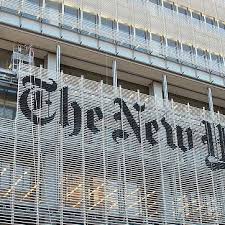 Moody’s today lowered its rating on the debt of The New York Times to junk status.
This means that bonds the Times issues are now considered speculative and the newspaper company will have to pay higher rates of interest to attract investors.
This will increase the pressure on the Times, which is already struggling to cope with a sheer drop in advertising revenues and a large debt load it has to finance.
The real news is the dramatic rise in the newspaper’s unfunded pension liabilty. Moody’s estimates it at a whopping $750m for the end of 2008. (The Times hasn’t released its year-end results yet.)
The Times debt is now six times its annual earnings before it deducts taxes and accounting charges (EBIDTA).
That’s a debt that must be paid. If the Times can’t pay it, then you will. If the Times goes into bankruptcy, which isn’t likely, taxpayers will cover much of the unfunded Times pension liability through the the Pension Benefit Guaranty Corporation.
The latest figures available are from the end of 2007, when the company disclosed a $275m gap between its $1.82b in obligations to its retirees and the $1.55b value of the fund assets set aside to pay ex-Timesmen.
If I’m reading this right, that gap grew by $500 million in fiscal 2008. That means the pension plan lost as much as 32 percent of its value. Given that the S&P 500 lost 38 percent last year, this seems to make sense.
The newspaper company is in trouble. It recently got a $250m capital infusion from Mexican billionaire Carlos Slim, but the Times must pay more than 14 percent annual interest. The Times is also trying to tap the capital locked up in its brand-new headquarters that could bring in another $225m.
Dark days indeed.
Update: Times CFO James Folio disclosed Jan. 28 that the company’s unfunded pension obligations are $625m, which means the pension fund lost $35om or 23 percent in 2008. That will cost the Times an extra $100m for the next seven years.
Newspaper Bankruptcy Watch: Lee Enterprises
It’s ironic that Lee Enterprises, a company that prides itself on the transparency and openness of its journalism, is engaging in a bit of financial trickery to fool investors.
Lee is a sinking ship. Its anchor has snagged on $2 billion in debt while the company is being pounded by a fierce gale.
To keep investors from fleeing in the lifeboats, Lee Enterprises announced today that it’s resorting to the financial equivalent of rearranging the deck chairs: a reverse stock split.
This is an utterly meaningless gesture designed to make it seem that the company’s worthless shares actually have more value. If you’re stupid enough to buy Lee stock after that, you deserve what you get.
Investors weren’t fooled. Shares of Lee fell nearly 14 percent today to close at 31 cents.
A reverse stock split means that instead of 100 shares of Lee worth $31 at today’s closing price, you will have 5, 10, 20, or 50 shares of Lee worth $31. It’s like exchanging 310 dimes for 124 quarters.
Nothing changes. It does nothing to address Lee’s huge problems in either the short-term or the long-term. That’s why the list of companies that went into bankruptcy after a reverse stock split is long.
But Lee is desperate to rejoin the New York Stock Exchange, which doesn’t want to trade piddly-ass penny stocks. If only the company cared as much about journalism as it does about its stock price.
Addendum: The company did receive a temporary reprieve from certain “covenants” on its Pulitzer debt, which means that Lee isn’t in default, yet. However, if I’m reading the company’s release correctly, Lee still owes a $306m balloon payment due in April. (background here).
Newspaper Bankruptcy Watch: The New York Times
 In End Times, Michael Hirschorn of The Atlantic who gazes into his crystal ball and sees the death of The New York Times.
It’s certainly plausible. Earnings reports released by the New York Times Company in October indicate that drastic measures will have to be taken over the next five months or the paper will default on some $400 million in debt. With more than $1billion in debt already on the books, only $46million in cash reserves as of October, and no clear way to tap into the capital markets (the company’s debt was recently reduced to junk status), the paper’s future doesn’t look good.
Times spokeswoman Catherine Mathis responds with a mighty bitchslap:
Your article “End Times” which speculates on whether The New York Times can survive the death of journalism, leaves a lot to be desired from the standpoint of . . . well, journalism.
Granted Hirschorn is being a bit irresponsible because, as he himself admits, the chances that the Times will go under are very slim, but methinks Mathis doth protesteth too much.
The Times is in trouble: The paper recently announced plans to borrow $225m against its beautiful, brand new steel-and-glass 52-story headquarters to deal with a cash crunch of its own making.
You would think that given what’s going on in the industry, the Times would tighten up operations, but American Thinker points out that in March 2007 the company increased its dividend 31 percent to 23 cents a share to “return more capital to shareholders.”
Twenty-three cents a share may not sound like a lot but it cost the company $132m a year. Of that, $25m went into the accounts of the Ochs-Sulzburger family that controls the paper. The family rode that gravy train until November, when the dividend was slashed to 6 cents.
But the Old Grey Lady isn’t exactly sitting on a pile of cash like, say, Microsoft. While the family was collecting its dividend checks, the Times was trying (and failing) to slash its costs by about $140m a year, almost exactly the amount of the dividend.
The Times couldn’t right the ship, so it has been tapping $400m from its two revolving lines of credit to pay expenses, including the dividend. One of those credit lines is expiring in May and no one’s willing to lend these days. So the Times is now borrowing against its headquarters to pay the bills. (Mathis points out that technically, the Times isn’t borrowing but arranging a sale-leaseback, but I think that’s a distinction without a difference.)
The Times borrowed to pay its investors with money it doesn’t really have. Somebody please explain to me how this is different than a Ponzi scheme.
Newspaper Bankruptcy Watch: Lee Enterprises
Corporate debt is a bit like the piece of ricotta torte I had for dessert last night: it goes down very easily, but chronic overindulgence will constrict the arteries, strain the heart, and possibly even kill you. And that’s exactly what is happening to Lee Enterprises, which publishes nearly 50 daily newspapers including the North County Times in San Diego County.
Lee Enterprises swallowed a staggering amount of debt over three years ago when it bought Pulitzer Inc., publisher of more than a dozen daily papers including the St. Louis Post Dispatch, founded in 1879 by Joseph Pulitzer. That turned out to be a disastrous move, as Lee is now in grave condition. Nearly 10,000 employees may find that come April, their employer can no longer survive in its present condition.
I decided to write about Lee after a friend who works for the chain asked what I thought of the company’s finances. Management was sugarcoating things, and my friend had no idea where things stood. (Full disclosure: I worked for the Lee owned Quad-City Times in the 1990s.)
Reading the company’s Dec. 31st 10-K filing led me to the conclusion that Lee Enterprises is already dead. A balloon payment of $306 million dollars is coming due April 28 and Lee, which posted a loss of nearly three times that amount last year, has flat-out admitted that it doesn’t have the cash.
The newspaper company can’t borrow its way out of this because its lenders have put it on a strict debt diet — no more sweets for you, Lee! They can’t borrow, they don’t have the cash, so Lee is left with few options. The company could sell assets to pay down debt but there’s not much of a market these days. Another option is a debt-for-equity swap, with the lenders becoming owners of the company.
Ultimately, it comes down to this: Either institutional investors that hold the secure notes will show mercy, or a bankruptcy judge will have to carve up the company’s bloated corpse and sell off the parts.
Lee’s stock closed at 56 cents today, down from $15 a share a year ago, and many on Wall Street think it hasn’t hit bottom. Lee’s short interest, a measure of pessimism in the company’s future, is one of the highest for any publicly-traded U.S. firm.
The Davenport, Iowa-based company’s difficulties are a symptom of the pain experienced by newspaper chains that used debt to finance growth in recent years. Tribune Corp., publisher of the Los Angeles Times and the Chicago Tribune, is in bankruptcy. McClatchy Corp., which loaded up on debt to buy Knight-Ridder in 2006, is struggling for survival.
When it acquired the St. Louis Post Dispatch in 2005 for $1.5 billion, Lee also assumed a $306 million debt, which is a twisted tale in itself. Pulitzer borrowed the money in 2000 to gain control of the Post Dispatch and buy out almost all of the stake held by the Newhouse family’s Advance Publications. (Privately-held Advance owns Conde Nast, publisher of The New Yorker, Vanity Fair and others, and also publishes major metro dailies in Portland, Ore., and New Orleans.)
For 16 years, Pulitzer had been paying Newhouse half of the Post Dispatch’s profits under a “joint operating agreement” with a newspaper that no longer existed. Newhouse sold the St. Louis Globe-Democrat in 1984, and somehow got Pulitzer to keep paying it, even after the Globe-Democrat stopped printing a few years later. (Newhouse still gets 5 percent of the Post Dispatch profits.)
The bad news doesn’t end in April because the Putlitzer debt just keeps on dealing out pain. The $306 million is only the principal on the loan, which carries 8.05 percent interest annually. So the total bill is more than $600 million. And counting.
That’s the story of how a bad deal to buy out one newspaper chain is about to destroy two others.
Hope for Change in the Public Debate?
Thomas Medvetz, The San Diego Union-Tribune:
Since the false premises and reckless mismanagement of the Iraq war have become widely known, there has been a great deal of soul-searching about the content of our public debate. But in my view the problem with this soul-searching is that, like the discussion above, it tends to reduce very quickly to a tallying of individual credit and blame rather than an examination of the profound misfirings of institutions. A postgame score card is no substitute for genuine inquiry into the deeper rules of public debate, which at present tend to ensure victory to the holders of the loudest megaphone over the bearers of evidence, to broadcast ratings over journalistic integrity, and to vigorous flag-waving over rigorous analysis.
More on "Obsession"
 My piece last week on the “Obsession: Radical Islam’s War with the West” DVD that was handed out in political swing states a month before the election provoked some interest here and here.rent a car bulgariaТюмень ландшафт The Guardian, based in London, quoted me as saying:
“Clarion was thinking of more creative ways to use newspapers than newspapers were,” Seth Hettena, a reporter who investigated the film for the Columbia Journalism Review, said.
Hettena described the free DVDs as “fall[ing] into a grey area, at the very least”. He cited the timing of the newspaper adverts, their distribution to 14 US states where voters are split on the presidential race, and Clarion’s ability to keep its donors secret under the tax laws.
The Altantic Monthly’s Jeffrey Goldberg said that Aish HaTorah, the group behind “Obsession,” is “just about the most fundamentalist movement in Judaism today.”
I actually have another idea for a film: I would call it “Obsession” as well, but it would be about the poor souls who believe that Obama is a radical Muslim, that Israel has a right to expel Arabs from its lands, and that America should declare war on all of Islam.
Who paid to distribute 22 million copies of “Obsession” via newspaper? We still don’t know.
"Obsession" with controversy
If political writers covered baseball
With apologies to The Washington Post.
This is Playoff Week. That, in reality, is about all that anyone knows outside Terry Francona’s inner, inner circle — that sometime in the next week the Boston Red Sox General Manager will announce his pitching lineup against the Tampa Bay Devil Rays. Beyond that, the baseball world is in a zone of fevered speculation.
Nothing is certain, and one sign of how jittery everyone is about the timing and the choice came a few hours ago, when the gossipy PROSportsDaily.com posted an item that said, “Paper: Red Sox may announce pitching lineup in AM.” That set off alarms in newsrooms across the country until the team’s front office shot it down — although it was not clear exactly what they were shooting down, other than that the announcement would come early this morning.
There was a widespread assumption, based on nothing solid from the campaign, that Francona could make his announcement this morning, this afternoon, or stage a multi-day rollout. Now, in a twist that goes against recent history, there are signs that Francona may wait to announce his choice until this weekend or just before game one on Monday in hopes of providing a big boost before the series opens.
In addition to giving some playoff-eve energy to the Red Sox, a late-in-the-week rollout would have another benefit in the eyes of his loyalists. It could help overshadow the other dominant story heading into the playoff, which is the long-running drama involving Red Sox pitcher Clay Buchholz and his girlfriend, Erica Ericsen, the 2007 Penthouse Pet of the year.
An announcement late in the week suggests that the Red Sox coaching staff believes that, in an era of 24/7 coverage and increasingly shortened news cycles, sustaining interest in a multi-day rollout has become increasingly difficult. Last year, Francona, the World Series winning manager, choreographed a five-day rollout of his choice of starting pitchers. Media attention spans today are considerably shorter.
Francona could move whenever he’s ready, but if he makes his announcement sooner than Friday, it would mean disrupting a schedule that is already set. He will be in Boston on Tuesday for a meeting with the coaching staff, an important event that he probably won’t want to overshadow with a pitching lineup announcement.
One possibility is Curt Schilling will get the call in game one. Schilling ….
Duke Cunningham, Mike Aguirre and Sign On radio
I was on Chris Reed’s radio show on Sign On Radio this morning, an Internet radio station run by the San Diego Union-Tribune. Chris is an editorial writer and blogger at the San Diego Union-Tribune.
We started talking about Randy “Duke” Cunningham’s request for a commutation, but then Chris asked me about a piece I wrote back in February on San Diego City Attorney Mike Aguirre.
That piece caused a bit of a stir, I guess, because I asked a question that nobody else was asking. Aguirre, our elected city attorney, called the mayor “schizophrenic” and told a San Diego Union-Tribune that he was “pathological.”
That struck me as odd because many people say privately that Aguirre is the one with mental problems. But if you, as a reporter, raised this issue, Aguirre suddenly got defensive. Or hinted at forces out to stop him. Or wrote a letter to your editor telling you to get out of the office more.
Then today I spotted news that Aguirre’s brother, a wealthy attorney, is working as an “unpaid intern.” Double the fun!
I voted for Aguirre because I thought we needed someone to shake things up in paradise or Enron-by-the-sea as The New York Times called us.
I just don’t like bullies.
Union-Tribune for Sale
It’s the end of an era: Copley Press announced today that it’s exploring a sale of the San Diego Union-Tribune. The U-T’s president and CEO said the newspaper is caught up in a “perfect storm” affecting all media organizations.
“Part of it is secular – that is, brought about by forces that are fundamentally changing our business model and making it impossible for us to continue doing business as usual. The other part is cyclical, brought on by the collapse in the real estate market that is affecting the entire country, but is slamming Sun Belt cities especially hard.”
It’s a big day for San Diego, and for people who resent the old order that Copley represented and the virtual stranglehold that the U-T had on the city, it’s a happy one. Copley and the U-T were the only game in town for many, many years, intimately tied in to the city’s and the GOP power structure in a way that few newspapers ever were.
I’ve written about some of this before: James Copley allowed his news service to provide cover for CIA operatives. Editors like Herb Klein and Jerry Warren moved back and forth from journalism into the Nixon White House.
The newspaper was a kingmaker in this law-and-order town, and it was part of what kept San Diego the lone conservative bastion on the Left Coast. It nurtured people like Bill Kolender, the city’s former police chief and current sheriff. He was hired on as an assistant to the publisher while he pondered his next political move. Lately, the U-T has tangled with progressive City Attorney Mike “We’re Marching On” Aguirre.
Copley was once a chain of newspapers in the Midwest and Southern California. All were sold in the hopes, I suppose, of saving the Union-Tribune, the crown jewel. Even in its weakened state, the newspaper remains a powerhouse. Its estimated revenues in 2006 of $387 million were more than all the local TV stations in town combined. But the company can’t limp along any more.
In the end, it was the mortgage and real crisis that pushed Copley to this. Which is ironic, because the Union-Tribune, like the old L.A. Times under Colonel Otis and the OC Register, were relentless promoters of growth. Think big. Build it and they will come.
But what goes up must come down. San Diego just can’t expand any more because nobody wants to live in Temecula and pay $4 gas for the privilege of driving hours back and forth to work every day. Something’s gotta give.
Gene Bell, the Union-Tribune president and CEO, says newspapers aren’t dying. Maybe, maybe not. But the once mighty newspaper will never be the same.
CBS Discovers MZM
CBS had an “exclusive” report on how Duke Cunningham briber Mitch Wade didn’t do such a good job of detecting roadside bombs in Iraq.
I’m shocked — shocked! — to learn that Cunningham used classified earmarks to sneak money to his friend’s company, MZM. And get this, the congressman’s friend was bribing him with yachts and antiques! The earmarks were a waste of money! Soldiers got totally screwed! And it could happen again today because Congress is still stuffed with dirtbags!
Hey Couric & Co, you really knocked that one out of the park.
La Raza = The Race?
The San Diego Union-Tribune story today on the outcry over the name of the largest Hispanic organization in the United States.
DOWNTOWN SAN DIEGO – The National Council of La Raza spends most of its time protecting and advancing the rights of Latinos through advocacy and community work. But as it wraps up its convention downtown, it has found itself defending its name.That’s because activists who oppose illegal immigration are saying in e-mails, during street protests and through the media that “La Raza” means “The Race,” and have been calling the organization a hate group.
Activists are saying that, are they? Well, my Spanish-English dictionary also happens to say the same thing. Not so, according the folks at La Raza:
Many people incorrectly translate our name, “La Raza,” as “the race.” While it is true that one meaning of “raza” in Spanish is indeed “race,” in Spanish, as in English and any other language, words can and do have multiple meanings. As noted in several online dictionaries, “La Raza” means “the people” or “the community.” Translating our name as “the race” is not only inaccurate, it is factually incorrect. “Hispanic” is an ethnicity, not a race. As anyone who has ever met a Dominican American, Mexican American, or Spanish American can attest, Hispanics can be and are members of any and all races.
It’s an interesting debate, but only now that the convention’s over does the newspaper feel comfortable enough to write about it. The Union-Tribune is acting more and more like the house organ of the Convention & Visitors Bureau. We wouldn’t want to upset all those conventioneers spending their dollars in America’s Finest City, would we?
This debate has been going on for quite a while now. There was an outcry when the City Council declared July 8 La Raza Day in San Diego. Right-wing talk show host Roger Hedgecock was beating this like a drum all last week.
Hedgecock appeals to the basest, most virulent nativist instincts. He described La Raza as the “Ku Klux Klan with a tan.” The group’s true goal was “the dismemberment of the United States of America.” He makes Lou Dobbs seem like an intellectual by contrast.
Hedgecock was once a “progressive Republican” former mayor who left office when he was CONVICTED of conspiracy and perjury. He then shifted gears and decided to make a living bashing Mexicans. Last week, he was chatting up his idea for his own group — “La Raza Blanca” — until a listener gently reminded him that … ahem … you might want to knock that off.
The Man in Black
I love songs about horses, railroads, land, judgment day, family, hard times, whiskey, courtshi, marriage, adultery, separation, murder, war, prison, rambling, damnation, home, salvation, death, pride, humor, piety, rebellion, patriotism, larceny, determination, tragedy, rowdiness, heartbreak, and love. And Mother. And God.
Johnny Cash, 1996
Big Cuts at the L.A. Times
The Los Angeles Times today announced plans to cut 250 positions across the company, including 150 positions in editorial, in a new effort to bring expenses into line with declining revenue. In a further cost-cutting step, the paper will reduce the number of pages it publishes each week by 15%.
Sasha Baron Cohen in Jerusalem
Great story in The Forward about Sasha Baron Cohen’s new project. Dressed in leather and studs, his arms and chest shaven, Cohen spoke in a heavy German accent, with “ultra-gay” movements and mannerisms as he interviewed a Jew and a Palestinian:
“Vait, vait. Vat’s zee connection between a political movement and food. Vy hummus?”
We exchanged astonished glances. “Hamas,” we explained, “is a Palestinian Islamist political movement. Hummus is a food.”
“Ya, but vy hummus? Yesterday I had to throw away my pita bread because it vas dripping hummus. Unt it’s too high in carbohydrates.”
The Hamas-hummus confusion went on for several minutes. Then, the interviewer declared: “Your conflict is not so bad. Jennifer-Angelina is worse.”
Gotcha! (Almost)
Newsweek finds out Cindy McCain is behind on the property tax bills on her La Jolla, Calif. condo.
Shortly after NEWSWEEK inquired about the matter, the McCain aide e-mailed a receipt dated Friday, June 27, confirming payment by the trust to San Diego County in the amount of $6,744.42.
April Boring
I live in San Diego City Council District 7 and I just got a mailer from the GOP candidate April Boling. Or as she calls herself, “April Boling, CPA.”
I like the quote on the back of the mailer so much that I clipped it out and pinned it on my wall:
“Some people think I’m a little boring, and maybe I am. After all the fiscal and ethical problems at City Hall, maybe a little boring wouldn’t be so bad.”
Can you imagine her victory speech? “Did you know that the Aleutian word for thank you is “qagaasakuq.” But enough frivolity. Now, because it is past my bedtime. I must retire.”
But things are in such a state in San Diego, this approach might work in a race for an open council seat.
Boling’s opponent is former TV reporter Marti Emerald. I interviewed Emerald, a Democrat, for a column I wrote a while back.
The mailer from the Boling campaign has this quote about Marti:
“Where was Marti when City Hall was falling apart? Investigating how to get the best deals at local garage sales or where to get the best cup of joe in San Diego.”
That, my friends, is media criticism.
American Idolatry

I admit it. I’ve been watching American Idol this season. I tried to fight it off. Really, I did. No self-respecting 38-year-old man should be watching American Idol, I told myself. For six seasons, I held out.
But the show was too relentless, too determined. It pounded away at my consciousness, demanding to be let in. Finally, I gave in.
American Idol embraced me — and my contempt. I rooted for a white, dreadlocked reggae fan from Texas when he forgot the lyrics to “Mr. Tambourine Man.” I counted the number of times Randy Jackson said “Check it out, dog.” I looked for signs of alcoholism in Paula Abdul.
Of course I cheered when Simon Cowell heaped scorn on the hapless contestants, before a live audience of 27 million. It’s the thinking man’s cumshot.
And the product placement! Oh, the product placement! The Ford commercial sung by the Top 5! The Coca-Cola cups in front of the judges! The wardrobe placements, the background placements, the call to action placements — I salute you all!
Some lowly intern at Nielsen Media Research got the job of counting the number of product placements on American Idol. The number of placements in Season 7 is surging, Nielsen says. There have been 3,291 placements so far this year. And we’re only halfway through the year.
In Season 12, the contestants will be singing commercial jingles right into their cell phones, while the backing band does a pan-flute solo with Coca-Cola bottles! We’ll have a contestant named Apple or Cingular! Oh, the possibilities.
Yes, I’m pathetic. But it turns out, I’m just as pathetic as the rest of the American Idol viewing audience. My age group, the 35 to 49 year-olds, accounted for nearly 30 percent of the American Idol audience, according to Nielsen Media Research. See for yourself here.
The next biggest age group? The 50 to 64-year-olds.
I shouldn’t be surprised by this. The clues were there all along. The reason why the songs this season were by Dolly Parton, the Beatles, Neil Diamond, Roberta Flack, and Bob Dylan is because half the audience is over the age of 35.
Ah, the Baby Boom generation. What institution haven’t you ruined yet?
Copley News Service and the CIA
Realize I’m a bit late in getting this up, but since a lot of folks at the CIA have been perusing my site lately, I thought I would post the Copley News Service and the CIA Article I mentioned in my Peanut Gallery column on the departures of Marcus Stern and Jerry Kammer and the end of Copley News Service.
I have ideas, too!
I’m putting the Cunningham trial aside for a while. You heard me right, you Cunningham case obsessives, you Duke haters, I’m taking a break. I need to get a life. It’s time to do some incisive D.C. reporting like the LA Times:
A senior Bush administration official, speaking on White House rules of anonymity, said the administration had looked at concrete steps over the last week.
“We had some ideas. The Turks have had some ideas. The Iraqis have had some ideas. The Kurds have had some ideas,” the official said.
(Hat tip, Kevin Drum)
 Trump / Russia