
Category: Politics
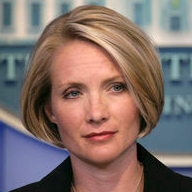
EXCLUSIVE: Secretive defense contractor hires Dana Perino in DC lobbying push
A secretive defense contractor that is at the center of a congressional investigation of a $1.4 billion contract to supply aviation fuel at the U.S. air base in Kyrgyzstan has hired a powerhouse D.C. lobbying team that includes Dana Perino and others from the Bush White House.
Congress wants to know whether the sole-source, classified contracts awarded to Mina Corp., Ltd., and Red Star Enterprises Ltd., were a vehicle for the U.S. government to deliver payoffs to the family of Kyrgyzstan leaders who were ousted amid charges of corruption linked to the Manas air base.
Mina Corp.’s fuel contract, awarded last year, is worth up to $730.9 million over three years for services at the Manas, the only U.S. airbase in Central Asia outside of Afghanistan.
Kyrgyzstan has also opened its own investigation, prompting the U.S. Embassy in Bishkek to say that the contract was issued in accordance with U.S. and local laws. Mina Corp has told both governments that it has never directed U.S. government funds to Kyrgyz officials.
As Congress turned up the heat on Mina and Red Star in July, the companies sent Washington lobbyists to the Hill to plead their case.
Senate lobbying disclosure forms show that on July 12 Mina Corp. hired public affairs firm Hamilton Place Strategies LLC to lobby Congress and the Defense Department.
Senate filings show the Hamilton Place team includes Perino, now a Fox News political commentator, W. Taylor Griffin, a spokesman for the McCain/Palin campaign who handled the “Troopergate” affair, and Tony Fratto, who spoke for the president on issues including intelligence matters, terrorist financing and financial crimes.
Also joining the Mina Corp. team this month were McLean, Virginia-based Dudinsky, Lisker & Associates, which says it is “monitoring and reporting Congressional activity” on behalf of Mina.” Principal Joel Lisker is a former FBI agent who headed the Justice Department’s foreign agent registration unit in the Carter years. His investigation led the president’s brother, Billy, to register as a foreign agent for Libya.
Barbour, Griffith & Rogers’ Ed Rogers, a Reagan and Bush I White House veteran, and Morris Reid, registered July 20 as lobbyists for Mina to handle a House investigation regarding Department of Defense contracts to provide jet fuel to U.S. military base in Bagham, Afghanistan.
Jeff Stein at The Washington Post’s SpyTalk blog reported last wek that after weeks of tense negotiations, a House oversight subcommittee has gotten promises of cooperation from Mina and Red Star.
“The heart of the investigation,” a source told Stein, “is why Red Star and Mina Corp. were not investigated under” the Foreign Corrupt Practices Act, which forbids U.S. companies from paying bribes or kickbacks to foreign officials.”
Mina Corp. has also hired the D.C. law firm, Weil, Gotschal and Manges LLP. The Weil team includes partner William Burck, who served in the Bush White House Counsel’s office. Burck specializes in FCPA investigations among other things, according to his law firm biography.
In a press release announcing last week’s agreement between Mina, Red Star and the National Security and Foreign Affairs Subcommittee of the House Committee on Oversight and Government Reform, Burck said maintaining his client’s secrecy was a key to the deal.
“We’ve worked closely with staff to make sure the Subcommittee obtains the information it seeks while preserving the confidentiality of the companies’ operations and the privacy of its personnel. Confidentiality is essential to permit the companies to meet the U.S. military’s needs in volatile areas of the world and supply vital fuel to our troops in the field.”
Burck and Perino have a close working relationship. They have penned regular columns critical of the Obama administration for National Review Online.
The Senate lobbying forms also raise fresh questions about who or what is behind Mina and Red Star.
The Defense Department has identified to Mina and Red Star Enterprises as companies based in Gibraltar. Mina Corp. was registered in London in 2003, records show.
The Senate lobbying disclosures identify Mina as a Dubai firm affiliated with “Mina Petroleum FZE” with an office in the Dubai Airport Free Zone. Companies operating within the free zone are treated as offshore, outside the United Arab Emirates.
Adding to the confusion, Mina’s webserver, minacorp.com, is registered in Vernier, Switzerland.
Steinbrenner the Felon
Who dropped the dime on Yankees owner George M. Steinbrenner for making illegal campaign contributions to the Nixon campaign?
According to Steinbrenner it was Nixon. Steinbrenner told baseball writer Roger Kahn for his book October Men that he wasn’t really a Republican at all and had been shaken down by the president’s men.
Steinbrenner was buddies with House Speaker Tip O’Neill and Ted Kennedy. He had raised about $2 million for Democrats running for Congress in the Cleveland area. That didn’t sit well with Nixon aides Bob Haldeman and John Erlichmann. “The Nixon people were very annoyed at my Democratic fund-raising,” Steinbrenner told Kahn.
As the 1972 presidential election approached, Nixon’s henchmen demanded dirt on Kennedy and other Democrats from Steinbrenner. “Rough stuff,” Steinbrenner told Kahn, “not only stories about the politicians but about their wives. Drinking. Sex. Very damn distasteful, if you ask me.”
Nixon’s men threatened an antitrust investigation of American Shipbuilding, Steinbrenner’s company, and punitive IRS audits. Steinbrenner decided to buy his way out with campaign contributions to CREEP, Nixon’s reelection campaign. But when he refused to squeal on his Democratic buddies, the Nixon campaign responded with a 14-count indictment in April 1974.
That’s Steinbrenner’s self-serving version anyway. As a prosecutor’s memo makes clear, Steinbrenner had no trouble squealing on Nixon’s people, Teamsters, Merrill Lynch or anyone else who might get him out of trouble.
When George Steinbrenner ratted out Merrill Lynch, Teamsters
The obituaries for Yankees owner George Steinbrenner, who died this week at age 80, all refer to his 1974 conviction for illegal campaign contributions to the Nixon campaign and the pardon Steinbrenner received from Ronald Reagan.
Steinbrenner’s defense attorney was the legendary trial lawyer Edward Bennett Williams. Steinbrenner wasn’t impressed. “I paid him $100,000” Steinbrenner once reportedly said, “and all he did was a cop a plea.”
That’s true, but Williams did the best he could for a client who had dug a mighty deep hole for himself. The issue wasn’t the illegal contributions, per se. The problem was Steinbrenner, the chief executive of American Shipbuilding, had funneled the contributions through his employees (disguised as “bonuses”) and then instructed them to lie to a grand jury. That’s suborning perjury and people go to jail for it.
According to The Man to See, Evan Thomas’ splendid 1991 biography of Williams, the attorney told prosecutors that Steinbrenner could implicate others in exchange for leniency.
“Steinbrenner could provide us with more than a dozen companies which had been involved in 610 [illegal corporate contribution] violations. … Williams indicated that Merrill Lynch had substantial difficulties in the campaign finance area. … Williams indicted that Steinbrenner had heard that the Teamsters had given more than a million dollars, that the million dollars had been kept at the Hotel Pierre, and that someone from the Teamsters had stolen it back again,” prosecutor John Koetl wrote following a meeting with Williams on October 18, 1973.
Ultimately, on the obstruction of justice charge, the government allowed Steinbrenner to plead guilty to being an accessory after the fact, a misdemeanor and the sentencing judge let him off with a fine. The commissioner of baseball wasn’t so merciful; he suspended Steinbrenner for two years.
Update: The Smoking Gun beat me to the punch on this one. Here’s a copy of the memo
CalPERS: A Legal Ponzi Scheme
California’s lame-duck Gov. Arnold Schwarzenegger likes to remind us, as he did last week, that California is facing an “unsustainable path that has taxpayers on the hook for $500 billion.”
Exhibit A is SB 400 of 1999, which increased benefits for California state government employees between 20% and 50% — without the money to pay for them.
This is in essence a legal version of a Ponzi scheme where new investors pay old ones until the whole thing collapses.
Schwarzenegger aide David Crane has called SB 400 “the largest non-voter approved debt issuance in California history.”
The bill was signed during the dot-com boom and the legislature relied on vague promises that the investment wizards at California’s giant pension system would generate the money out of thin air.
Needless to say, that hasn’t exactly worked out.
On June 16th, Schwarzenegger struck a deal with four unions representing 23,000 of the state’s 170,00 unionized workers to roll back the benefits that were given away in SB 400. If similar agreements are reached with the state’s eight other employee unions, state savings in FY 2010-11 would total $2.2 billion, $1.2 billion General Fund.
Even with the cuts, Calpensions’ Ed Mendel notes, pension benefits for CHP officers are still more generous than the days before SB 400.
Democrats led by Gov. Gray Davis signed SB 400 as a thank-you to the unions that helped end 16 years of Republican rule in California the previous November.
Even though the legislature is controlled by Democrats. It needs to be said that the bill was supported by both parties. It passed unanimously in the Senate. Only seven members of the 80-member California Assembly voted against it.
The most notorious passage in the bill provided highway patrolmen with 3 percent of final pay for each year served at age 50, a significant improvement of the pre-SB 400 formula of “two at 50″ — 2 percent of final pay for each year served at age 50.
This is much, much more than 1 percent increase.
Before SB 400, a highway patrolman had to work 45 years before he could retire with 90 percent of pay. The bill shaved 15 years off that time, allowing them to retire with 90 percent of pay after 30 years on the job.
In 2008-2009, a full third of the payroll for all highway patrolman now goes into their retirement accounts.
CalPERS believed they could cover the additional costs through “continued excess returns” and said it expected that contributions from the state would hold steady at $350 million.
Instead, the compound annual growth rate of CalPERS investments grew a pathetic 1.6 percent from 1999 to the end of 2009. On June 16th, the same Schwarzenegger announced his deal with the unions, CalPERS announced that it was raising the state’s contribution to $3.9 billion.
CalPERS unfunded liability, the percentage of benefits promised that can be covered by the fund’s assets, has risen from $158 billion in 1999 to $238 billion last year.
With its myriad accounting trips, CalPERS can “smooth” (hide) losses for generations. Some day the bill will come due.
It’s looking increasingly doubtful that there will be anybody left to pay it.
Brent Wilkes, Master of Delay
 The appeal of Brent Wilkes, who was convicted in 2007 of bribing former Rep. Randy “Duke” Cunningham, has been delayed again.
The former defense contractor remains free on $2 million bail.
The 9th U.S. Circuit Court of Appeals said earlier this month that it won’t hear the appeal until the U.S. Supreme Court issues its rulings in the appeals of former Enron CEO Jeff Skilling and former Rep. Bruce Weyrauch.
Those cases involve the crime of depriving the public of the right to “honest services,” the same law federal prosecutors in San Diego used against Wilkes.
Wilkes’s briefing papers now are due before the 9th Circuit about a month after the Supreme Court issues its rulings in Skilling and Weyrauch. The earlier deadline was today.
With more arguing back and forth and the average wait of a year for a ruling from the court, it will be a long time before Wilkes sees the inside of prison again.
It’s a pretty sweet deal for Wilkes, who is being represented by the federal public defender’s office in San Diego.
Cunningham is due to be released in 2013, according to the U.S. Bureau of Prisons website.
Amazingly, it’s looking increasingly likely that Duke may finish serving his sentence before Wilkes starts serving his.
 Trump / Russia