Saudi Takedown Notice

I have received a letter from a law firm requesting that I takedown an affidavit filed in New York State Supreme Court that listed $1 billion worth of properties secretly owned by HRH Prince Abdul-Aziz bin Fahd, the youngest and favorite son of King Fahd, and his relative, Sheik Khalid N Al Assaf.

I downloaded the document while it was publicly available on the court’s website and posted it here after I read an article about it in Britain’s Independent newspaper. The affidavit has since been sealed and removed from the court’s website.

Attorney Howard Kaplan of Arkin Kaplan Rice LLP says the affidavit “contains or purports to contain obviously proprietary and sensitive business information. It is extremely detrimental to our clients’ interests to have this confidential information still available on and downloadable from your blog side. Moreover, the Hill affidavit itself is not only one-sided but, in many instances, demonstrably false.”

I am considering Kaplan’s request and would like to hear from any readers as to whether they believe there is any value in having this information remain publicly available.

Full disclosure: Kaplan’s partner, Stanley Arkin, and I met socially, but we have not communicated in years.


Saudi Takedown Letter

San Diego Island to Become ‘Battle Lab’

Via Defense News:

The HALO Corp., San Diego-based  organization founded by former Special Operations, National Security, and Intelligence personnel, which is hosting its sixth annual Counter-Terrorism Summit at the end of October at the Paradise Point Resort & Spa in San Diego.

Strategic Operations of San Diego, will help conduct tactical training exercises on the island. This should include a recreated Middle Eastern village, battlefield effects, combat wounds and medical simulations. Participants can also expect a simulated Somali pirate invasion to grace the resort’s shores. Unmanned aerial vehicles are likely to be floating overhead as well.

Keynote speakers include former NSA and CIA Director Michael Hayden; Alejandro Romero, Mexico’s interior secretary and Michael Downing, the director of LAPD’s counter-terrorism and special ops bureau. Cool classes will be offered like Social Engineering: The Art of Human Hacking by Chris Hadnagy. (Highly recommend his book).

I’d love to go, but it’s $1000 a person.

Peak Oil

UCSD economics professor James Hamilton has an interesting post up on his Econbrowser blog about peak oil — the point at which world oil supplies go into irreversible decline.

Geologist M. King Hubbert predicted in the 1950s that oil supplies would peak and then follow a linear decline. Declining supplies could spark unrest across the globe, so the notion that peak oil has arrived and global supplies are being deliberately over reported tends to attract crackpots, conspiracy theorists, gold bugs, and survivalists. As a result, peak oil has been kind of ignored by many economists.

Hamilton cites an IMF working paper that proposes a more accurate model for future oil production that predicts a non-linear decline; after all, higher oil prices stimulate further production from increasingly difficult to reach places like the sea floor or difficult to extract sources like oil shale.

However, there is a cost for these increases, the IMF study finds: “small further increases in world oil production comes at the expense of a near doubling, permanently, of real oil prices over the coming decade.” (emphasis added).

Hamilton concludes:

We like to think that the reason we enjoy our high standards of living is because we have been so clever at figuring out how to use the world’s available resources. But we should not dismiss the possibility that there may also have been a nontrivial contribution of simply having been quite lucky to have found an incredibly valuable raw material that for a century and a half or so was relatively easy to obtain. Optimists may expect the next century and a half to look like the last. Benes and coauthors are suggesting that instead we should perhaps expect the next decade to look like the last.

Signs of Hubbert’s Peak?

U.S. Energy Information Administration forecasts of oil production have been revised downward for more than a decade

Mexican SIGINT

Mexico has been having a lot of success capturing the leaders of drug cartels.

U.S. agents cannot operate in Mexico. Nevertheless, many successful captures of important cartel figures are often backed by gringo assistance,  according a secret State Department cable released by Wikileaks,

What sort of assistance? This interesting study “Sever: SIGINT and Criminal Netwar Networks”  (.pdf) details the critical but unheralded role played by signals intelligence (SIGINT), commonly known as wiretapping and eavesdropping, in targeting Mexico’s drug cartels.

Buried  the $1.4 billion Merida anti-drug initiative is a little-known,  $3-million SIGINT system that is paid for by the U.S. taxpayer.

The Communications Intercept System in Mexico’s Federal government was installed by Verint Systems Inc., a politically well-connected firm based in Melville, N.Y. and paid for by the U.S. State Department. 

The system “can monitor almost any form of electronic communication in Mexico.”

The Communications Intercept System’s central monitoring station has real time and off- line playback, fax and packet data decoding, stores all calls for at least 25,000 hours, and has cellular location and tracking. The database in the monitoring station can accommodate 8,000,000 sessions, and monitor and record 60 calls simultaneously. Four facsimiles can also be decoded simultaneously. The monitoring station is a joint Mexico-U.S. network.

Specific tools of analysis are also included in the system. Voice data banks are used for analysis, comparison, recognition and identification. The system has the ability to analyze calls and automatically generate links between them. Additionally, the system has the tools necessary to track cellular targets on a map.

Surveillance by the Drug Enforcement Administration led to the capture in 2010 of Teodoro “El Teo” Garcia Simental, a lieutenant in the Tijuana cartel, in La Paz. El Teo was responsible for hundreds of killings and kidnappings over a two year reign of terror.

Before his death in 2009, cartel leader Arturo Beltran Leyva was overheard talking to  prostitutes on his cell phone before a raid. The capture of members of his network had also created the paranoia which led to his split from the Sinaloa Cartel, and its boss Joaquin “El Chapo” Guzman Loera.

Another sign that SIGINT has been effective was found in a raid last year of a compound used by the Zetas, one of the better organized drug operations, where officials found encryption equipment and mobile radio transmitters the cartel was using to communicate and coordinate its operations.

Docs Reveal Secret $1B Saudi Property Empire

This story in Britain’s Independent newspaper caught my eye:

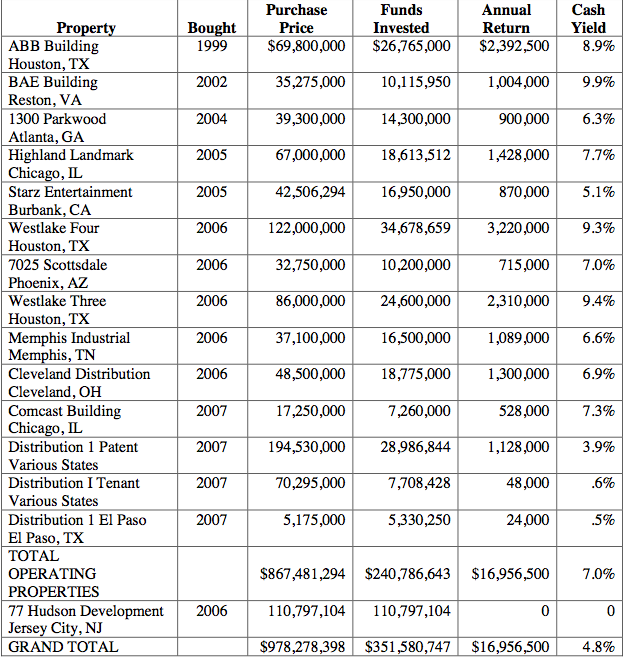
A secret $1bn US property empire amassed by members of the Saudi royal family is the subject of a bitter legal dispute that threatens to reveal the extent of the family’s American business interests.

These properties are owned by HRH Prince Abdul-Aziz bin Fahd, the youngest and favorite son of King Fahd and his relative, Sheik Khalid N Al Assaf. The prince, a minister of state without portfolio, is known for his extravagance and international playboy image. The prince reportedly owns $2 billion USD worth of palaces and the world?s largest collection of super yachts. He also once had a romantic relationship with model/actress Yasmine Bleeth of Baywatch.

I tracked down the court document.

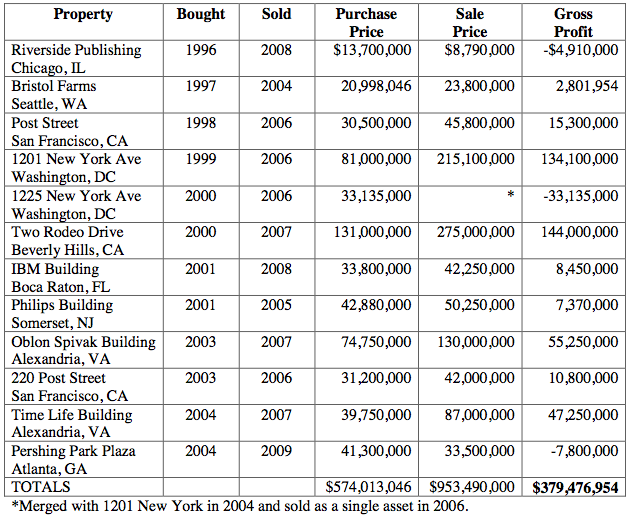
Turns out the Prince has owned several buildings in California including the Starz Entertainment building in Burbank; Two Rodeo Drive in Beverly Hills; and 220 Post Street in San Francisco.

Here’s a list of the property holdings:


Other properties formerly owned by the Prince and the Sheikh are:

The properties are managed by

  • Dr. Abdulrahman Otaishan, a senior financial advisor to the Prince
  • Dr. Andreas Limburg
  • Pierre Rolin and his company Strategic Real Estate Advisors Limited, which was placed into administration in 2010 after losing a single client.

Secret $1B Saudi Property Empire