
Tagged: Russia
Senate’s Russia Inquiry Examined Trump’s Ties to Epstein
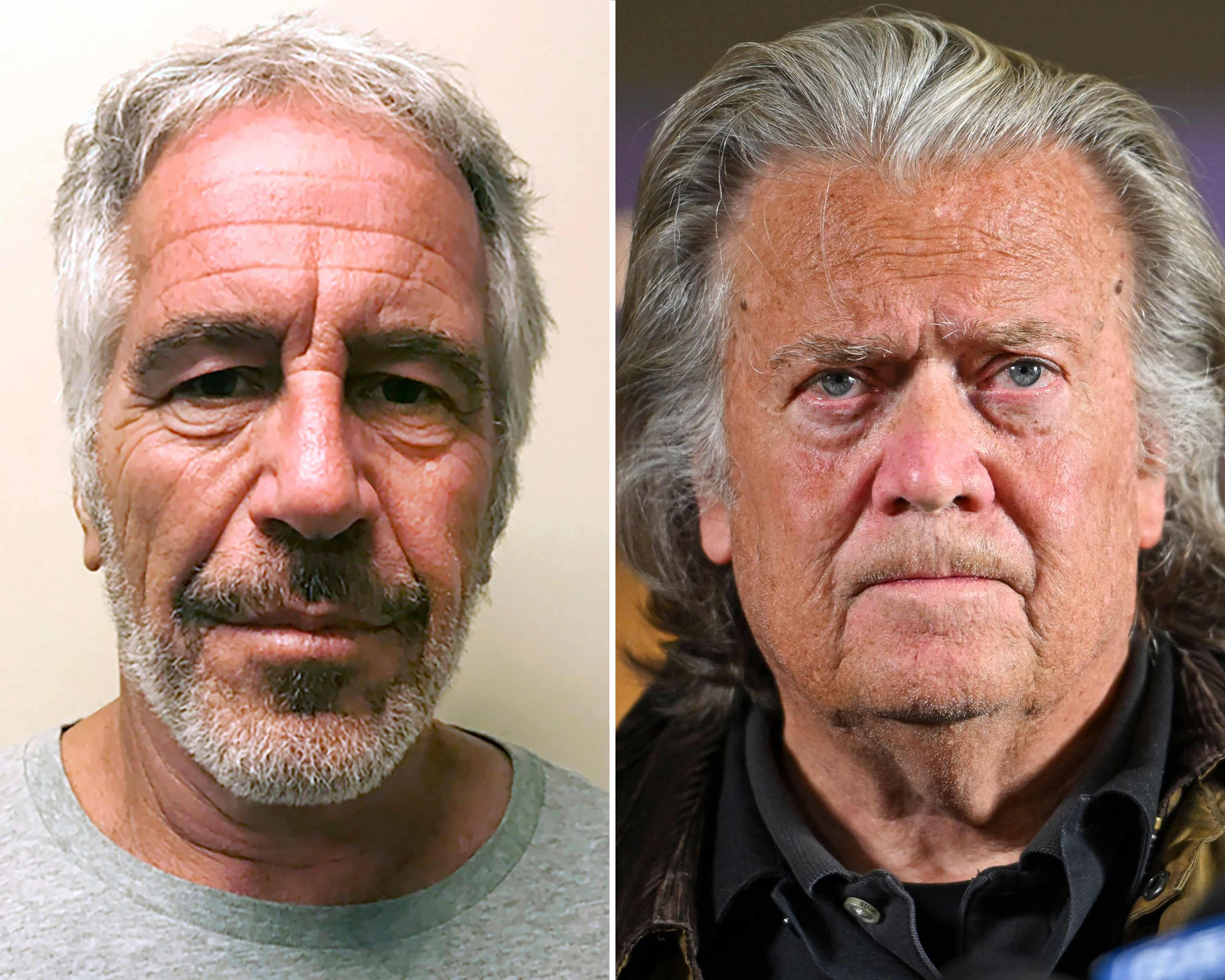
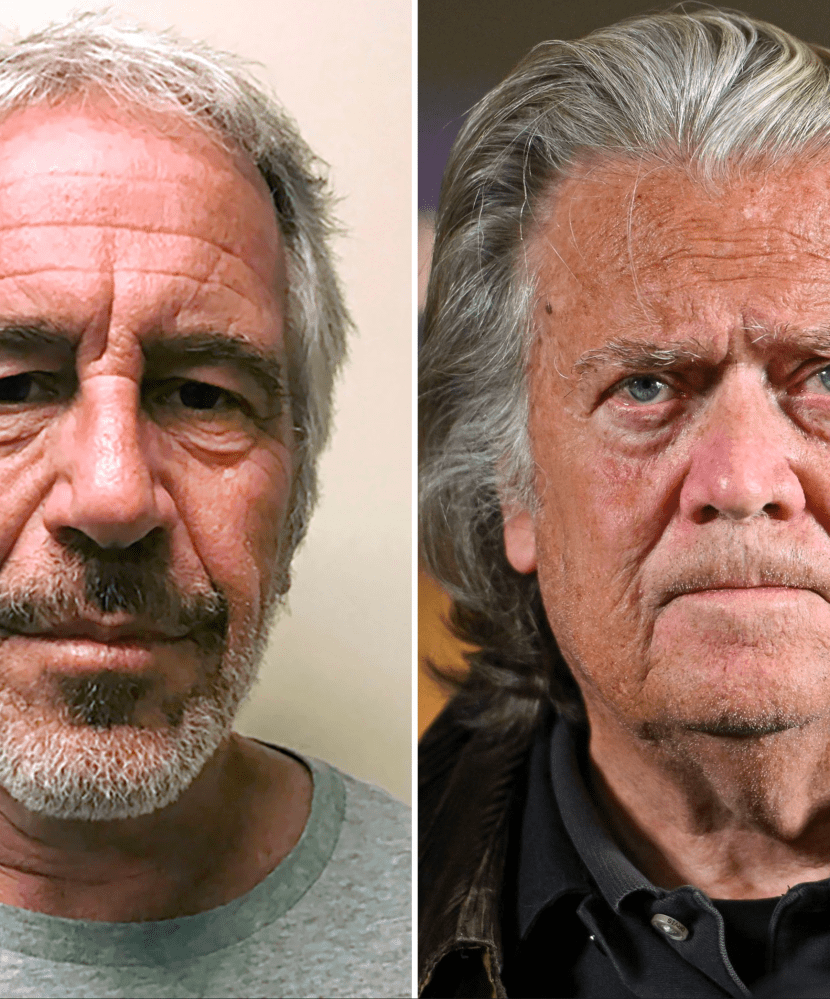
The House Oversight Committee released the following text exchange as part of its investigation into Jeffrey Epstein. It captures a conversation between Steve Bannon and Epstein after Bannon’s appearance before the Senate Intelligence Committee during its probe into Russian interference in the 2016 election. The messages span two days, November 19 and November 21.
For background, read my post on Jeffrey Epstein, Leon Black, and Russia.
November 19, 2018
EPSTEIN:
How was it
BANNON:
Dude: 8 and 1/2 hours
BANNON:
15 minutes on u
EPSTEIN:
Members or staff
EPSTEIN:
Was burke allowed in? Does he have clearance
Note: Epstein is referring to Bannon’s attorney William Burck.
BANNON:
Staff ::: took alex spiro— his NYC partner, stone cold killer
EPSTEIN:
Why me? Did they want bagels and coffee
EPSTEIN:
Or did they get your text s
BANNON:
Neither ::: went thru list of 50 names– Leon Black
BANNON:
Then u–grilled me when I said I knew u about relationship with djt
EPSTEIN:
Did they ask you if i had a silver bullet
EPSTEIN:
Toughest we’re republicans?
EPSTEIN:
Were
BANNON:
No democrats– spiro also big dem
EPSTEIN:
Oy
EPSTEIN:
So it begins
BANNON:
Somehow your name has come up in this thing; Leon’s about “Russia”
EPSTEIN:
Message: This thing being Russia or djt or .. play
EPSTEIN:
Is the somehow, my friendship with lucifer
EPSTEIN:
🙂
BANNON:
Leon about Russia; u about trump but they ask every witness these 50 names— 25+ Russian
November 21, 2018
EPSTEIN:
Do you recall any specific questions re me, and your interview?
EPSTEIN:
at
BANNON:
Yes ::: “what is his relationship with potus”; “does he talk about trump”;
“when was last time he saw trump”… etc etc etc
EPSTEIN:
Some reporters asking the same question ? Can figure out why?
EPSTEIN:
Can’t
BANNON:
Interview ends with 50 names — everybody gets the request — 25 Russian names; 25 American — u and Leon are #3 / #4 on american list
EPSTEIN:
Understood
EPSTEIN:
funny
BANNON:
“has Leon Black ever mentioned Russia”; “Do you know of any connections
Leon Black has with Russia” etc etc
EPSTEIN:
Other Americans? David geovanis? Ken lebow? Any other names you recall
EPSTEIN:
Nick ribs? Tom barrack?
BANNON:
Benton Lebow
BANNON:
Barrack
BANNON:
Geovanias
BANNON:
Ton other I didn’t know– and only Russian was Alexander Dugin
EPSTEIN:
Ha
Empty Russian Promises

Large crowds gathered in Moscow Friday as Russian opposition leader Alexei Navaly was laid to rest.
Navalny’s aides claimed that he was on the verge of being freed in a prisoner exchange with the West when he died Feb. 16 in an Arctic penal colony. Early-stage discussions had begun to swap Navalny, Wall Street Journal reporter Evan Gershkovich, and ex-Marine Paul Whelan for Vadim Krasikov, who was convicted of killing a former Chechen separatist fighter in Berlin in 2019, according to The New York Times.
Meanwhile, President Biden still hasn’t delivered on his promise of “devastating” consequences if Navalny died.
To mark the second anniversary of Russia’s invasion of Ukraine and punish Russia for Navalny’s death, the Biden administration unveiled a sweeping package of sanctions on more than 500 people and companies, including some officials linked to the prison where Navalny died. But behind the scenes, administration officials were quietly downplaying the potential impact of the new measures, the Wall Street Journal reported.
The most effective punishment would be direct U.S. military aid to Ukraine, but a measure approving $60 billion in funding remains hopelessly tied up in the House of Represtatives.
That’s not to say the White House doesn’t have options.
Another devastating blow would be using some or all of the $300 billion in Russian assets frozen by the United States after the invasion to help Ukraine. On Tuesday, White House spokesman John Kirby said the administration was “exploring the option,” but cautioned that U.S. allies need to be on board. Public bickering at this week’s G20 meeting showed they aren’t behind it.
The administration has also held off on another powerful measure—a full embargo on the sale of Russian oil. The administration instead imposed an oil price cap that is increasingly unenforceable and allows billions of dollars to fund Moscow’s war machine. A full embargo on Russian oil would almost certainly unleash economic turbulence that the White House would rather avoid in an election year.
Finally, the United States could add Russia to the official list of state sponsors of terrorism along with Cuba, Iran, North Korea and Syria. Such a declaration would open the U.S. courts to lawsuits by victims of Russian aggression and allow them to claim damages from frozen Russian assets. There’s no doubt some reason why White House hasn’t pulled the trigger, but we don’t know what it is. Kirby has ducked questions on this subject in recent days.
To be sure, all of these options carry risk. But slapping Putin’s wrist with more ineffective sanctions only emboldens him.
The White House could use a good dose of Navalny’s courage.
Another Russian gangster who did business with Trump
It will never cease to amaze me that America elected a president with so many links to Russian organized crime.
There was Vyacheslav Ivankov whose FBI file contained numerous references to Donald Trump that the bureau refused to release to me. There was David Bogatin who spent $6 million to buy five separate units in Trump Tower. There was Anatoly Golubchik and Vadim Trincher, who went to prison for running an illegal sports betting ring in Trump Tower that catered primarily to Russian oligarchs.
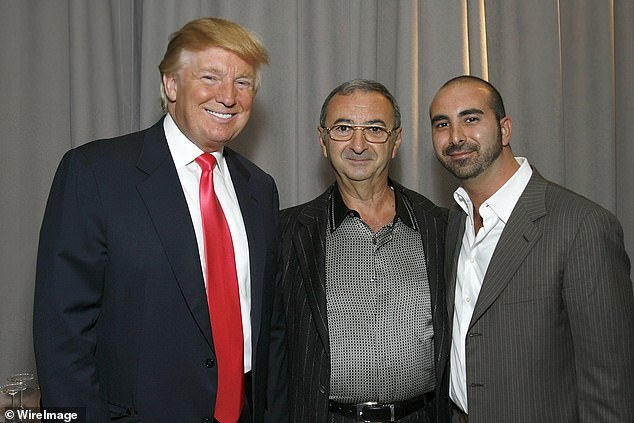
Add another name to the list: The FBI’s file on Tamir Sapir, a Georgian developer who financed the construction of Trump Soho in Manhattan in 2008, shows he was under investigation for links to Russian organized crime.
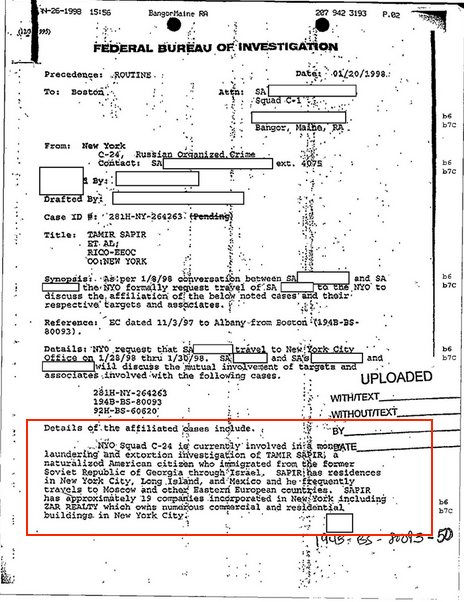
A memo in the FBI file states that C-24, the FBI’s Russian Organized Crime squad in New York, was investigating Sapir for money laundering and extortion:
“NYO squad C-24 is currently involved in a money laundering and extortion investigation of TAMIR SAPIR, a naturalized Armenian citizen who immigrated from the former Soviet Republic of Georgia through Israel. SAPIR has residences in New York City, Long Island, and Mexico and he frequently travels to Moscow and other Eastern European countries.”
“SAPIR has approximately 12 companies incorporated in New York including ZAR REALTY which owns commercial and residential buildings in New York City. [Note: One of those residences was a condo on the 58th floor of Trump Tower.]”
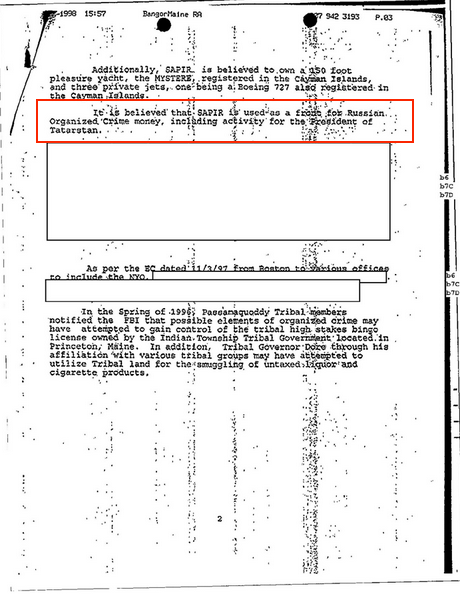
“Additionally, SAPIR is believed to own a 150-foot pleasure yacht, the MYSTERE, registered in the Cayman Islands and three private jets, one being a Boeing 727 also registered in the Cayman Islands.”
“It is believed that SAPIR is a front for Russian organized crime money including activity for the President of Tartarstan.
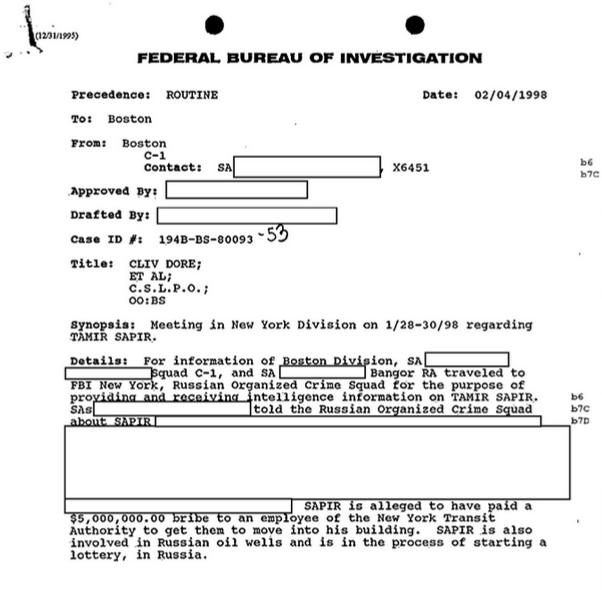
Another FBI notes that Sapir allegedly paid a $5 million bribe to an employee of the New York Transit Authority to get employees to move into a building he owned.
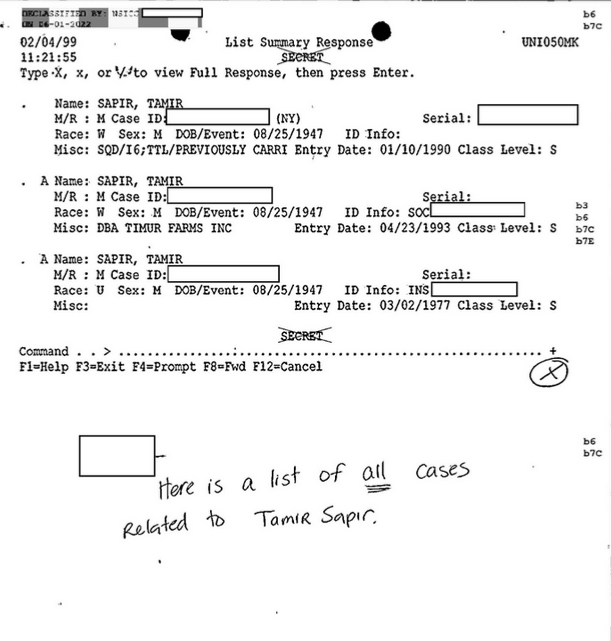
The file lists numerous FBI investigations involving Sapir, some dating back to 1977.
Another FBI investigation involved Joy-Lud, a Manhattan electronics store that Sapir ran with Sam Kislin, a Ukrainian immigrant who was a major donor to Rudy Giuliani’s mayoral campaigns.
Joy-Lud catered to a Soviet clientele—with one notable exception. Donald Trump purchased 200 televisions on credit from Sapir and Kislin’s electronics store in the 1970s for his newly acquired Commodore Hotel.
I’ve asked the FBI to process these other files and will post them here when I receive them.
Benchslapped: The Eric Dubelier File

You might not realize it but a Russian company accused of financing an attack on American democracy is trying to use the U.S. court system to make a mockery of Special Counsel Robert Mueller’s investigation.
The company is Concord Management and Consulting LLC. The Russian company, owned by one of Putin’s cronies, stands accused of bankrolling the operations of the St. Petersburg-based Internet troll farm that bombarded Americans with divisive content on social media during the 2016 election.
Not only has Concord Management pleaded not guilty to what it calls “a make-believe crime” — conspiracy to defraud the United States — it has battled to gain access to Mueller’s sensitive investigative files.
No doubt it would be interesting to Concord and its Russian masters how Mueller was able to obtain such detailed and devastating information.
I was wondering what sort of attorney would represent a company like Concord Management.
The answer, it turns out, is a bad one.
His name is Eric A. Dubelier and he has somehow managed to reach the rank of partner at the firm Reed Smith LLP despite repeatedly embarrassing himself and his firm in court.
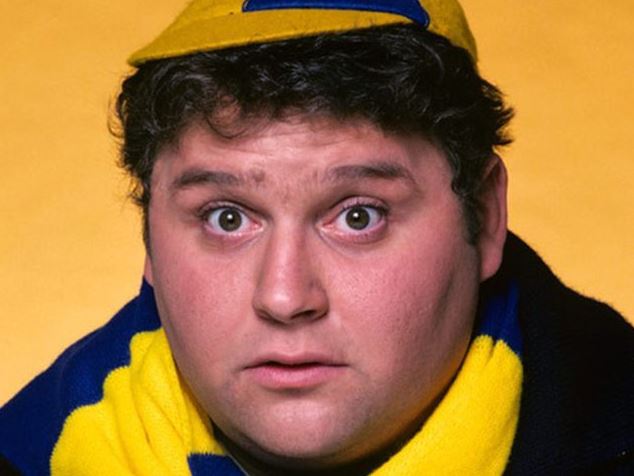
His legal filings in the case quoted Flounder (!) from the film Animal House. In open court, he pointed his finger at Jeannie Rhee, one of Mueller’s prosecutors, and said her claim that he had hung up on her in a phone call was “bullshit.”
Judge Dabney Friedrich called Dubelier’s actions “unprofessional, inappropriate, and ineffective.”
This is what is known in the legal profession as a “benchslap.”
Sure, it stings. Most attorneys just take it.
Not Dubelier. His response was a legal filing one observer described as “breathtakingly petulant:”
Perhaps more importantly however, the Court did not consider the fact that while the mainstream media has largely ignored Defendant’s pending motions, when the word “Judge” appears before a person’s name, this political adornment suggests to the public that there now is some higher level of wisdom than among the mere mortal lawyers in the case, and as such, every single mainstream media organization repeated the Court’s words as gospel.
How dare the media quote the judge!
But there’s more.
The direct consequence was swift and clear; that is, undersigned counsel have received overnight and continuing today a flow of hatred in the form of voicemail and electronic mail from self-proclaimed patriots containing threats, intimidation, and the desire that both undersigned counsel promptly die. One communication specified that the cause of death for [co-counsel Katherine] Seikaly should be by fire. Apparently some of these brave self-proclaimed patriots were whipped into their frenzy by a cable television entertainer unknown to undersigned counsel named Rachel Maddow who devoted a significant portion of her variety program to the words spoken by the Court yesterday. So while counsel’s words used in advocacy can hurt, the words of a Judge can have devastating consequences.
Dubelier’s humiliation is palpable. Which is surprising. It’s not the first time he’s been benchslapped.
Justice Ruth Bader Ginsburg also benchslapped Dubelier in her 2011 dissent in the case of Connick v. Thompson.
This case involved an infamous episode of prosecutorial misconduct in the death penalty case of John Thompson. (Thompson spent 14 years on Louisiana Death Row until an investigation found blood evidence that would have exonerated him was withheld from the defense. Dubelier was the special prosecutor on the case.)
Here’s RBG’s benchslap of Dubelier:
On what basis can one be confident that law schools acquaint students with prosecutors’ unique obligation under Brady? Whittaker told the jury he did not recall covering Brady in his criminal procedure class in law school. Dubelier’s alma mater, like most other law faculties, does not make criminal procedure a required course.
Translation: Just because Eric Dubelier has a law degree doesn’t mean he knows the law.
The Brady rule RBG is talking about is the 1963 Supreme Court case of Brady v Maryland. Ever since that ruling, prosecutors have had to share with defense attorneys any evidence that might help exonerate a defendant.
Dubelier, questioned under oath, could not articulate the Brady rule, according to a Slate article on the Thompson case.
Dubelier’s alma mater, Tulane University, bears some of the blame here. Dubelier spent the better part of a decade at Tulane, leaving a bachelor’s degree (with honors), an MBA, and finally, in 1984, a law degree.
A year out of law school, Dubelier, working for the New Orleans district attorney’s office, embarrassed himself before Judge Oser in a high-profile point-shaving case against a former Tulane basketball star, John “Hot Rod” Williams.
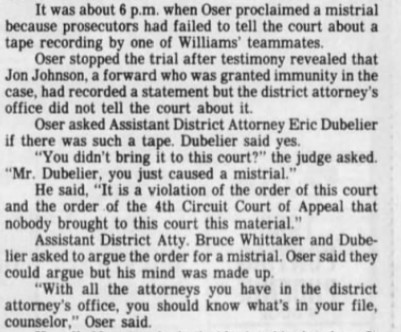
That’s another violation of the same Brady obligations Justice RBG referenced earlier.
Judge Oser reversed himself and, later, dismissed the case again saying Dubelier had deliberately concealed Brady material from the defense. Williams was acquitted in a retrial.
Despite his disastrous performance in the Hot Rod Williams case, Dubelier remained a close assistant to New Orleans District Attorney Harry Connick Sr. (the father of singer Harry Connick Jr.). It didn’t hurt that Dubelier was briefly married to Connick’s niece.
After New Orleans, Dubelier spent more than a decade as a prosecutor the U.S. Attorney’s office, first in Miami and later in Washington, D.C. In his defense, he seems to have performed his duties without any more national embarrassments. One of the individuals he prosecuted was Francisco Martin Duran on charges of trying to assassinate President Clinton.
He left what now refers to as “the real Justice Department” in 1998 to join Reed Smith. One of his clients at Reed Smith was the widow of Andrew Breitbart, the founder of Breitbart News, which is interesting given his current representation of the (alleged) financier of the Russian troll farm.
As for the Concord case, the troll farm lawyer got his revenge on the press when he trolled reporters with another filing that made a cryptic reference to a nude selfie in Mueller’s possession.
Some Useful Trump/Russia Definitions
The Trump/Russia scandal has filled our heads with a lot of intelligence jargon. Unwitting asset. Agent. Active measures. But what do these words actually mean?
Someone pointed me to the CIA’s own Glossary of Intelligence Terms, created in 1989. Granted it’s a bit outdated, but it’s also quite helpful. (I am indebted to The Black Vault, an online repository of declassified documents for the glossary.)
Here’s how the CIA defines active measures:
Active measures: A literal translation of a Russian phrase that is used to describe overt and covert techniques and intelligence operations designed to advance Soviet foreign policy objectives and to influence events in foreign countries by altering people’s perceptions. Active measures should not be confused with legitimate diplomatic activities.
We often hear Trump described as a possible asset, unwitting or otherwise, of Russia. But according to the CIA’s glossary this isn’t the right use of the word.
Agent (1) A person who engages in clandestine intelligence activity under the direction of an intelligence organization but who is not an officer, employee, or co-opted worker of that organization. (2) An individual who acts under the direction of an intelligence agency or security service to obtain, or assist in obtaining, information for intelligence or counterintelligence purposes. (3) One who is authorized or instructed to obtain or to assist in obtaining information for intelligence or counterintelligence purposes.
A better word is asset.
Asset: (1) Any resource — a person, group, relationship, instrument installation, supply — at the disposition of an intelligence agency for use in an operational or support role. (2) A person who contributes to a clandestine mission but is not a fully controlled agent. (Also see intelligence asset, national intelligence asset, and tactical intelligence asset.)
We recently learned that the FBI had opened a counterintelligence investigation into Trump after his firing of James Comey. Here’s how the CIA defines it.
Counterintelligence: Information gathered and activities conducted to protect against espionage, other intelligence activities, sabotage, or assassinations conducted for or on behalf of foreign powers, organizations, persons, or terrorist activities, but not including personnel, physical, document, or communications security programs. (Also see foreign counterintelligence, security countermeasures, and technical surveillance countermeasures.)
It’s interesting to view propaganda from an intelligence perspective.
Propaganda: Any form of communication in support of national objectives designed to influence the opinions, emotions, attitudes, or behavior of any group in order to benefit the sponsor, either directly or indirectly.
The dossier compiled by former MI6 agent Christopher Steele is often described as raw intelligence.
Raw intelligence: A colloquial term meaning collected intelligence information that has not yet been converted into finished intelligence. (Also see intelligence information.)
That takes us to another definition.
Finished intelligence: (1) The product resulting from the collection, processing, integration, analysis, evaluation, and interpretation of available information concerning foreign countries or areas. (2) The final result of the production step of the intelligence cycle; the intelligence product. (Also see intelligence cycle and end product.)
Let me know if this is helpful or there are any other terms you’d like to see explained.
 Trump / Russia