
Category: Semion Mogilevich
From Trump Tower to Arson
The long, strange fall of Jacob Bogatin, a onetime partner of the “Brainy Don” Semion Mogilevich, now accused of murder in Virginia.
Once upon a time, Semion Mogilevich was one of the biggest gangsters in the world. The “Brainy Don” had his fingers in virtually every criminal activity imaginable, including murder, extortion, sex trafficking, weapons trafficking, money laundering, and even a stock fraud occurring right under the FBI’s nose.
In 2003, federal prosecutors unsealed an indictment charging Mogilevich in a $150 million stock fraud scheme involving YBM Magnex, a purported manufacturer of bicycles and magnets based outside Philadelphia. Also indicted was the company’s CEO, Jacob Bogatin.
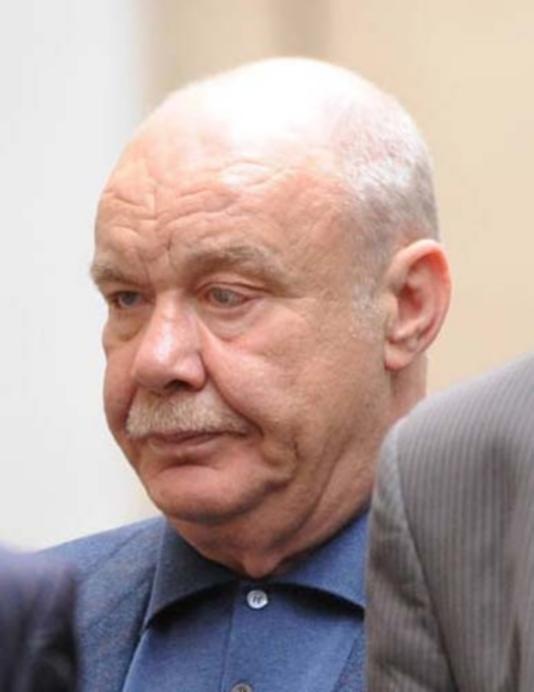
The case drew attention from those of us investigating Donald Trump’s Russia ties because Jacob’s brother, David Bogatin, had bought five apartments in the newly opened Trump Tower in 1984 for $5.8 million. The money came from a gasoline-tax scam he was running in Brooklyn with the Colombo crime family. According to one of Bogatin’s partners in that scheme, Trump himself persuaded Bogatin to purchase the apartments “as an investment.”
Trump didn’t merely broker the sale. As investigative reporter Wayne Barrett reported in Trump: The Deals and the Downfall, Trump personally attended the closing—an unusual move for a developer, and one that suggested this was no ordinary real-estate transaction.
The Bogatin deal carried classic money-laundering red flags. Of the five condos, only one was in David Bogatin’s name; the other four were held by shell companies created the same day by attorney Marvin E. Kramer, who specialized in forming shelf corporations from his Coney Island office. “We didn’t think he was living in five apartments,” former New York assistant attorney general Ronda Lustman told me. Prosecutors quickly concluded that the purchases were intended to launder cash and conceal assets.
Bogatin wasn’t alone. From its earliest days, Trump Tower attracted Russian organized crime figures. Roughly a third of its units were owned by foreign corporations, many of which were registered in Panama or the Netherlands Antilles. It was one of only two buildings in New York that allowed anonymous buyers. “Trump Tower allowed people who wanted to hide their money to buy there because their names were never really published,” said Jim E. Moody, former deputy assistant director of the FBI.
Among its early residents was Vyacheslav Ivankov, one of Russia’s most feared vory v zakone—“thieves-in-law.” The FBI tracked him to a Trump Tower apartment while he directed Russian Mafia operations in the United States. Years later, another mobster, Vadim Trincher, ran a multimillion-dollar gambling ring from a Trump Tower apartment just floors below Trump’s own penthouse.
Another figure often mentioned in connection with Mogilevich is Felix Sater, a Russian-born stockbroker-turned-government-informant and real estate developer who became one of Donald Trump’s more controversial business partners, scouting property deals in Moscow. While some have speculated about ties between Sater and Mogilevich’s network, any link appears to run through Sater’s father, Michael Sheferofsky. In Putin’s People, journalist Catherine Belton reported that two former Mogilevich associates said Sheferofsky had “become an ‘enforcer’ for some of Mogilevich’s interests” in Brighton Beach, where he ran protection rackets with the Genovese crime family.
Whether Trump knew about the Bogatins’ mob ties in 1984 remains unclear. The FBI never questioned him about David Bogatin. “In retrospect, we should have been looking in that direction,” said Ronald Noel, a former FBI agent on the case. What’s certain is that Trump was eager to make the sale, so eager he showed up in person at the closing.
David Bogatin fled the country, settling first in Austria and later in Poland, where he launched one of the country’s first private banking chains. When a Warsaw newspaper exposed his past in 1992, he was arrested and extradited to New York, where he served eight years in Attica.
His brother was more fortunate. The YBM case never reached trial. Mogilevich remains a fugitive despite years on the FBI’s Ten Most Wanted list and a $5 million reward for his capture. Jacob Bogatin remained free on bail ever since.
Until this week.
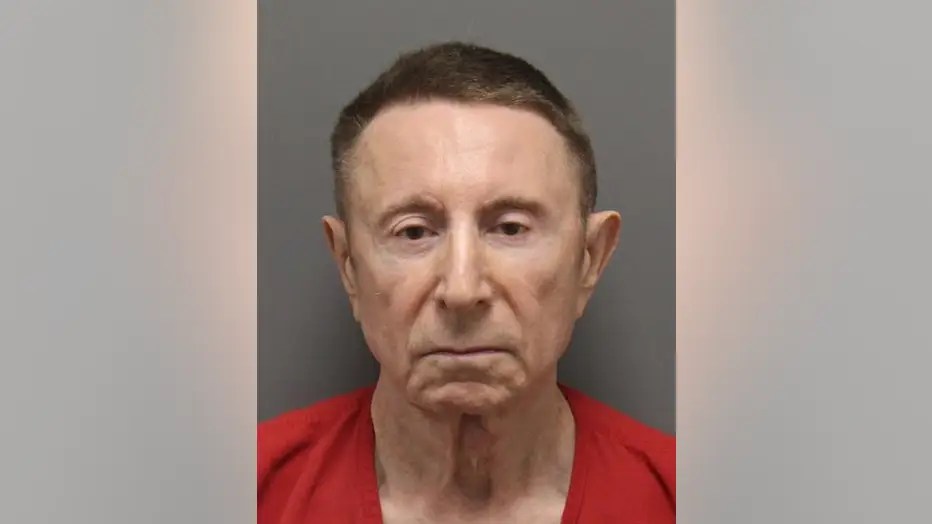
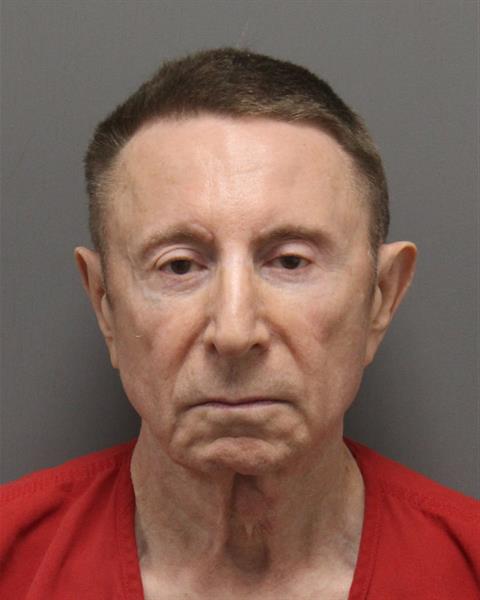
On October 28, Jacob Bogatin, now 78, was arrested and charged with murder and arson for a blaze that killed a 36-year-old woman and destroyed three townhomes in Sterling, Virginia.
According to the Loudoun Times-Mirror, Bogatin lived in the complex with his girlfriend, Valeria Gunkova, the listed owner, in a unit under foreclosure. One day after the October 24 fire, Bogatin filed an insurance claim for more than twice what was owed on the property.
Investigators say surveillance footage showed a man resembling Bogatin walking away from the scene moments after the fire began. A search of his car turned up a bottle of lighter fluid and a grill lighter.
Bogatin had been free on a $1 million bond since 2003 in the YBM Magnex case. His home-monitoring restrictions were lifted a year later, and he was permitted to travel abroad on the condition that he not commit any crime.
After the Loudoun County fire, pretrial-services officer Keri Foster asked the court to revoke Bogatin’s bail. In her report, Foster noted that Bogatin had dutifully called in to report his home had burned down—without mentioning that he might have been the one who struck the match.
Russian Money in UK Politics
In The Godfather, Part II, mobster Hyman Roth is asked by reporters why he moving to Israel.
“I’m a retired investor living on a pension, and I wished to live there as a Jew in the twilight of my life,” Roth explains.
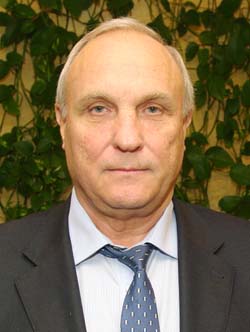
Sergey Kopytov is a retired Ukrainian politician living out the twilight of his life in eastern Europe. Like the fictional Hyman Roth, Kopytov invests in hotels. Except Kopytov’s hotels are not located in Cuba, but rather in the Crimean Peninsula, where he served briefly as finance minister in the pro-Russia Ukraine Party of Regions.
The Hyman Roth of the Godfather Part II was looking for a man who wants to be president of the United States. Roth had the cash to help elect him. “We’re bigger than U.S. Steel,” Roth says.
The very real Sergey Kopytov may been looking for a man who wanted to be the UK Prime Minister. And like Roth, Kopytov had the cash to help make it happen.
A $630,225 donation to the UK’s Conservative Party in February 2018—money helped install Boris Johnson in the prime minister’s office at 10 Downing Street—came from Kopytov, according to a bank alert sent to the National Crime Agency.
The bank alert, which tracked the flow of funds from Russia to Britain, was first obtained by The New York Times. It also was detailed in the latest issue of the UK magazine, Private Eye.
“We were able to trace a clear line back from this donation to its ultimate source,” an official at Barclays Bank wrote on January 2021. That “ultimate source” was Sergei Nikolaevich Kopytov.
If true, this raises troubling questions about Russian influence in UK elections. As in the United States, UK political parties are barred from accepting contributions from foreigners. The Conservative Party donation, however, was given a sheen of respectability. It was made in the name of Kopytov’s son-in-law, Ehud Sheleg. The Israeli-born Sheleg is a UK citizen and owner of a posh London art gallery, and a former treasurer of the Conservative party.
“I believe that the flow of funds which began with a $2.5 million payment from Kopytov to his daughter Liliya, and which ended with the $630k donation to the Conservative party was designed to conceal its origins from an impermissible donor and therefore the people responsible for designing the flow of funds committed an offense which potentially qualifies as a criminal offense,” the Barclays banker wrote in the alert. Sheleg’s wife, the former Liliya Kopytova, is a former Miss Ukraine 30 years his junior.
“Kopytov can be stated with considerable certainty to have been the true source of the donation,” the alert states. It adds: “Kopytov is a Russian resident and there is no indication that he has a UK passport or is on the UK electoral roll.”
It’s part of a pattern of Russian money and influence flowing into the UK Conservative Party. Boris Johnson played tennis in 2014 with Lubov Chernukhin, the wife of a Russian former minister, in exchange for a £160,000 donation. Chernukhin donated almost £2 million to the Conservatives.
Even as the Kremlin meddled in UK elections and sent assassins to kill two former Russian spies living in England, Boris Johnson defended his decision to take questionable money connected to Russia. “It’s very important that we do not allow a miasma of suspicion about all Russians in London—and indeed all rich Russians in London—to be created,” Johnson told the BBC. The future prime minister made those remarks in March 2018, one month after Sheleg’s donation to Johnson’s party and mere days after the poisoning of retired military intelligence officer Sergei Skripal.
A lawyer for the Shelegs told The New York Times that the couple received millions from Kopytov in the weeks before the 2018 donation. But that was “entirely separate” from the campaign contribution. The explanation given was that Kopytov’s money, which derived from a property sale, repaid a loan made to Sheleg by his family’s trust.

In May 2018, Ehud Sheleg gave another £750,000 donation to the Conservative party. (That donation was not covered in the bank alert.) He was named co-treasurer of the party three months later, and took over sole responsibility for the job the following year. Sheleg stepped down as the Conservative treasurer in 2021, a few months after Barclays filed its suspicious activity report. His representatives say there was no connection between the two events.
Sheleg was one of the biggest single donors to the Conservative party. In total, he gave £3.6 million to the Conservative Party, which got him knighted by the queen.
It remains unclear why nearly three years elapsed before Barclays filed its suspicious activity report about Sheleg’s 2018 contribution.
The $2.5 million that made its way to Sheleg began its journey in Kopytov’s Russian bank account. It then passed through Austria’s Raffeisen Bank, according to Private Eye. Raffeisen has the greatest exposure to Russia of any foreign bank, with €22.9bn of assets at risk. Readers of my book, Trump/Russia, will not be surprised to hear this as there’s a long history of dirty Russian money flowing through Raiffeisen. An infamous 2006 US State Department cable released by Wikileaks stated that that Raiffeisen served as a front for the Russian gangster Semion Mogilevich.
It took weeks for the $2.5 million to land in the Shelegs joint bank account in Britain. The day after it arrived, Sheleg made his contribution to the Conservative party.
The Barclays bank alert that sounded the alarm about Sheleg’s contribution states “that sources, including a Private Eye article note Ehud Sheleg’s close relations with Moscow… [and] connections with organized crime figures.”
Sheleg’s connections with Moscow including hosting the Russian ambassador to the UK in 2015. His organized crime ties relate to a franchise of his Halcyon art gallery in Cyprus. One of the men involved, Rustem Magdeev, is accused in UK court documents of having connections to organized criminals, a charge he denies.
The role of treasurer of the Conservative Party is often a springboard to the House of Lords, the upper house of British parliament. Seven of the last 10 treasurers were made barons.
An elevation to life peer may now be out of Sheleg’s reach. Questions have arisen in parliament about Sheleg and Kopytov. “Exactly what current and former links do the Sheleg-Kopytov family hold with key actors in the Russian state? Finally, has electoral law been broken and, relatedly, has our national security been compromised?” the chair of the Labour Party asked on the floor of the House of Commons last month. Stephen Kinnock, a Welsh MP who was threatened with a libel lawsuit for questioning Sheleg’s ties to Russia, asked when the former Conservative Party treasurer should be labeled a foreign agent.
In The Godfather, Part II, Hyman Roth’s plans to take over Cuba were foiled by Fidel Castro. Exposing Sergey Kapytov as the “ultimate source” of a Conservative Party donation may have foiled his plans as well.
The NSA is listening to the Russian Mafia
I found some interesting things in National Security Agency newsletters that were leaked by Edward Snowden and published online by The Intercept.
These relate to the NSA’s little-known work in tracking transnational organized crime.
The NSA, which collects massive amounts of signals intelligence, has a unit called S2F dedicated to international crime and narcotics. A unit within S2F (S2F21) is tasked with monitoring mob bosses from Russia and elsewhere.
A 2006 memo revealed how this unit helped thwart the sale of a refinery to an Israeli organized crime figure via a front energy company.
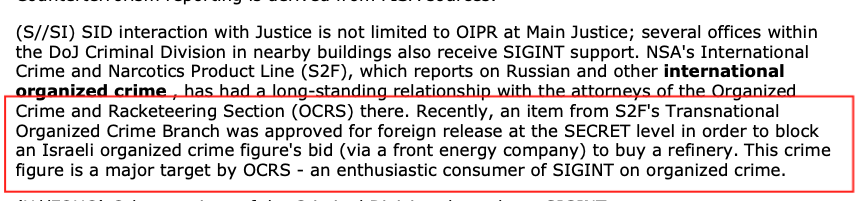
The Israeli organized crime figure isn’t named. If you have any ideas about who this is, please contact me.
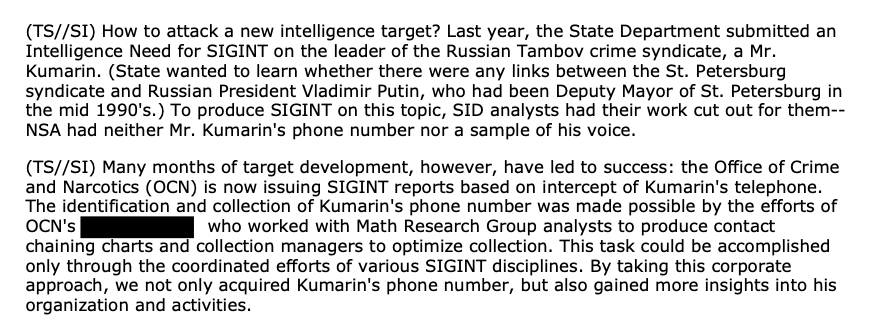
A 2003 memo revealed that NSA was tracking a Russian organized crime boss, Vladimir Kumarin, at the request of the State Department. State wanted to know if there were links between Kumarin’s Tambov gang, based in St. Petersburg, and Vladimir Putin.
The indispensable Catherine Belton writes in Putin’s People that in the 1990s, Kumarin, “with the help of Putin,” began taking control of St. Petersburg’s entire fuel and energy business. Putin also granted Kumarin an exclusive contract to supply fuel for the city’s ambulances, buses, and police cars. Kumarin became so powerful he became known as “the night governor.”
In 2006, NSA expanded its relationship with Spain’s Centro Nacional de Inteligencia (CNI) to target Russian organized crime bosses. There were numerous targets of mutual interest to both countries, including Zakhar Kalachov who was arrested in Dubai in 2006.
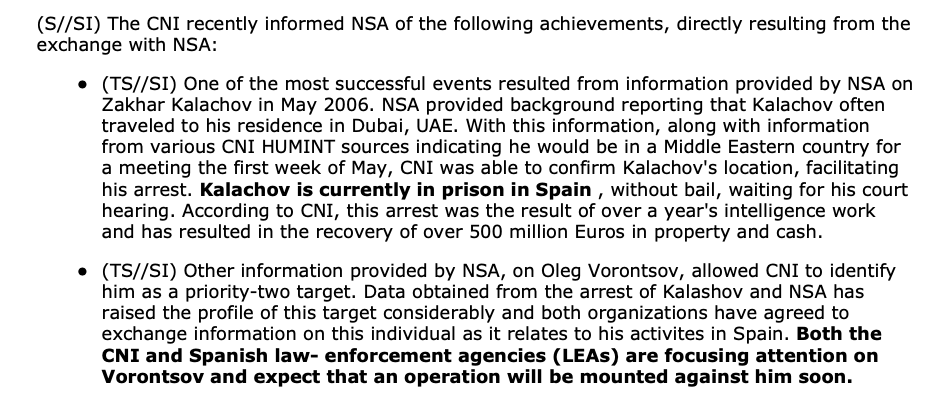
The NSA’s powerful tools tipped the Spanish police to a company called Vera Metalurgica, linked to Russian crime bosses. One of those crime bosses, according to Spanish authorities, was Oleg Deripaska.

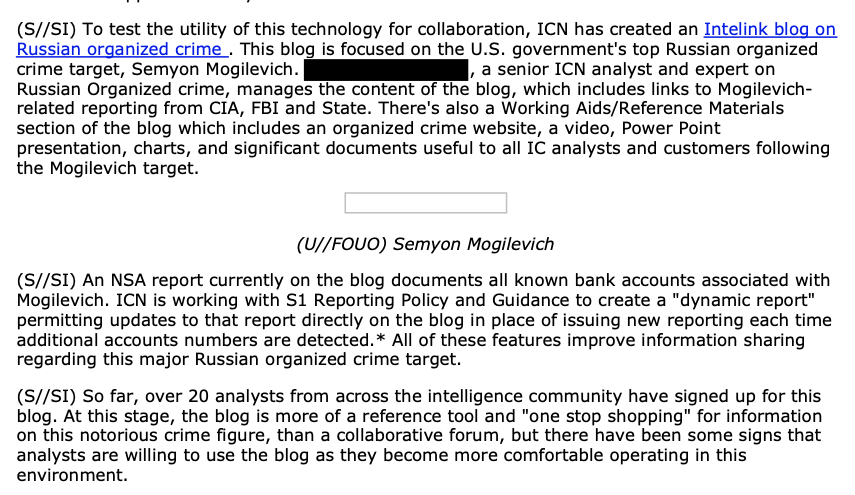
Finally, in 2006, the NSA let its employees know of a interagency intelligence blog devoted to the latest bank accounts and other information collected on Semion Mogilevich, “the U.S. government’s top Russian organized crime target.”
Time to Put a Lie about Felix Sater to Rest (Updated)
Of all the characters in the Trump/Russia saga, few are more fascinating than Felix Sater.

Sater is many things: a Russian emigre, the son of a gangster, an ex-con, and the guy who scouted real estate deals in Moscow for Donald Trump.
He was also a very valuable informant to the U.S. government for many years, as you can see from some photos I recently came across regarding Evgeny Shmykov, an ex-spy who was Sater’s long-time contact in Russia:
The guy that Shmykov stands shoulder-to-shoulder with? That’s Ahmad Shah Massoud, the anti-Taliban leader assassinated right before the 9/11 attacks.
These photos got some attention on Twitter, but as always, whenever Sater’s name comes up, people inevitably connect him to a powerful Russian Mafia boss named Semion Mogilevich, known as “the most dangerous mobster in the world.”
It’s time to put this to rest.
There is no, I repeat, no credible evidence linking Sater to a Russian Mob boss who was on the FBI’s 10 Most Wanted List.
In writing my book, Trump/Russia, I spent quite a bit of time looking for evidence of the Sater-Mogilevich connection. In the end, I concluded that it just wasn’t there. To paraphrase Robert Mueller, if I had found evidence that Sater was connected to Mogilevich, I would so state.
There’s no doubt Sater did have ties to Russian organized crime. Sater’s father, Michael Sheferfofsky, was a Russian gangster who pleaded guilty in 2000 to two counts of extortion for shaking down businesses in Brooklyn.
Update: In her 2020 book, Putin’s People, Catherine Belton wrote that she spoke to two former Mogilevich associates in 2018 who told her that Sater’s father “become an ‘enforcer’ for some of Mogilevich’s interests” in Brighton Beach, Brooklyn. Another British journalist, Paul Wood, told me in 2019 that he spoke with someone from Mogilevich’s organization who told him that there is a link between Sater himself and Mogilevich.
Even so, proof is still lacking. There’s no mention of Mogilevich in Sherorfksy’s criminal file.
So where does this claim come from?
The Sater-Mogilevich link is found in a Supreme Court petition for a writ of certiorari in Palmer v John Doe. 14-676.
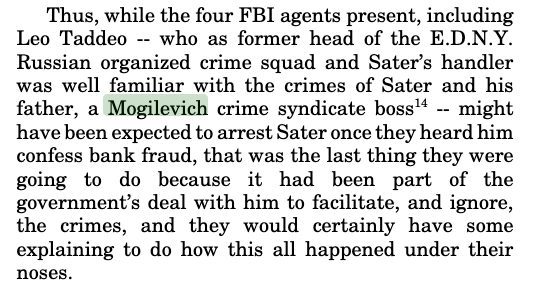
This sounds like credible evidence. It’s convinced many people, including me, as my 2017 blog post shows.
The thing is it’s bullshit. Yes, I know. Mea culpa, mea culpa, mea maxima culpa.
While reporting my book, Trump/Russia, I tried to get to the bottom of this. I asked Richard Lerner, the attorney who wrote the Supreme Court petition, how he learned about the Sater-Mogilevich connection.
He somewhat sheepishly admitted that it comes from a website called Deep Capture.
This is where things get weird.
Deep Capture was written by Mark Mitchell, a former editor at Columbia Journalism Review, to “expose the ‘deep capture’ of American institutions by powerful and corrupt financial interests.”
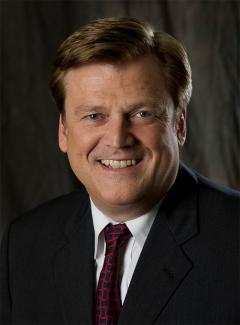
Bankrolling Deep Capture was Patrick Byrne, the CEO of Overstock.com, a publicly-traded online retailer.
Byrne is famous for, among other things, a 2005 conference call with investors that touched on subjects ranging from:
“Miscreants, an unnamed Sith Lord he hopes the feds will bury under a prison, gay bath houses, whether he is gay, does cocaine, both or neither, and an obligatory, not that there is anything wrong with that, phone taps, phone lines misdirected to Mexico, arrested reporters, payoffs, conspiracies, crooks, egomaniacs, fools, paranoia, which newspapers are shills and for who, payoffs, money laundering, his Irish temper, false identities, threats, intimidation, and private investigators,” wrote Mark Cuban, the basketball team owner, investor, and host of Shark Tank.
That’s just a sampling. You can read the full thing here.
Byrne has also accused reporter Bethany McLean of giving Goldman Sachs traders blowjobs and said on live TV that he knew for a fact of a fax machine in the offices of CNBC where every morning hedge funds send in “instructions” for journalists. Authorities at Salt Lake City’s airport arrested him in 2013 when they found a loaded handgun in his carry-on luggage.
Sater is one of Byrne’s “miscreants” who appears as a recurring character in Deep Capture, where he is described to this day as a “Mafia boss” and “a Russian mobster and a member of the Mogilevich organization (controlled by Semion Mogilevich).”
To give you a taste of Deep Capture, check out this now-deleted post that describes … well, just read it for yourself:
A month or so after that, an offshore businessman who had provided some information to our investigation received in the mail a beautiful, lacquered, Russian matryoshka doll. And inside this doll, there was a slip of paper.
On the paper was the letter “F” — with a cross on it. The businessman knew right away that the letter “F” stood for “Felix” – Felix Sater.
The businessman said he had called Felix Sater to see what the deal was with the doll. And after talking to Felix, the businessman invited Patrick Byrne to a greasy spoon diner in Long Island. It was urgent, aid the businessman — so Patrick made haste.
And when Patrick arrived at the diner (along with two other people, who can testify to this) the offshore businessman, discarding with formalities, said, “This meeting can be very short. I have a message for you from Russia.”
The message, said the businessman, was this: “‘We are about to kill you. We are about to kill you.’ Patrick, they are going to kill you – if you do not stop this crusade [the investigation into destructive market manipulation], they will kill you. Normally they’d have already hurt you as a warning, but you’re so weird, they don’t know how you’d react. So their first step is, they’re just going to kill you.”
According to the businessman, this threat had come straight from the mouth of Felix Sater.
Maybe this did happen. Then again, maybe the moon landing was faked. Maybe the Illuminati controls the world. Maybe 9/11 was an inside job.
I’m pretty sure it didn’t happen.
Editor’s note: I am striking my snarky comments because I was wrong. Patrick Byrne has shown me evidence that this conversation did take place. In a recorded 2007 phone call, a transcript of which is in my possession, Byrne’s associate was told: “And there’s a beautiful box and inside is a matryoshka and I opened up the last matryoshka and inside is an F with a cross on it, which is for Felix.” I was also played the recording of this call. A clear threat was relayed to Mr. Byrne, who did not make this story up. I owe him an apology.
Patrick Byrne emailed me August 4 to say:
“For the record, your email reminded me that Felix wrote me once (while I was very ill) and denied being the source of the Russian death threat against me. He was quite gentlemanly, and I think I said I would post it. However, I think I was in a cardiac unit at the time, come to think of it, and it never got done.”
Byrne didn’t answer my questions about what evidence he has for the Sater-Mogilevich connection, which can still be found on his website.
In 2016, a Canadian judge ordered Byrne and Mitchell to pay $1.2 million (Canadian) over published claims that Altaf Nazerali, a Vancouver businessman, was a gangster, an arms dealer, a drug trafficker, a financier of al-Qaida and member of the Russian and Italian Mafias.
Nazerali is mentioned in the deleted post quoted above about Sater and the matryoshka doll. Nazerali is described as a friend of Sater’s, although I’d wager that they never met.
The judge wrote that Mitchell and Byrne “engaged in a calculated and ruthless campaign to inflict as much damage on Mr. Nazerali’s reputation as they could achieve. It is clear on the evidence that their intention was to conduct a vendetta in which the truth about Mr. Nazerali himself was of no consequence.” Read the decision here.
A month before the ruling was issued, Byrne announced he was taking an indefinite personal leave of absence from Overstock.com to battle stage 4 Hepatitis C. He returned to his duties a few months later.
The Supreme Court of Canada dismissed Mitchell and Byrne’s appeal in August 2018 and affirmed a seven-figure award.
Maybe you think Sater a bad guy. Maybe you think he made amends for his criminal past. Either way, a man whose life is far more fascinating than most of ours will ever be doesn’t need to be embellished with fiction.
Five surprises in Glenn Simpson’s testimony
Glenn Simpson
Well, it took a couple of days, but I finally managed to read through Fusion GPS co-founder Glenn Simpson’s 312-page testimony to the Senate Judiciary Committee.
Thank you to Sen. Dianne Feinstein for releasing this information last week over the objections of Republicans. Sen. Feinstein said the American public deserve to make up their own minds. Couldn’t agree more. You can find the testimony here.
So I thought I would pick things that jumped out at me from Simpson’s testimony:
1. An internal source in the Trump Organization was providing the FBI with information about Russian collusion.
Simpson learned this from Christopher Steele, the former British spy he had hired to investigate Trump’s links to Russia. Steele’s findings, including the scandalous scene in the Moscow Ritz, were so alarming that he took his findings to the FBI. The FBI told Steele, yes, we’ve heard something similar from our internal Trump source. Simpson refused to answer questions about who this source might have been, but this source was not one of Steele’s source. Huge bombshell. (p. 175)
2. Someone has been killed as a result of Steele’s reports.
Simpson’s lawyer, Josh Levy, drops this on p. 279. “Somebody’s already been killed as a result of the publication of this dossier and no harm should come to anybody related to this honest work,” he says. Curiously, nobody challenges this, which makes it seem an accepted fact. Maybe they were all just tired after 9 hours of questioning. The person is not named, but presumably it’s someone in Russia. Otherwise, it would be a bigger deal, right?
3. Felix Sater is connected to Russian organized crime kingpin Semion Mogilevich This connection has been alleged in a Supreme Court petition filed in 2012 by lawyers Fred Oberlander and Richard Lerner to unseal Sater’s criminal case. The Website Deep Capture made the same claim, but the sourcing wasn’t very strong, as did two New York attorneys in court filings. (Update: Sources I’ve spoken to led me to doubt this claim.) (p.69)
4. Chris Steele broke off talks with the FBI in part because of a story in The New York Times. This was the infamous Halloween 2016 story that reported that an FBI investigation of Trump found no ties to Russia. The Times story and FBI Director James Comey’s bizarre decision to reopen the investigation of Hillary Clinton’s email made Steele concerned that the FBI was being manipulated for political ends by Trump’s people. (p. 178).
5. Bill Browder’s comical efforts to hide from Fusion GPS and Glenn Simpson.
This isn’t a single event. It’s more like a pattern. Maybe Simpson is a liar as Browder says or maybe Browder doesn’t like anybody nosing around in his business practices in Russia. Read it for yourself and see what you think pp 40-48.
 Trump / Russia