
Category: San Diego
Life in the Downtown Market?
How much will a San Diego law school student pay in rent?
It’s a good question for Security Properties of Seattle, which made the first purchase of a complex with more than 100 units that downtown San Diego has seen in three years.
Security Properties of Seattle picked up the 172-unit Entrada Apartments on 13th street in the East Village, a few blocks from Petco Park, for $22 million. That’s about $127,000 per unit.
This seems like a steal. Up the block, the future home of the Thomas Jefferson School of Law is under construction (you can watch on their webcam).
But there’s work to do. Security Properties says performance needs improvement. The company says that will happen when the law school relocates to downtown in January. If this devastating review is a guide, the building’s management has had some problems.
SRM Development put up the building in 2004 with a $3.5 million loan from the Centre City Development Corporation, downtown redevelopment agency. The complex has 40 units set aside for low-income housing.
Under a deal with Security Properties, CCDC will receive $600,000 up front and annual payments of $145,000. The $2.9 million balance will be fully paid off in 2015.
A Goldline History: Glenn Beck, Spooks, Drugs
Following my recent post on Goldline, a precious metals coin dealer and sponsor of conservative gasbag Glenn Beck, I decided to poke around a bit in the company’s history, which is pretty fascinating.
As I wrote earlier, Goldline is drawing heat from its bait-and-switch pratices of selling rare gold coins like the 20 Swiss Franc. Beck is definitely taking notice of the attention he is bringing to Goldline following reports by ABC News and Media Matters:
It turns out that the company known today as Goldline has been a source of intrigue and controversy for years.
It was founded a half-century ago by Nicholas Deak, a spy-turned-banker, whom Time magazine called “the James Bond of the world of money.”
Born to a family of Transylvanian bankers, Deak joined the U.S. Army as a paratrooper and later became a senior intelligence officer in the Office of Strategic Services, the forerunner of the CIA. After the war, he helped launch an exchange firm that grew to 70 offices worldwide. By the late 1970s, Deak & Co. was handling 20 percent of all U.S. retail gold sales.
But there were persistent rumors that Deak’s work had a more sinister aspect. In his study of the infamous Nugan Hand bank of Australia, The Crimes of Patriots, journalist Jonathan Kwitny wrote:
For years, it was whispered that Deak had a close working relationship with the Central Intelligence Agency. Certainly the CIA would have been derelict not to try to keep tabs on Deak. And there would have been a lot for Deak to gain by trading off with the world’s biggest spy agency, because much of the company’s business involved speculation about the relative future value of the world’s currencies.
Deak & Co. had a hand in shady deals with shadowy figures, including its role as the conduit of Lockheed Corporation’s bribes to Japanese officials.
Federal prosecutors charged Deak & Co. of California with Bank Secrecy Act violations in 1977 for failing to report $11 million two Filipinos sent to the United States.
Ron Pulger-Frame, a courier who worked for both Deak and Nugan Hand, told the official bankruptcy receiver’s office in Hong Kong in 1981, “Deak’s had a system which was devised by me to circumvent Australian exchange regulations.”
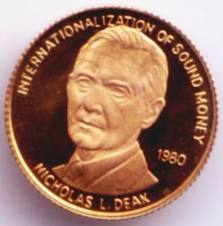
Deak: The James Bond of money
President Reagan’s Commission on Organized Crime charged in 1984 that Deak & Co. had been involved in a multi-million dollar laundering operation for Colombian cocaine traffickers. Nearly $100 million was laundered through Deak by a single criminal. The company filed for bankruptcy before the year ended.
In 1985, a homeless woman from Seattle entered Deak’s Wall Street offices and opened fire with a .38-caliber revolver, killing the 80-year-old financier and a receptionist. (Time magazine on Deak’s slaying )
The Thomas Cook Group, best known for its brand of traveler’s checks, bought the company in 1988 and sold it three years later to A-Mark Precious Metals of Santa Monica, the largest private precious metals dealer in the United States and one of only a handful of companies authorized to purchase gold bullion coins directly from the U.S. Mint.
A-Mark was started in the 1960s by a California teenage coin buff named Steven C. Markoff, whose politics are the polar opposite of Glenn Beck’s. Markoff is a supporter of the ACLU, an avowed critic of U.S. marijuana policy, and a movie producer (all of which would make him a Hollywood leftist, in Beck’s view).
In 2005, Markoff sold A-Mark Precious Metals to its current owner, Irvine, California-based Spectrum Group International for $20 million cash.
The corporate history then gets very murky. In 2006, H.I.G. Capital in Miami, bought Goldline’s parent company, Goldline Holdings Inc., according to this Federal Trade Commission filing. This deal, as far as I can tell, received no other public announcement.
Goldline changed hands again in January 2009 when management and CIVC Partners, a Chicago-based private equity firm, acquired the firm in a transaction worth over $50 million. At the time, Goldline’s revenues were in excess of $300 million.
It’s the infusion of capital from CIVC that has apparently helped Goldline expand its presence through endorsements from conservative commentators and personalities like Glenn Beck and others.
Glenn Beck Fuels Gold Hysteria — And Profits
I heard the other day about a man who took all his money, bought gold and buried it in his backyard. The poor fellow probably listens to commentator Glenn Beck.
The incessant stream of end-of-the-world nonsense that Beck spews forth makes his incredibly popular radio and TV talk shows the ideal vehicle for gold advertisements.
An average of 9 million listeners a week makes Beck’s radio show the third most popular in America, behind Rush Limbaugh and Sean Hannity. Mercy Radio Arts, aka Glenn Beck Inc., took in $32 million in revenue in the past 12 months, according to Forbes magazine.
But this is not your traditional media advertising relationship:
Anyone who listens to conservative radio is getting bombarded with messages from Santa Monica-based Goldline, which boasts that it does half a billion in annual sales of gold coins and bullion
Others who offer testimonials on Goldline’s website are Laura Ingraham, Mark Levin, Mike Huckabee, Monica Crowley, Fred Thompson. You can listen to them shilling for Goldline here on the Goldline website.
It would seem to be a natural fit. Gold thrives on instability and chaos, and Beck is constantly hammering home the theme that the United States is highly unstable … ergo, we should buy gold. The problem is the gold that Goldline is selling often isn’t bullion, but rare coins, which are a different animal.
According to ABC News’ The Blotter, authorities in Los Angeles and Santa Monica are investigating complaints from Goldline customers say they were lied and misled in their purchases of gold coins and others who received something they didn’t order. The Santa Monica City Attorney’s office has set up a website to handle complaints.
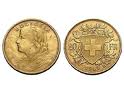
The gold 20 Swiss Franc
Goldline customers are often sold gold 20 Swiss Franc and other European coins. The Missouri Secretary of State’s office found in 2006 that a Goldline agent violated state law by advising an elderly woman to sell her annuity to buy gold. The woman ultimately bought 153 Gold 20 Swiss Francs and other coins.
This is a classic bait-and-switch.
Buying a Swiss Franc coin is NOT the same as buying gold bullion or even gold American Eagles, South African Krugerrands or Canadian Maple Leafs, all of which are linked to the spot price of gold.
Gold 20 Swiss Francs, which are numismatic or rare coins, have less to do with gold spot prices and more to do with scarcity, condition and coin demand. In other words, if gold rises you still make not make any money.
Goldline charges a sizeable markup on numismatic coins. According to Goldline’s own disclosure on its website:
Our spread on semi-numismatic coins, rare or numismatic coins and rare currency currently ranges from 30% to 35%. Examples of coins which have a 30% to 35% spread include European gold coins such as the Swiss 20 Franc, the PCGS certified “First Strike®” coins, coins which have been encapsulated by a grading service such as PCGS or NGC, the Morgan and Peace silver dollars in all grades, and the Walking Liberty, Franklin and Kennedy silver half-dollars in all grades. Spreads may change based upon market conditions, availability and demand.
Here’s how this works. If the spread on a coin is 35%, then a coin Goldline is selling for $500 is really worth only $325. The coin must appreciate $175 before you earn a profit. Again the prices of these coins move independently from the price of gold.
According to a report issued in May Rep. Anthony D. Weiner, coins on the Goldline website were marked up an average of 90 percent compared to their melt values. But this is unfair: rare coins value has less to do with the price of gold and more to do with scarcity and other factors.
Mark Albarian, president and CEO of Goldline, is a coin collector. A coin collector knows what coins are worth. If you don’t, then caveat emptor — buyer beware — no matter what Glenn Beck says.
Glenn Beck Fuels Gold Hysteria — And Profits
I heard the other day about a man who took all his money, bought gold and buried it in his backyard. The poor fellow probably listens to commentator Glenn Beck.
The incessant stream of end-of-the-world nonsense that Beck spews forth makes his incredibly popular radio and TV talk shows the ideal vehicle for gold advertisements.
An average of 9 million listeners a week makes Beck’s radio show the third most popular in America, behind Rush Limbaugh and Sean Hannity. Mercy Radio Arts, aka Glenn Beck Inc., took in $32 million in revenue in the past 12 months, according to Forbes magazine.
But this is not your traditional media advertising relationship:
Anyone who listens to conservative radio is getting bombarded with messages from Santa Monica-based Goldline, which boasts that it does half a billion in annual sales of gold coins and bullion
Others who offer testimonials on Goldline’s website are Laura Ingraham, Mark Levin, Mike Huckabee, Monica Crowley, Fred Thompson. You can listen to them shilling for Goldline here on the Goldline website.
It would seem to be a natural fit. Gold thrives on instability and chaos, and Beck is constantly hammering home the theme that the United States is highly unstable … ergo, we should buy gold. The problem is the gold that Goldline is selling often isn’t bullion, but rare coins, which are a different animal.
According to ABC News’ The Blotter, authorities in Los Angeles and Santa Monica are investigating complaints from Goldline customers say they were lied and misled in their purchases of gold coins and others who received something they didn’t order. The Santa Monica City Attorney’s office has set up a website to handle complaints.
The gold 20 Swiss Franc
Goldline customers are often sold gold 20 Swiss Franc and other European coins. The Missouri Secretary of State’s office found in 2006 that a Goldline agent violated state law by advising an elderly woman to sell her annuity to buy gold. The woman ultimately bought 153 Gold 20 Swiss Francs and other coins.
This is a classic bait-and-switch.
Buying a Swiss Franc coin is NOT the same as buying gold bullion or even gold American Eagles, South African Krugerrands or Canadian Maple Leafs, all of which are linked to the spot price of gold.
Gold 20 Swiss Francs, which are numismatic or rare coins, have less to do with gold spot prices and more to do with scarcity, condition and coin demand. In other words, if gold rises you still make not make any money.
Goldline charges a sizeable markup on numismatic coins. According to Goldline’s own disclosure on its website:
Our spread on semi-numismatic coins, rare or numismatic coins and rare currency currently ranges from 30% to 35%. Examples of coins which have a 30% to 35% spread include European gold coins such as the Swiss 20 Franc, the PCGS certified “First Strike®” coins, coins which have been encapsulated by a grading service such as PCGS or NGC, the Morgan and Peace silver dollars in all grades, and the Walking Liberty, Franklin and Kennedy silver half-dollars in all grades. Spreads may change based upon market conditions, availability and demand.
Here’s how this works. If the spread on a coin is 35%, then a coin Goldline is selling for $500 is really worth only $325. The coin must appreciate $175 before you earn a profit. Again the prices of these coins move independently from the price of gold.
According to a report issued in May Rep. Anthony D. Weiner, coins on the Goldline website were marked up an average of 90 percent compared to their melt values. But this is unfair: rare coins value has less to do with the price of gold and more to do with scarcity and other factors.
Mark Albarian, president and CEO of Goldline, is a coin collector. A coin collector knows what coins are worth. If you don’t, then caveat emptor — buyer beware — no matter what Glenn Beck says.
Sunstone Walks Away from the W Hotel
Major Foreclosures and Defaults in Downtown San Diego
When homeowners owe more than their home is worth and walk away, it’s called a “strategic default.” Fannie Mae warned potential strategic defaulters last month that they would never again get another mortgage.
But no one seems bothered that Sunstone Sunstone Hotel Investors Inc. is walking away from a $65 million mortgage on the 258-room W Hotel in downtown San Diego.
The San Diego Union-Tribune’s Lori Weisberg reports that the W Hotel was auctioned on the courthouse steps on June 29. The property is now in the hands of Bank of America, the lender.
Sunstone was underwater on the W Hotel. The Aliso Viejo-based real estate investment trust, concluded that it owed far more than the W Hotel was worth. Sunstone bought the W for $96 million in 2006 from a group led by developer Gatehouse Capital Corp., the Wall Street Journal reported last month.
But Sunstone is coming out ahead. Chief financial officer Ken Cruse crows to the U-T about “a significant gain” on the W San Diego because the hotel was recorded on Sunstone’s books at $35 million.
Thanks, assholes.
 Trump / Russia