
Category: Donald Trump
Why Did a Russian NHL Player Sue Trump’s Lawyer, Michael Cohen?


Vladimir Malakhov is a Russian-born retired professional hockey player. He was active in the NHL 1992 to 2006, playing for the New York Islanders, the Montreal Canadiens, and the New Jersey Devils.
In January of 1999, Malakhov wrote a check for $350,000 to Michael D. Cohen, Trump’s personal lawyer. The check was deposited — and then the money disappeared.
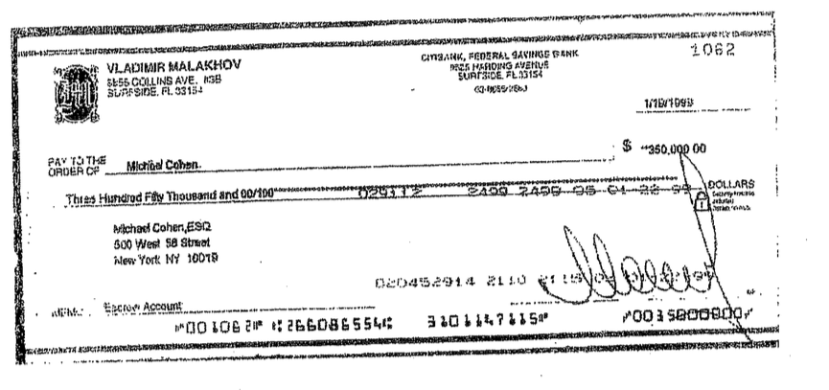
What happened to the money and how this check came to be written to Michael Cohen was the subject of years of litigation in Circuit Court in Miami, Florida. (See Fomina v. Netscheret, 2006-001330-CA-01.)
Malakhov sued Cohen (/a/k/a “Michael D. Hacking”) in 2010 in Miami Circuit Court. (Malakov v. Cohen, 2010-14576-CA-03). I’ve embedded the lawsuit at the bottom of this post.
The story begins in late 1998 or early 1999, when Malakhov was living in Florida, and earning millions as a professional hockey player playing with the Montreal Canadiens.
One day, an acquaintance asked him for a large loan. The acquaintance was a woman named Julia Fomina. According to an affidavit filed by Malakhov’s agent, the money was intended not for Fomina but rather her boyfriend in Russia, Vitaly Buslaev. (For more on Buslaev’s background, see Yuri Felstinsky’s original article at the website Gordonua.com. There’s also a story out in Buzzfeed.)
Malakhov loaned $350,000 to Fomina and, on the advice of his attorney, secured the loan by having Fomina sign over a mortgage for her apartment on the 24th floor of Miami Beach condo tower.
For reasons that aren’t clear, Fomina instructed Malakhov’s wife to send the $350,000 loan to Michael Cohen. The check was issued in January 1999 to Cohen personally, not his law firm or many businesses, and deposited in Cohen’s Citibank trust account.
Sometime later, Fomina defaulted on her loan. When Malakhov moved to foreclose on the condominium, Fomina swore under oath that she never received the $350,000 that had been sent to Cohen.
It took years before Cohen was finally deposed and asked what happened to the money. Cohen’s response: “I don’t recall.” He insisted he didn’t know Malakhov, had no idea why the hockey player would write him such a huge check, had no records relating to the check, and had no clue what happened to the money.
A Miami judge accepted Cohen’s story and dismissed the case.
In deposition, Cohen speculated that one of the reasons why Malakhov might have sent him the check were his ties to Russians, including his business partner, the Ukrainian-born “Taxi King” Simon Garber. I’ve written previously about Cohen’s family ethanol business in Ukraine.
The Malakhov story connects to Trump in another roundabout way.
A few years before he wrote the check to Cohen, Malakhov was shaken down by a Russian mobster, according to testimony at a U.S. Senate hearing on Russian organized crime.
Malakhov, who at the time was playing for the New York Islanders, was approached in the National Restaurant in New York City’s Brighton Beach neighborhood. The man who demanded money from the hockey player worked for Vyacheslav Kirillovich Ivankov, one of the most powerful Russian Mafia bosses in America.
As I noted in an earlier post, Ivankov is one of several Mobsters who turned up in Trump Tower. Invakov also showed up Trump’s New Jersey casino, the Taj Mahal. Ivankov’s phone book included a working number for the Trump Organization’s Trump Tower residence, and a Trump Organization fax machine.
Ivankov was arrested in 1995 and sent to prison for extortion. After his release he returned to Russia where he was assassinated.
As for Malakhov, after he was shaken down, he spent the next months in fear, looking over his shoulder. His worries ended when he was traded to the Canadiens.
A Missing Piece of the Puzzle
The Guardian is out with a report that contacts between the Trump campaign and Russian intelligence occurred much earlier than previously reported:
GCHQ first became aware in late 2015 of suspicious “interactions” between figures connected to Trump and known or suspected Russian agents, a source close to UK intelligence said. This intelligence was passed to the US as part of a routine exchange of information, they added.
Looking at the Trump-Russian Timeline, this puts other events around that time into context. Beginning in late 2015, the following events occurred:
- December: Accounts associated with Russian propaganda “troll farm” called the Internet Research Agency begins supporting Donald Trump
- December 17: Vladimir Putin praises Donald Trump at his annual news conference. “He is a bright and talented person without any doubt. He is the absolute leader of the presidential race.”
- Feb. 2: Alexander Dugin, a conservative “philosopher” with close ties to the Kremlin, endorses Trump.
- March: Individuals linked to the Russian government begin openly supporting Donald Trump. Government-funded propaganda outlets RT and Sputnik cast Trump as the target of unfair coverage from mainstream media outlets.
- March: A hacking group known as “Fancy Bear” or “APT28” launches a spearfishing campaign targeting email addresses at hillaryclinton.com and dnc.org that gains them access to DNC network. The hacking group is run by the Russian foreign military intelligence service (GRU) and appears focused on a single target: the DNC’s opposition research files on Donald Trump.
What the publicly available information shows is a steady ramping up of Russian support for Trump.
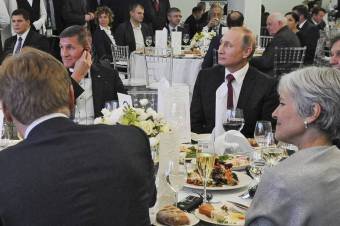
Our man in Moscow
The GHCQ information fills in the missing piece. The contacts between the Trump campaign and Russian intelligence appear to be the catalyst for the covert and overt support from Moscow.
Michael Flynn’s December 10 trip to Moscow also emerges as a possible lynchpin in this story. Flynn, you will recall, attended RT’s 10th anniversary gala in Moscow, where was seated at the head table next to Vladimir Putin. It’s not clear what Flynn’s role in the campaign was in this time, if any. The two men first met in August; Flynn announced he was advising Trump in February 2016.
A website that tracked Trump’s evolving campaign team lists the following people as part of Trump’s inner circle in late 2015:
- Corey Lewandowski
- Michael Glassner
- Donald F. McGahn
- Michael Cohen
- Hope Hicks
- Roger Stone (resigned Aug. 8, 2015)
More TK.
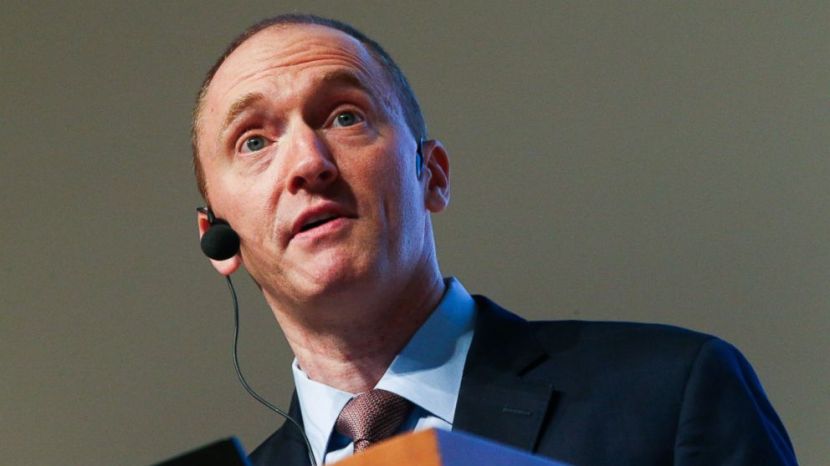
Carter Page Timeline
Op-Ed: Trump’s $95 million home sale to Russian deserves scrutiny
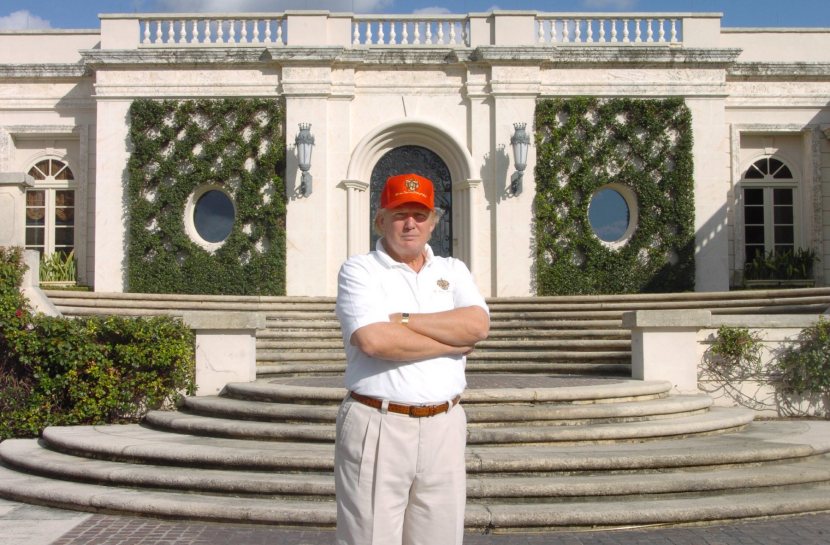
Trump outside Maison de l’Aimitie, which he sold to a Russian billionaire.
Published online April 6, 2017 in The San Diego Union-Tribune
by Seth Hettena
When the FBI recently revealed that it was investigating the nature of any links between President Trump, his associates and the Russian government, I was reminded of another scandal involving disgraced San Diego County Congressman Randy “Duke” Cunningham.
The story, which began with a report published in the San Diego Union-Tribune, grew into one of the biggest political scandals in county history. In 2006, a federal judge sentenced Cunningham to 100 months in prison for accepting $2.4 million in bribes from defense contractors to whom he steered lucrative Pentagon contracts.
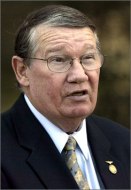
Duke Cunningham
While there are many differences between the two men — Cunningham, unlike Trump, served his country honorably during the Vietnam War and became a highly decorated Navy fighter pilot — there are similarities where their political careers are concerned.
Like Trump, Cunningham had a loose tongue that often got him in trouble. Like Trump, he mocked, taunted, bullied and insulted his political opponents. And like Trump, Cunningham was drawn into far-fetched conspiracies. Look in the Congressional Record, and you’ll find Cunningham denouncing President Bill Clinton as a traitor and a KGB dupe because of a visit to Moscow as a college-aged man.
At the center of Cunningham’s bribery scandal was a real estate deal. Cunningham sold his home in Del Mar to a defense contractor and campaign contributor named Mitchell Wade, one of the shady “friends” the congressman attracted. Wade paid $1.675 million for the congressman’s home in 2003, an eye-popping figure that attracted attention even in San Diego County’s red-hot housing market.
Wade bought the home without ever having set foot in it, and only later found out that it was in sorry shape, darkened by the bars Cunningham installed over every window and skylight to foil Del Mar’s burglars. Wade put the home up for sale a month later, but it languished for a year before he managed to unload it for a $700,000 loss. To prosecutors, it smelled like bribery. And it was.
President Trump also sold a home for more than it was worth — except the house itself and the sale price were both much, much bigger. The property was a sprawling, oceanfront mansion in Palm Beach, Florida that Trump sold for $95 million after purchasing it four years earlier for $41 million. At the time, it was the most expensive U.S. home sale ever.
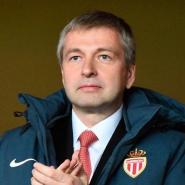
Dmitry Rybolovlev
The buyer of the 6-acre property was a Russian fertilizer magnate named Dmitry Rybolovlev. The sale took place in July 2008, a time when the overheated U.S. real estate market was showing signs of distress and the supply of luxury homes exceeded demand.
Rybolovlev overpaid. Five years after the sale, Palm Beach County officials appraised the house at less than $60 million.
To be fair, no one has accused Trump or Rybolovlev of bribery, but the similarities between the sale of Cunningham’s property and Trump’s are striking. Not unlike the defense contractor who bought Cunningham’s Del Mar home, the Russian fertilizer king showed little interest in Trump’s mansion before or after he bought it. He never lived in it and is said to have visited it only once.
The home was plagued by mold, and, amazingly, a lawyer for Rybolovlev’s ex-wife told the Palm Beach Post he found no evidence that the Russian billionaire had hired anyone to inspect the property before he paid Trump a $50 million premium for it. In 2015, Rybolovlev got permission to demolish the 61,744-square-foot home, and is now selling off the land underneath it.
Other coincidences link Rybolovlev and Trump. Reporters have tracked the Russian billionaire’s private plane to cities where Trump was traveling during the 2016 presidential campaign and into his presidency. Both men say they have never met.
It could be that the sale of the Palm Beach mansion is an example of Trump’s ballyhooed deal-making skills. And it is also possible that it was something else: that the purchase of the mansion known as Maison de l’Aimitié (House of Friendship) was a covert form of payment from friends unknown in Russia or elsewhere.
The major difference between the two transactions is that at the time of the sale of the Palm Beach mansion, Trump was not a public official. But now that he occupies the most powerful office in the world, the FBI, Senate and House intelligence committees who are examining the president’s ties to Russia should learn the lessons of the Cunningham scandal and give the enormous premium paid for Trump’s moldering mansion — purchased sight unseen — the close scrutiny it deserves.
Hettena, a former military writer, is a freelance writer based in San Diego.
The Godfather Goes to Washington (Updated)
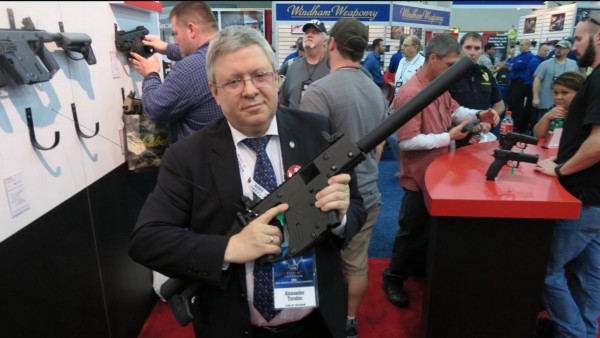
Reputed Russian mob “godfather” at the 2016 NRA convention in Louisville, Ky.
How did a suspected Russian mob “Godfather” (update: and Kremlin emissary) nearly make it to a private meeting in February with President Trump? With help from friends in the NRA.
Dramatis Personae
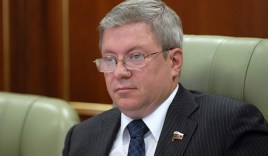
The “Godfather” Alexander Torshin
The Godfather: Spanish police investigating the Moscow-based Taganskaya crime syndicate laundering ill-gotten gains through banks and properties in Spain learn that Alexander Torshin, while serving as a deputy speaker of the upper house of parliament in Russia, instructed members how to launder criminal proceeds. Wiretaps recorded Torshin talking in 2012 and 2013 to the alleged Taganskaya leader in Spain, Alexander Romanov. An internal document from the Spanish Civil Guard Information Service, explains Torshin’s central role in the criminal plot.
“As a consequence of the phone tapping carried out in the aforementioned inquiries it has been ratified that, above Romanov, on a higher hierarchical level, is Alexander Torshin. In the numerous phone conversations and with different contact persons, Alexander Romanov himself recognized his subordination before someone who he describes as ‘the Godfather’ or ‘the boss’ … which in itself is telling when it comes to situating their relationship.”
Torshin also has longstanding ties to the FSB, successor agency to Russia’s KGB.
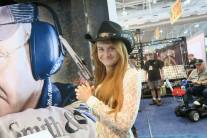
Maria Butina
The Honeypot: Maria Butina. In 2011, this tall redhead was involved in sales of appliances and furniture in the Altai region of Siberia, A year later, she was rubbing elbows with Torshin and putting together Право на Оружие (translated as “Right to Bear Arms”) in Moscow, an international gun rights organization.
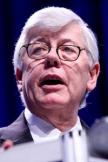
David Keene
The Useful Idiot: David A. Keene is a political consultant, longtime director of the American Conservative Union, past president of the National Rifle Association, and currently the opinion editor of The Washington Times. Although not the power broker he once was, Keene still wields influence. He takes a liking to Torshin and Butina and opens doors for them in Washington and introduces them to influential people.
Our Story Begins
It’s election day in America, 2012. Barack Obama is running for a second term against Mitt Romney. Enter Torshin.
Nov. 6 2012: Torshin travels to Nashville, Tennessee where the NRA an American friend has granted him special status as an observer for the 2012 presidential election. Tweet below reads: “Standing in line at the polling place. As an ordinary American. 6:45 a.m.” At the time, Torshin is a senator in Putin’s United Russia in the upper house of Russia’s parliament.
Nov. 8, 2012: Torshin visits the Russian ambassador’s residence in Washington and NRA headquarters in Washington, DC.
May 2013: Torshin attends the NRA’s annual meeting in Houston, Texas.
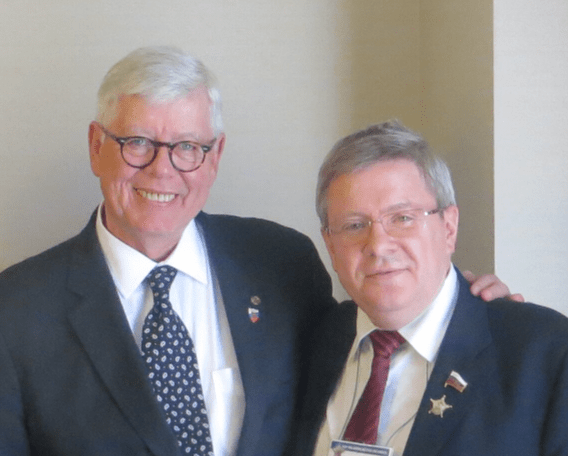
Torshin photographed in 2013 with then NRA president David Keene at the NRA’s annual convention in Houston.
August 21, 2013: Torshin decides not to attend a birthday celebration for Taganskaya leader in Spain, Alexander Romanov, as planned. Spanish authorities believe he was warned by the Russian prosecutor that if he stepped onto Spanish soil he would be arrested.
November 2013: NRA president David Keene travels to Russia for a conference hosted by The Right to Bear Arms. Keene speaks at the conference, with Torshin in attendance.
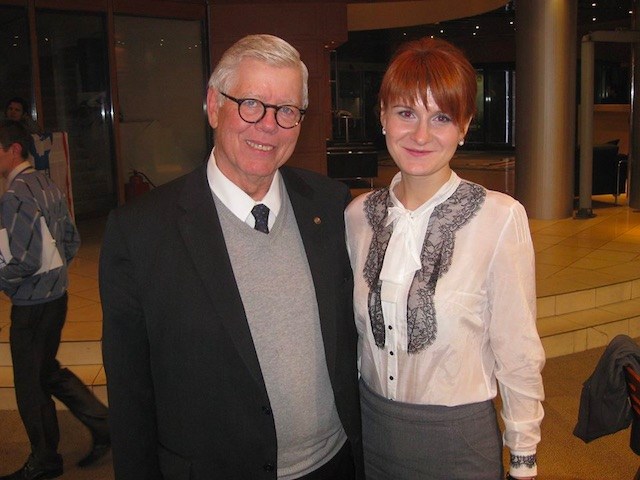
David Keene and Maria Butina in Moscow. (Source: Facebook)
January 2, 2014: David Keene publishes an op-ed piece in the Washington Times by his friend, Alexander Torshin. “Last year, I had the pleasure of attending the National Rifle Association’s annual meeting in Houston,” he writes. Torshin says he has been a “life member” of the NRA for years.
April 2014: Torshin and Butina attend the NRA’s annual meeting in Indianapolis, where they are given the red carpet treatment. Butina attends the annual NRA Women’s Leadership Luncheon as a guest of former NRA President Sandy Froman and participates in general meetings over the weekend as a guest of former NRA President David Keene. She also presents the then-NRA president Jim Porter with a plaque. Butina is given the “rare privilege” of ringing a Liberty Bell replica.
May 5, 2014: Maria Butina visits NRA headquarters in Washington, DC. and meets with David Keene.
May 6, 2014: Butina and her organization are profiled by conservative website Townhall.
We are a young organization. We are three years old. And we invited David Keene. He made a speech at our annual meeting. And so it’s like an answer from one side. The next side is the life member of our organization. He is our Russian senator. His name is Senator Alexander Torshin. He is a life member of NRA too, and he’s usually a participant of such events, and every annual meeting of NRA. But now the situation between (our) two countries is very difficult. And we have to go here together with Senator Torshin. He is a great gun lover, he supports our organization and he’s a friend of the NRA.
September 3, 2014: Paul Erickson, NRA member, GOP operative, campaign manager for Pat Buchanan’s 1992 presidential run, attends an open forum in Moscow organized by Right to Bear Arms.
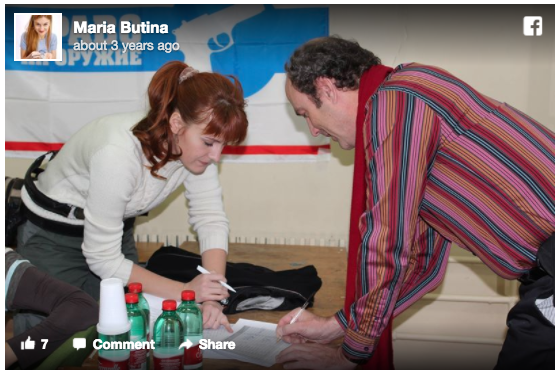
Butina and Erickson in Moscow
January, 20 2015: Torshin is named deputy governor of the Central Bank of Russia, responsible for liaison with the Federal Assembly chambers, and also federal and regional state executive bodies. Torshin selects Maria Butina as his special assistant.
April 2015: Torshin and Butina both attend NRA’s annual meeting in Nashville.
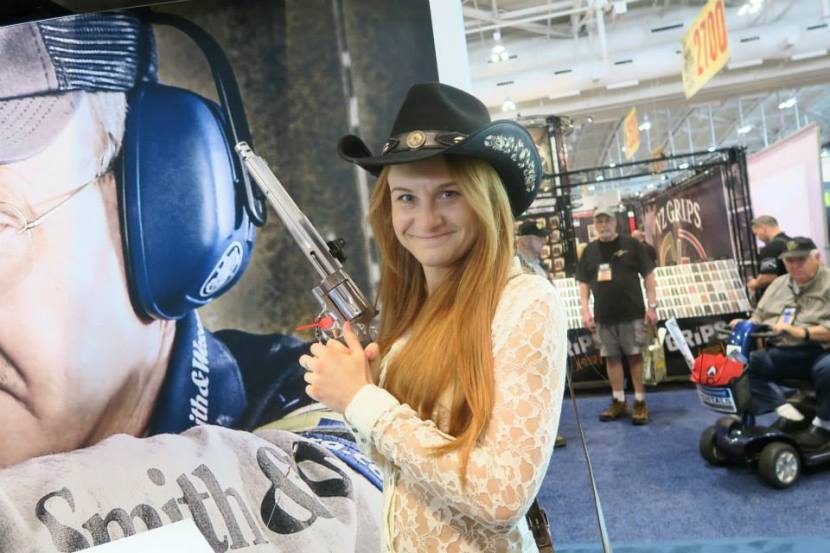
April 10, 2015: Butina, Torshin and Keene meet future Republican presidential candidate and Wisconsin governor Scott Walker during an event in Tennessee.
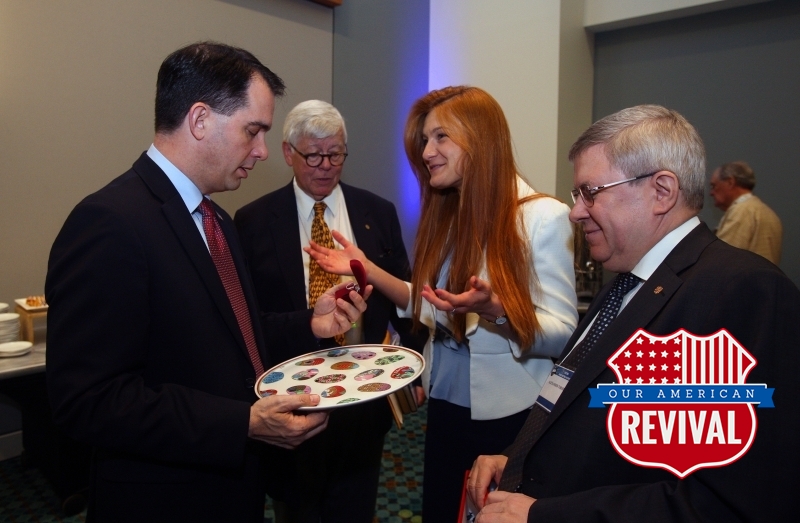
July 11, 2015: Maria Butina attends Trump Freedom Fest rally in Las Vegas and poses a question to the Republican candidate: “I’m from Russia. My question will be about foreign politics. If you will be elected as president, what will be your foreign politics, especially in the relationships with my country? Do you want to continue the policy of sanctions that are damaging both economies? Or [do you] have any other ideas?”
Trump replies: “I know Putin, and I’ll tell you what, we’ll get along with Putin. … I would get along very nicely with Putin, I mean, where we have the strength. I don’t think you’d need the sanctions. I think we would get along very, very well.”
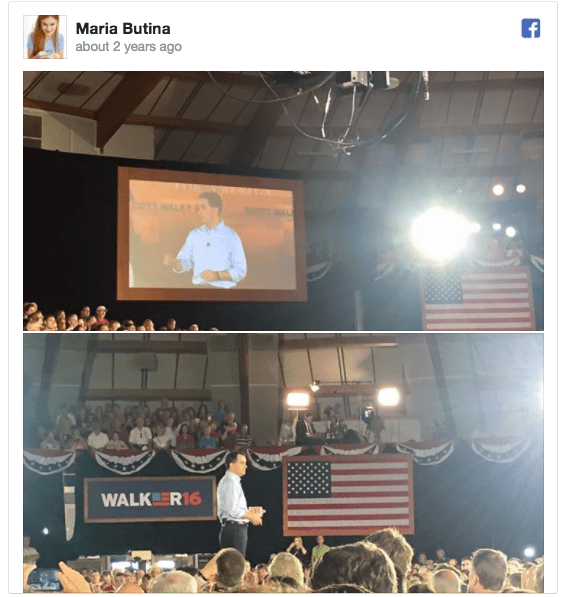
July 13, 2015: Butina attends the official launch of Wisconsin Gov. Scott Walker’s run for governor.
December 2015: An NRA delegation travels to Moscow to meet with Dmitry Rogozin, the deputy prime minister in charge of Russia’s defense industry who is a subject of US sanctions. The delegation consists of David Keene, Paul Erickson, and Milwaukee County, Wisconsin sheriff David A. Clarke. Right to Bear Arms pays $6,000 for Clarke’s meals, hotel, transportation, and entertainment. (Daily Beast story)
Feb. 7, 2016: Torshin attends National Prayer Breakfast in Washington, D.C.
February 10, 2016: Paul Erickson forms a limited liability corporation with Maria Butina called Bridges, LLC., based in South Dakota. What this company does is a mystery.
May 2016: According to The New York Times, Torshin tries to meet with Trump during the NRA comeeting between Trump and Vladimir Putin. Torshin Rick Clay, an advocate for conservative Christian causes, to Rick Dearborn, a Trump campaign aide.
May 2016: Paul Erickson, Marina Butina’s friend and business partner, writes an email to a Trump campaign aide, The New York Times reports.
Subject: “Kremlin Connection.”
Russia, Erickson writes, was “quietly but actively seeking a dialogue with the U.S.” and would use the NRA’s annual convention in Louisville, Kentucky, to make “first contact.”
“Putin is deadly serious about building a good relationship with Mr. Trump,” Erickson writes to Trump aide Rick Dearborn. “He wants to extend an invitation to Mr. Trump to visit him in the Kremlin before the election. Let’s talk through what has transpired and Senator Sessions’s advice on how to proceed.” Sessions says he does not recall the outreach.
“The Kremlin believes that the only possibility of a true reset in this relationship would be with a new Republican White House,” Erickson writes. “Ever since Hillary compared Putin to Hitler, all senior Russian leaders consider her beyond redemption.”
By “happenstance” and the reach of the NRA, Erickson says he had been put in position to “slowly begin cultivating a back-channel to President Putin’s Kremlin” in recent years.
“Russia is quietly but actively seeking a dialogue with the U.S. that isn’t forthcoming under the current administration.”
May 20, 2016: Torshin attends NRA convention in Louisville, Kentucky. He shares a table with Donald Trump, Jr. at a private dinner. According to The New York Times, Torshin had tried and failed to meet with candidate Trump in Louisville to pitch a “backdoor meeting” with Putin. In the picture below, David Keene is in the background and Torshin is wearing a button that reads “I’m the NRA and I Voted.”
May 2016: Taganskaya mafia boss Alexander Romanov is sentenced to almost four years in a Spanish prison, after pleading guilty to illegal transactions totaling 1.65 million euros ($1.83 million) and $50,000.
August 8, 2016: Bloomberg reveals Torshin’s connections to organized crime.
Nov. 12, 2016: Butina celebrates her birthday with a costume party in Washington, DC. attended by several Trump’ campaign consultants.
January 15, 2017: Torshin tweets that he brought a gift for NRA President Allan D. Cors. President Cors loves tanks.
January 20, 2017: Maria Butina and Paul Erickson attended the invitation-only Freedom Ball to celebrate Donald Trump’s swearing in as President of the United States.
Feb. 2, 2017: Torshin and Butina are excited to meet newly-elected President Donald Trump at the National Prayer Breakfast. Their hopes are dashed at the last minute when a White House national security aide notices Torshin’s name and flags him as a figure who had “baggage,” a reference to his suspected ties to organized crime, according to Yahoo News.
Butina told Yahoo:
“Late the night before, we were told that all meet and greets were off,” Butina wrote in an email. “There were no specific questions or statements that Mr. Torshin had in mind during what we assumed to be a five-second handshake. We all hope for better relations between our two countries. I’m sure there will be other opportunities to express this hope.”
Fin.
 Trump / Russia