The New Tsar: The Rise and Reign of Vladimir Putin by Steven Lee Myers
Russia, as a country, punches far above its weight.
Its economy — kleptocracy, really — is smaller than that Italy, Korea or Brazil. And it is mired in a recession, dragged down by rampant corruption, and the imposition of sanctions by the European Union and the United States. And yet, rather than focus inward, reassess or attempt to rebuild, Russia focuses outward at its many perceived enemies — foremost among them the United States.
As everyone but President Trump acknowledges, Russia launched an audacious campaign to influence the 2016 U.S. presidential election. According to U.S. intelligence, that campaign was ordered by none other than Russia’s president, Vladimir Putin. And it succeeded beautifully. Russia managed to undermine faith American democracy, denigrate Hillary Clinton and diminish her chances of winning, all for virtually no cost at all.
And now we learn that Russia, to help its preferred candidate, Donald Trump, provided assistance that may have been even more direct. Top Trump campaign aides were in constant and repeated contact with Russian intelligence officials. A leaked dossier compiled by a former British spy suggests that Moscow has scandalous and compromising material on Trump (kompromat) that make him susceptible to blackmail. Trump’s own behavior — his blasé attitude about Russia’s meddling, his nonstop praise for Putin — lend credence to these allegations.
Trump denies all. “It’s all fake news,” Trump cried in his press conference Feb. 16. But worries are mounting in Congress and in the US intelligence community, and the president knows it.
The concern of this website and many others that Trump is not acting in the best interests of America when he says he wants to strike some kind of grand bargain with Russia, as he has signaled he intends to do. “I would love to be able to get along with Russia,” Trump said in his Feb. 16 news conference. “Now, you’ve had a lot of presidents that haven’t taken that tack. Look where we are now. Look where we are now.”
So let’s take a look at where we are now and how we got here. What drove Putin to meddle in the U.S. election? Why does Putin hate Hillary Clinton so much that he would hack a US election? Is this the action of a rational man?
In The Last Tsar, an excellent political biography of Putin by Steven Lee Myers, a veteran Moscow correspondent for The New York Times, we get an answer of sorts: Russia sees itself as a nation under siege from the West. After a quarter-century of relative openness since the collapse of the Soviet Union, since 2014, most Russians have once again to come to view the outside world as “an enemy at the gates, to be feared and resisted.”
Russia’s bellicose foreign policy is a reflection of the autocratic Putin himself, who has been fighting his whole life. As a youth growing up in a rough section of Leningrad (today’s St. Petersburg), he became (and remains) an accomplished judo practitioner. He brawled in the streets. “I was a real thug,” he once said, and he was unable to back down from a challenge, even when he knew better or should have. While attending a prestigious KGB academy, Putin got into a fight with some hooligans on the Metro. He returned with a broken arm, and his KGB career suffered for it. Putin never got a glamorous foreign posting in the United States or Western Europe, serving instead in dreary East Germany.
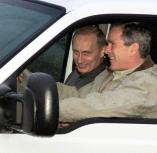
On the ranch
It’s easy to see the Russia-United States relationship as just another fight Putin won’t back down from, but things weren’t always this bad between the two former Cold War adversaries. It was a different Putin who was the first foreign leader to telephone Bush after the attacks of Sept. 11, 2001 and offer any assistance. Bush invited Putin to spend three days at his ranch in Crawford. The U.S. president famously said he looked Putin in the eye and got a sense of his soul. He liked what he saw: a man deeply committed to his country.
The 2003 invasion of Iraq was a turning point. For Putin, the Iraq war revealed the true intentions of the United States: it wanted to impose “freedom” on the rest of the world, with force if necessary. By the end of his presidency, Bush realized he had misjudged the man. “Vladimir,” Bush told him, “you’re cold-blooded.”
It sure seems that way. His critics have been silenced with blackmail, arrests, beatings and murder. And not just bullet-in-the-head-drop-the-gun-at-the-scene assassinations, but grotesque, baroque murders that seem to almost gleefully make a public example of the victim’s suffering. Poisoning seems to Russia’s signature style.
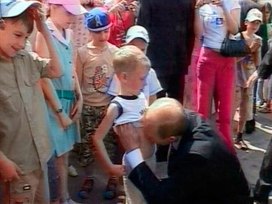 Alexander Litvinenko, a former Russian secret service operative who became a outspoken Putin, was famously poisoned in 2006 with radioactive Polonium 210, shortly after he had publicly accused Putin of being a pedophile shortly before his death.
Litvinenko’s interest was piqued by a photo of Putin kissing a boy’s stomach and a long-rumored videotape of Putin himself in a sexual tryst, Myers notes. (Litvinenko wrote that the tape showed Putin having sex with young boys.) If Putin didn’t order the murder of Litvinenko and many others, he, at the very least, “created a climate that made political murder grimly ordinary,” Myers writes.
Putin formally broke with the United States in 2007 in a speech at the Conference on Security Policy in Munich, Germany. He said the world was being plunged into “an abyss of permanent conflicts” because of one nation’s “almost uncontained hyper use of force — military force.” And in case anybody didn’t get the message, Putin went on to call out the United States by name:
“We are seeing a greater and greater disdain for the basic principles of international law. And independent legal norms are, as a matter of fact, coming increasingly closer to one state’s legal system. One state and, of course, first and foremost the United States, has overstepped its national borders in every way. This is visible in the economic, political, cultural and educational policies it imposes on other nations. Well, who likes this? Who is happy about this?
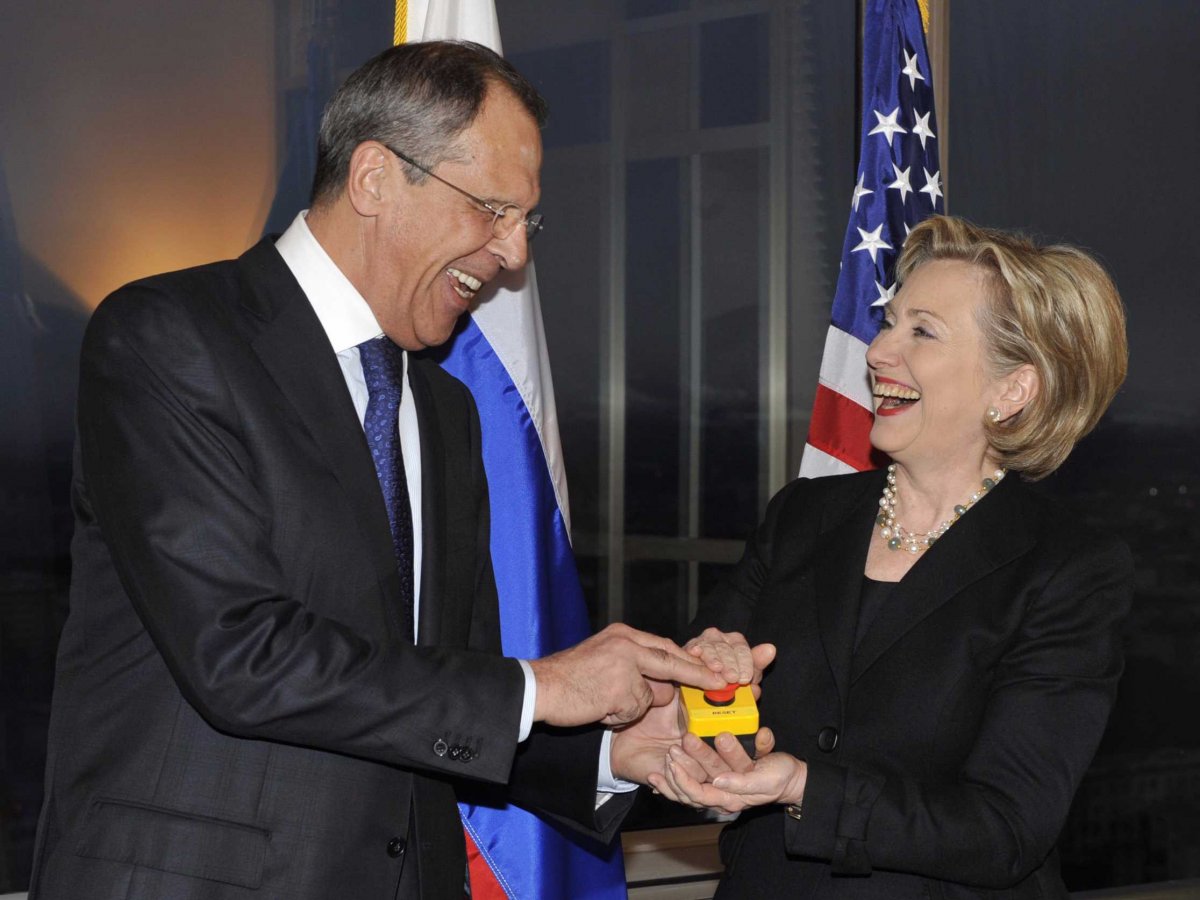
Putin gave up the presidency in 2008 to his long-time factotum Dmitry Medvedev, and took the post of prime minister. It was during the Medvedev era that the United States attempted to “reset” relations with Russia. The United States saw in Medvedev, a liberal reformer, an opportunity to build bridges.
At his Feb. 16 press conference, Trump brushed off this effort as a joke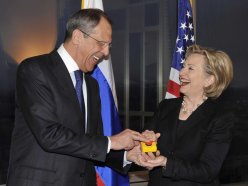 . “Hillary Clinton did a reset, remember? With the stupid plastic button that made us all look like a bunch of jerks. Here, take a look. He looked at her like, what the hell is she doing with that cheap plastic button?” Trump said.
But it wasn’t a joke. There was progress. Russia allowed U.S. forces to pass through Russian airspace on their way to Afghanistan and President Obama dropped plans to build a missile shield over Eastern Europe. In March 2010, the United States and Russia agreed to reduce their nuclear arsenals, which President Trump reportedly denounced as a bad deal during his phone conversation with Putin on January 28.
In 2011, the United States began pushing for a military intervention in Libya. Medvedev, at Secretary Clinton’s urging, agreed not to use Russia’s veto on the U.N. Security Council to thwart an intervention. Putin was furious. “The resolution is defective and flawed. It allows everything,” he said. “It resembles medieval calls for crusades.”
It was in 2012, when Putin returned to the presidency, that things really went downhill for the United States and Russia. He and Medvedev switched jobs in what became known as the rokirovka, the Russian word for castling in chess, where the castle and king exchange places to protect the king.
Mikhail Khodorkovsy, the former head of the Yukos oil company who had been thrown in jail and watched his company seized by the government, wrote in an open letter that Putin was dragging Russia down with him.
“[Putin] is incapable of tearing himself away from the already unliftable ‘oar’ of the monstrous ‘galley’ he himself has built. A galley that apathetically sails right over people’s destinies. A galley over which, more and more, the citizens of Russia seem to see a black pirate flag flying.”
Many Russians were furious over the rokirovka, which they saw as a cynical political manipulation. Thousands took the streets, chanting “Putin is a thief.” That the protests were peaceful made them even more terrifying to the Kremlin, Myers writes. Putin refused to see that protesters wanted a Russia without Putin; instead he blamed Secretary Clinton in language lifted out of the Cold War. “She set the tone for some actors in our country and gave them a signal,” Mr. Putin continued. “They heard the signal and with the support of the U.S. State Department began active work.” Putin cracked down hard on the opposition, and ramped up anti-American voices on state media. Any critic of Putin now risked being tarred as a US agent.
Things went from bad to worse later that year, when President Obama signed into law the Magnitsky Act, named for an auditor who was beaten to death in a Russian prison after investigating Russian tax officials. The law was intended to punish those responsible for Magnitsky’s death. The Russian Duma responded by, among other things, banning the adoption of Russian children by Americans, essentially punishing their own children out of spite.
Many in the US intelligence community saw it as no coincidence that Edward Snowden, the National Security Agency whistleblower, found refuge in Russia. Many in US intelligence are convinced that Snowden all along was a Russian spy. Putin called his arrival in the summer of 2013 a “Christmas present,” and he uses Snowden to mock and belittle the CIA.
In 2014, right after the Winter Olympics in Sochi, Russian forces invaded Ukraine and swiftly annexed Crimea. As Myers observes, the man who had once decried the United States’ “uncontained hyper use of force” now seemed to be saying, “Well, if you can do it, why can’t we?” The United States and the European Union responded by imposing ruinous economic sanctions on Russia. In response, Snowden was quickly granted him asylum, yet another act of Russian nose-thumbing.
And so, today, US-Russia relations have returned to their familiar Cold War roots, just as they were in Putin’s days as a young man in the KGB. Putin sees the influence of the United States everywhere — in Ukraine, in Georgia, in the Arab Spring, to name a few — and Russia sees NATO as an existential threat, just as it did in Soviet days. It’s siege mentality: enemies are closing in; we must fight back. And Russia has chosen to fight back, not with the awesome strength of the nuclear arsenal it possess, but in the more covert “active measures” it employed in Soviet days. Russia has cleverly exploited modern technology to use what are really old tricks of propaganda, subterfuge and funding of foreign pressure groups.
Domestically, Russia is a mess. The ruble has crashed. The price of oil, which accounts for nearly 70 percent of Russia’s exports, has fallen, which Putin blames on a conspiracy between Saudi Arabia and the United States. Russia plunged into an economic crisis. Despite all this, Putin remains enormously popular. His dark, paranoid vision of the world, thanks to his effective control of Russia media, has become his country’s vision of the outside world.
“When a Russian feels any foreign pressure, he will never give up his leader,” said Russia’s first deputy prime minister Igor Shuvalov. “Never. We will survive any hardship in the country — eat less food, use less electricity.”
Wrapping themselves in the flag may not be enough to keep Russians warm during this Cold War, however.
Unless Donald Trump has his way.

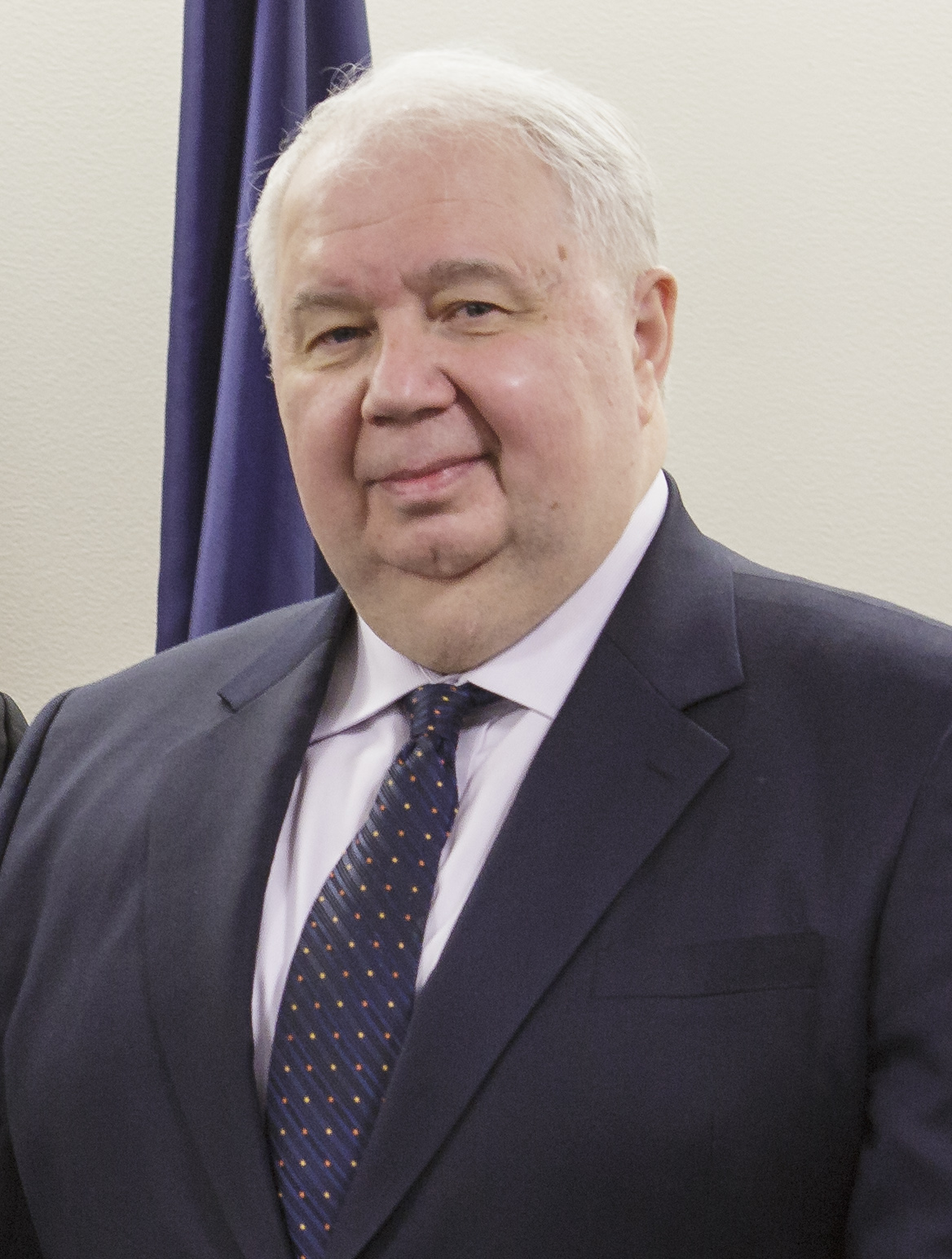
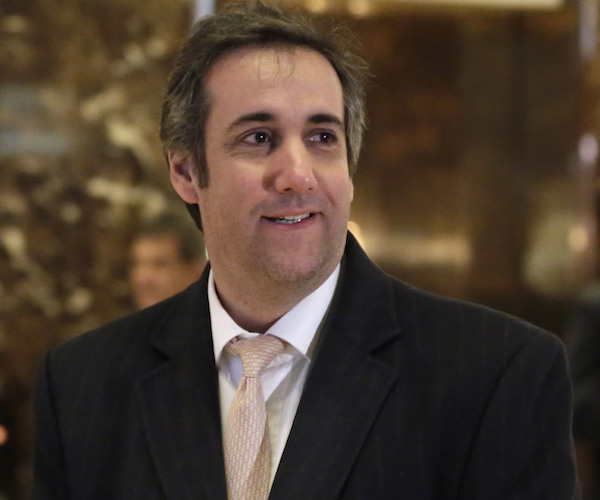
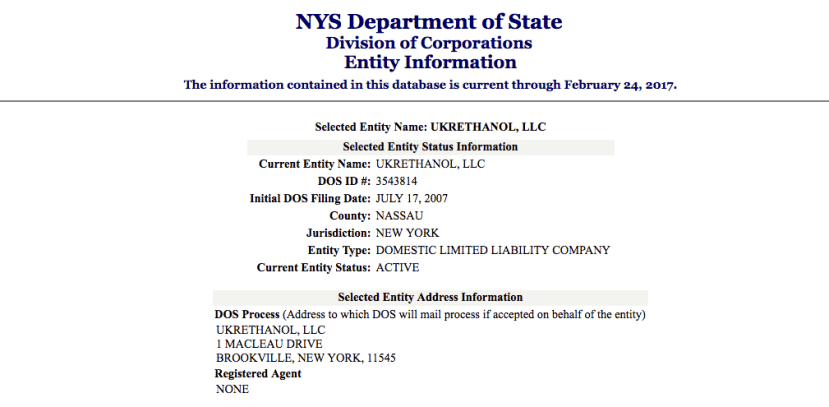 Ukrethanol LLC was founded in July 2007, just months after Michael Cohen joined the Trump Organization. Prior to that Cohen was a partner at the New York law firm of Phillips Nizer.
 Trump / Russia