RT — The Foreign Agent in Your TV Set

The motto of RT, the Kremlin-backed propaganda network, is “question more.”  RT loves to pose questions about all manner of conspiracy theories, such as the Sept. 11 attacks were an inside job. However, one subject which RT dares not question is the nature of its own organization.

  • What is RT America?
  • Does the Kremlin pay its bills?
  • Is RT a foreign agent?

What is RT America?

RT describes itself as a “publicly-funded, non-profit organization.” It is a brand of ANO TV-Novosti, an “autonomous non-profit organization”, established in Moscow 2005 by the now-defunct Russian news agency, RIA Novosti. In the United States, it operates through a US corporation that is RT in all but name.

When it first launched in 2005 the network called itself “Russia Today” but it rebranded itself in 2009 as the more ambiguous RT.  “We removed ‘Russia Today’ from the logo after many colleagues, also from foreign media, told us that it was diminishing our potential audience,” said Margarita Simonyan, RT’s editor in chief told The Moscow Times. “Who is interested in watching news from Russia all day long?”

Fans of “alternative facts” love to tune in to RT, which bombards viewers in Europe, the UK (where RT’s bank accounts have been frozen) and America with all sorts of outlandish stories in English, Arabic, Spanish, and, of course, Russian.

The US intelligence community devoted a good deal of its report on Russia’s interference in the US elections to RT, saying it was part of “a Kremlin-directed campaign to undermine faith in the US Government and fuel political protest” and noting that RT’s editor in chief Margarita Simonyan was close to the Kremlin. Not to be outdone,  Simonyan cleverly mocked the report in an open letter titled, “Dear CIA.”
3975f97600000578-3843634-image-a-1_1476732140501

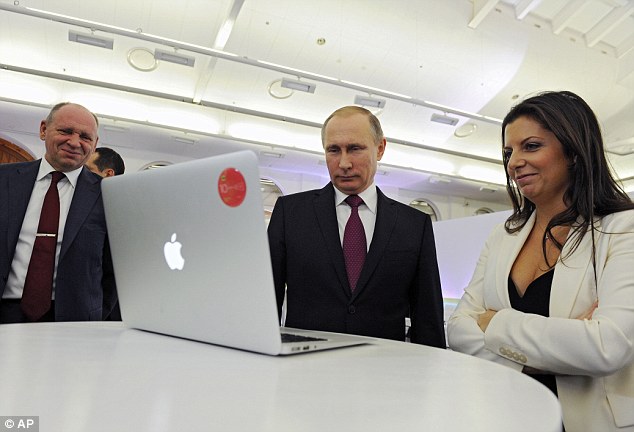
RT editor Margarita Simonyan and Vladimir Putin

Does the Kremlin pays its bills?

RT’s budget of more than $300 million comes from the Federal Agency for Press and Mass Communications of the Russian Federation. (By comparison, the budget of the BBC, which is funded by the British government, is $375 million). In other words, yes, the Kremlin pays the bills.

Is RT a foreign agent?

The funny thing about RT is that the only place you will find it in the United States is on your TV set. RT has been very careful not to have any legal or physical presence in the United States.

The only legal paperwork I could find for RT was a 2009 US trademark application:
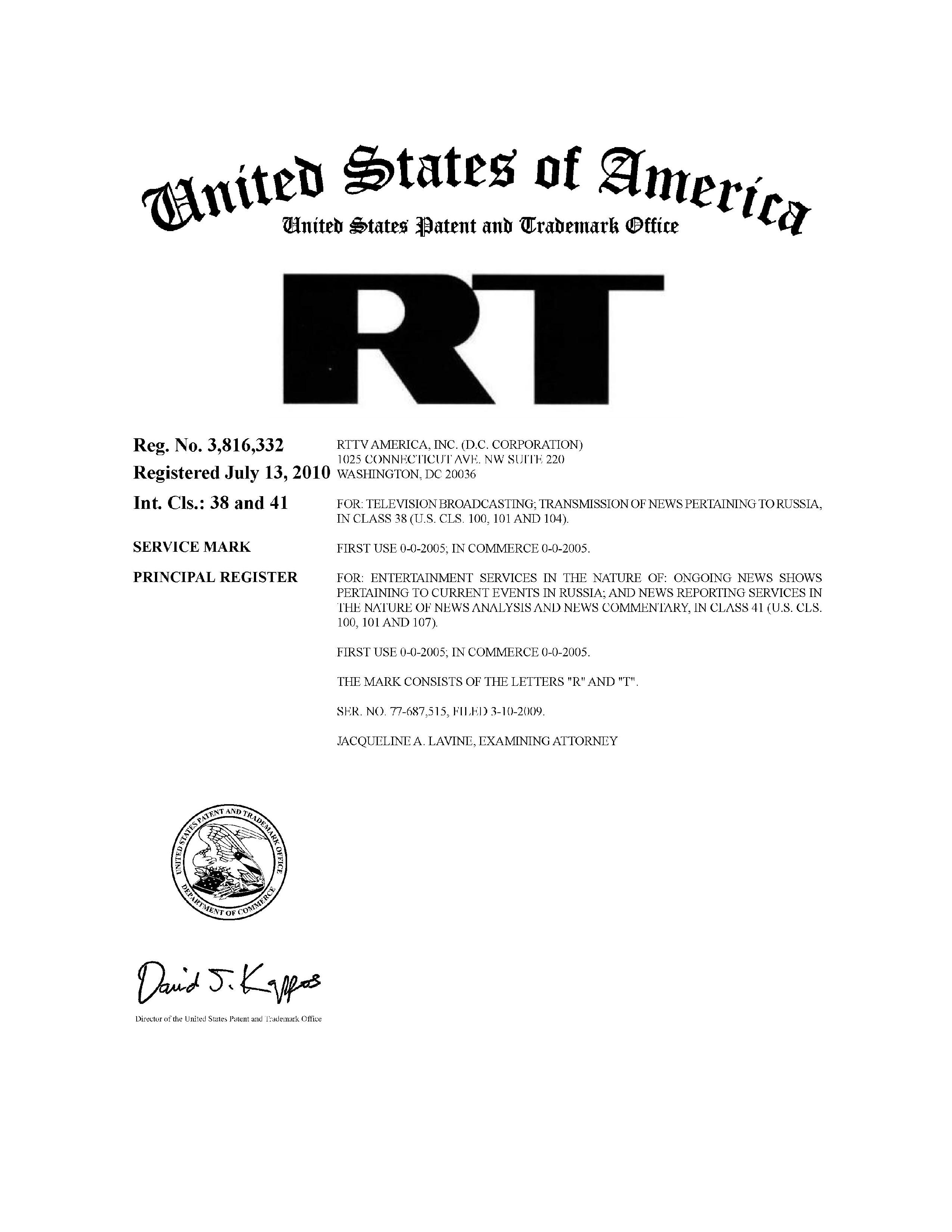
As you can see, RT’s own trademark states that it produces “ongoing news shows pertaining to current events in Russia.”

The trademark was obtained by RTTV America Inc., the commercial entity through which RT America operates in the United States.

RT’s editor Margarita Simonyan says that RT does not need to register under the Foreign Agents Registration Act. RT “simply transfers funds” to RTTV America.

However, this is a fig leaf. RT’s own trademark application, shows that RTTV America assigned its entire interest in the trademark to ANO TV-Novosti in Moscow.
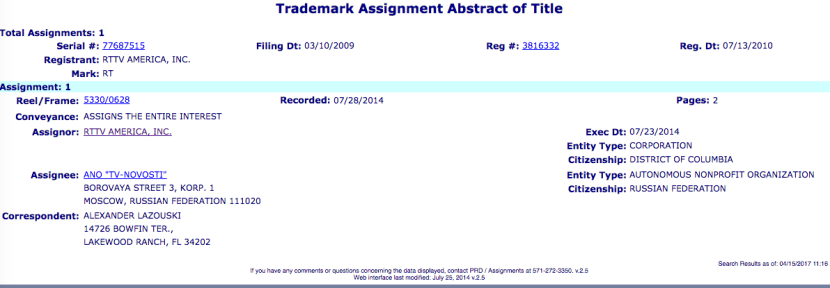
The entire value of the RT brand in the United States belongs to a Russian corporation.

The Foreign Agents Registration Act of 1933 is designed to “insure that the US government and the people of the United States are informed of the source of information (propaganda) and the identity of persons attempting to influence US public opinion, policy, and laws.”

As the Atlantic noted, two Asian television networks and the distributors for two Chinese daily newspapers have registered under FARA. NHK, which rebroadcasts Japanese programming in the United States, is registered as a foreign agent.

The FARA statute exempts news organizations unless they are “owned, directed, supervised, controlled, subsidized or financed” by any organization registered outside the United States. It’s clear that RT is funded by the Russian government. So, yes, RT is a foreign agent.

Ilya Ponomarev, a leftist former member of the Russian Duma who now lives in exile in the United States, told Buzzfeed that RT is not a media outlet, and should register as a foreign agent.

“It’s a great mistake that the west is doing, that it’s acknowledging it as a media tool,” he said. “I think it’s a lobbying tool and it should be regulated as a lobbyist rather than media.”

“Russia Today is way more dangerous than ISIS. Way more dangerous,” he said. “Because ISIS may create physical danger with certain western individuals who are coming into direct contact with ISIS, but RT is very focused and committed in disputing the very core values of western society.”

The most difficult question to answer is whether RT deserves First Amendment protections. I’ll try to tackle that in a future post.


Why Did a Russian NHL Player Sue Trump’s Lawyer, Michael Cohen?

Vladimir Malakhov is a Russian-born retired professional hockey player. He was active in the NHL 1992 to 2006, playing for the New York Islanders, the Montreal Canadiens, and the New Jersey Devils.

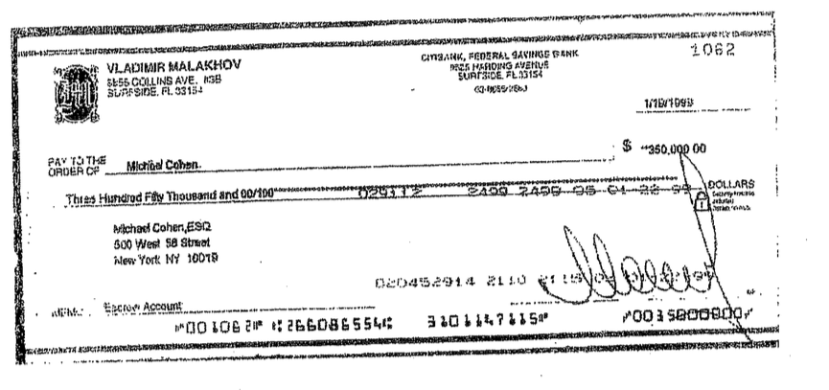
In January of 1999, Malakhov wrote a check for $350,000 to Michael D. Cohen, Trump’s personal lawyer. The check was deposited — and then the money disappeared.

Screen Shot 2017-04-14 at 8.25.50 AM

What happened to the money and how this check came to be written to Michael Cohen was the subject of years of litigation in Circuit Court in Miami, Florida. (See Fomina v. Netscheret, 2006-001330-CA-01.)

Malakhov sued Cohen (/a/k/a “Michael D. Hacking”) in 2010 in Miami Circuit Court. (Malakov v. Cohen, 2010-14576-CA-03). I’ve embedded the lawsuit at the bottom of this post.

The story begins in late 1998 or early 1999, when Malakhov was living in Florida, and earning millions as a professional hockey player playing with the Montreal Canadiens.

One day, an acquaintance asked him for a large loan. The acquaintance was a woman named Julia Fomina. According to an affidavit filed by Malakhov’s agent, the money was intended not for Fomina but rather her boyfriend in Russia, Vitaly Buslaev. (For more on Buslaev’s background, see Yuri Felstinsky’s original article at the website Gordonua.com. There’s also a story out in Buzzfeed.)

Malakhov loaned $350,000 to Fomina and, on the advice of his attorney, secured the loan by having Fomina sign over a mortgage for her apartment on the 24th floor of Miami Beach condo tower.

For reasons that aren’t clear, Fomina instructed Malakhov’s wife to send the $350,000 loan to Michael Cohen. The check was issued in January 1999 to Cohen personally, not his law firm or many businesses, and deposited in Cohen’s Citibank trust account.

Sometime later, Fomina defaulted on her loan.  When Malakhov moved to foreclose on the condominium, Fomina swore under oath that she never received the $350,000 that had been sent to Cohen.

It took years before Cohen was finally deposed and asked what happened to the money. Cohen’s response: “I don’t recall.”  He insisted he didn’t know Malakhov, had no idea why the hockey player would write him such a huge check, had no records relating to the check, and had no clue what happened to the money.

A Miami judge accepted Cohen’s story and dismissed the case.

In deposition, Cohen speculated that one of the reasons why Malakhov might have sent him the check were his ties to Russians, including his business partner, the Ukrainian-born “Taxi King” Simon Garber. I’ve written previously about Cohen’s family ethanol business in Ukraine.

The Malakhov story connects to Trump in another roundabout way.

A few years before he wrote the check to Cohen, Malakhov was shaken down by a Russian mobster, according to testimony at a U.S. Senate hearing on Russian organized crime.

Malakhov, who at the time was playing for the New York Islanders, was approached in the National Restaurant in New York City’s Brighton Beach neighborhood. The man who demanded money from the hockey player worked for Vyacheslav Kirillovich Ivankov, one of the most powerful Russian Mafia bosses in America.

As I noted in an earlier post, Ivankov is one of several Mobsters who turned up in Trump Tower. Invakov also showed up Trump’s New Jersey casino, the Taj Mahal. Ivankov’s phone book included a working number for the Trump Organization’s Trump Tower residence, and a Trump Organization fax machine.

Ivankov was arrested in 1995 and sent to prison for extortion. After his release he returned to Russia where he was assassinated.

As for Malakhov, after he was shaken down, he spent the next months in fear, looking over his shoulder. His worries ended when he was traded to the Canadiens.

A Missing Piece of the Puzzle

The Guardian is out with a report that contacts between the Trump campaign and Russian intelligence occurred much earlier than previously reported:

GCHQ first became aware in late 2015 of suspicious “interactions” between figures connected to Trump and known or suspected Russian agents, a source close to UK intelligence said. This intelligence was passed to the US as part of a routine exchange of information, they added.

Looking at the Trump-Russian Timeline, this puts other events around that time into context. Beginning in late 2015,  the following events occurred:

  • December: Accounts associated with Russian propaganda “troll farm” called the Internet Research Agency begins supporting Donald Trump
  • December 17: Vladimir Putin praises Donald Trump at his annual news conference. “He is a bright and talented person without any doubt. He is the absolute leader of the presidential race.”
  • Feb. 2: Alexander Dugin, a conservative “philosopher” with close ties to the Kremlin, endorses Trump.
  • March: Individuals linked to the Russian government begin openly supporting Donald Trump. Government-funded propaganda outlets RT and Sputnik cast Trump as the target of unfair coverage from mainstream media outlets.
  • March: A hacking group known as “Fancy Bear” or “APT28” launches a spearfishing campaign targeting email addresses at hillaryclinton.com and dnc.org that gains them access to DNC network. The hacking group is run by the Russian foreign military intelligence service (GRU) and appears focused on a single target: the DNC’s opposition research files on Donald Trump.

What the publicly available information shows is a steady ramping up of Russian support for Trump.

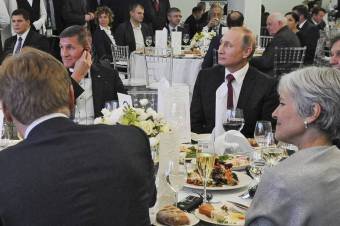
flynn-putin

Our man in Moscow

The GHCQ information fills in the missing piece. The contacts between the Trump campaign and Russian intelligence appear to be the catalyst for the covert and overt support from Moscow.

Michael Flynn’s December 10 trip to Moscow also emerges as a possible lynchpin in this story. Flynn, you will recall, attended RT’s 10th anniversary gala in Moscow, where was seated at the head table next to Vladimir Putin. It’s not clear what Flynn’s role in the campaign was in this time, if any. The two men first met in August; Flynn announced he was advising Trump in February 2016.

A website that tracked Trump’s evolving campaign team lists the following people as part of Trump’s inner circle in late 2015:

  • Corey Lewandowski
  • Michael Glassner
  • Donald F. McGahn
  • Michael Cohen
  • Hope Hicks
  • Roger Stone (resigned Aug. 8, 2015)

More TK.


Op-Ed: Trump’s $95 million home sale to Russian deserves scrutiny

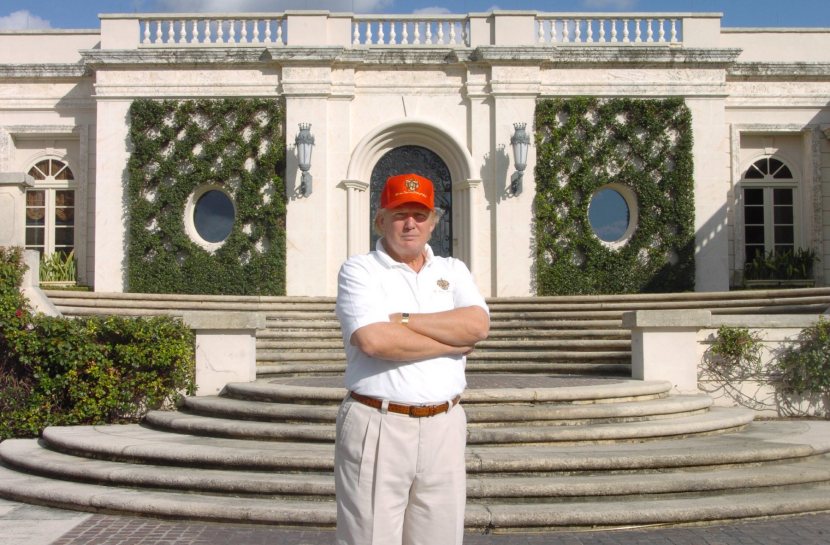
MDN1-BIZTRUMPTEASE0227.BIN

Trump outside Maison de l’Aimitie, which he sold to a Russian billionaire.

Published online April 6, 2017 in The San Diego Union-Tribune

by Seth Hettena

When the FBI recently revealed that it was investigating the nature of any links between President Trump, his associates and the Russian government, I was reminded of another scandal involving disgraced San Diego County Congressman Randy “Duke” Cunningham.

The story, which began with a report published in the San Diego Union-Tribune, grew into one of the biggest political scandals in county history. In 2006, a federal judge sentenced Cunningham to 100 months in prison for accepting $2.4 million in bribes from defense contractors to whom he steered lucrative Pentagon contracts.

cunninghamx

Duke Cunningham

While there are many differences between the two men — Cunningham, unlike Trump, served his country honorably during the Vietnam War and became a highly decorated Navy fighter pilot — there are similarities where their political careers are concerned.

Like Trump, Cunningham had a loose tongue that often got him in trouble. Like Trump, he mocked, taunted, bullied and insulted his political opponents. And like Trump, Cunningham was drawn into far-fetched conspiracies. Look in the Congressional Record, and you’ll find Cunningham denouncing President Bill Clinton as a traitor and a KGB dupe because of a visit to Moscow as a college-aged man.

At the center of Cunningham’s bribery scandal was a real estate deal. Cunningham sold his home in Del Mar to a defense contractor and campaign contributor named Mitchell Wade, one of the shady “friends” the congressman attracted. Wade paid $1.675 million for the congressman’s home in 2003, an eye-popping figure that attracted attention even in San Diego County’s red-hot housing market.

Wade bought the home without ever having set foot in it, and only later found out that it was in sorry shape, darkened by the bars Cunningham installed over every window and skylight to foil Del Mar’s burglars. Wade put the home up for sale a month later, but it languished for a year before he managed to unload it for a $700,000 loss. To prosecutors, it smelled like bribery. And it was.

President Trump also sold a home for more than it was worth — except the house itself and the sale price were both much, much bigger. The property was a sprawling, oceanfront mansion in Palm Beach, Florida that Trump sold for $95 million after purchasing it four years earlier for $41 million. At the time, it was the most expensive U.S. home sale ever.

profilePic43399-1449056544761.jpg

Dmitry Rybolovlev

The buyer of the 6-acre property was a Russian fertilizer magnate named Dmitry Rybolovlev. The sale took place in July 2008, a time when the overheated U.S. real estate market was showing signs of distress and the supply of luxury homes exceeded demand.

Rybolovlev overpaid. Five years after the sale, Palm Beach County officials appraised the house at less than $60 million.

To be fair, no one has accused Trump or Rybolovlev of bribery, but the similarities between the sale of Cunningham’s property and Trump’s are striking. Not unlike the defense contractor who bought Cunningham’s Del Mar home, the Russian fertilizer king showed little interest in Trump’s mansion before or after he bought it. He never lived in it and is said to have visited it only once.

The home was plagued by mold, and, amazingly, a lawyer for Rybolovlev’s ex-wife told the Palm Beach Post he found no evidence that the Russian billionaire had hired anyone to inspect the property before he paid Trump a $50 million premium for it. In 2015, Rybolovlev got permission to demolish the 61,744-square-foot home, and is now selling off the land underneath it.

Other coincidences link Rybolovlev and Trump. Reporters have tracked the Russian billionaire’s private plane to cities where Trump was traveling during the 2016 presidential campaign and into his presidency. Both men say they have never met.

It could be that the sale of the Palm Beach mansion is an example of Trump’s ballyhooed deal-making skills. And it is also possible that it was something else: that the purchase of the mansion known as Maison de l’Aimitié (House of Friendship) was a covert form of payment from friends unknown in Russia or elsewhere.

The major difference between the two transactions is that at the time of the sale of the Palm Beach mansion, Trump was not a public official. But now that he occupies the most powerful office in the world, the FBI, Senate and House intelligence committees who are examining the president’s ties to Russia should learn the lessons of the Cunningham scandal and give the enormous premium paid for Trump’s moldering mansion — purchased sight unseen — the close scrutiny it deserves.

Hettena, a former military writer, is a freelance writer based in San Diego.