Jared Kushner Timeline

This is a guest post by Terry J. Clark, a frequent reader of this site who follows the Trump-Russia story.
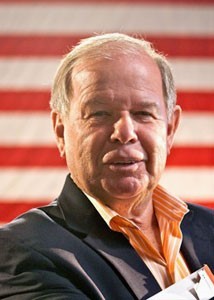
Lanny Wiles
As we now know, on June 9th, 2016, Donald Trump Jr., the future president’s son, met with several Russian operatives at Trump Tower in New York City.
The meeting is the best evidence yet of collusion between the Trump campaign and Russia. Don Jr. had been lured to the meeting by a promise of dirt on Hillary Clinton from Russia.
One of the operatives at the June 9th meeting was a a former Soviet intelligence named Rinat Akhmetshin, who was working as a lobbyist in the United States. Akhmetshin, like everyone else who attended the meeting, has been the focus of intense scrutiny. A profile in The New York Times described him as a “master of the dark arts.”
A figure who has mostly escaped attention is a GOP operative working quietly behind the scenes with Akhmetshin. The operative is Lanny F. Wiles, a genial Southerner whose family is closely tied to Trump.
A week after the Trump Tower this meeting took place, Akhmetshin asked Wiles to hold a seat for someone at a June 14, 2016 hearing before the Foreign Affairs Committee on “U.S Policy Toward Putin’s Russia.”
The person whose seat Wiles was saving at the June 14 hearing turned out to be Natalia Veselnitskaya — the Russian attorney who lured Don Jr. to the Trump Tower by claiming that she had “dirt” on Hillary Clinton which she had obtained from the Russian government.
Wiles told ABC News he has “absolute, zero connection” to any relations the Russian lawyer may have had to the Trump campaign. But Wilkes clearly had a connection to Russia: He was working for it.
Wiles was working with Akhmetshin to undo the Magnitsky Act, a law despised by the Kremlin that sanctioned Russian officials connected to Sergei Magnitsky’s 2009 death. Magnitsky was a Russian lawyer who had worked for American-born investor Bill Browder to uncover a $230 million Russian government corruption scheme
The night of the June 14 House hearing, Wiles organized a dinner at the Capitol Hill Club, a private social club for Republicans. The dinner guests included Akhmetshin and Veselnitskaya as well as Rep. Dana Rohrabacher, a member of the House Foreign Affairs Committee who is seen as Vladimir Putin’s staunchest ally in Congress, and Paul Behrends, the congressman’s staff director (who was recently fired over his Russia connections).
According to this excellent Politico story, Rohrabacher and Behrends had, with Akhmetshin’s help, planned the day’s hearing to be a show trial of investor Bill Browder, the man behind the Magnitsky Act. That plan was nixed by senior committee Republicans and replaced with a panel that included two former US ambassadors to Russia.
Rinat Akhmetshin
Akhmetshin had been hired by Denis Katsyv, the owner of the Cyprus-registered company Prevezon Holdings, Ltd., which was linked to the Magnitsky case. Some of the money stolen in the scam uncovered by Magnitsky turned up in US bank accounts controlled by Prevezon.
Together, Katsyv and Akhmetshin recruited Wiles to undermine the Magnitsky Act.
While Wiles was working on behalf of Russian interests, he did not register as a foreign agent as required by the US law. Wiles told Politico that Akhmetshin told Wiles he wouldn’t have to register because he would be working for the law firm BakerHostetler.
[Side note: Fusion GPS, the DC firm that commissioned former British MI6 officer Christopher Steele to produce what became known as the Trump dossier, was also hired by BakerHostetler to dig up dirt on Bill Browder. (See Browder’s letter.) The firm is the subject of a July 19 hearing before the US Senate Judiciary Committee, at which Don Jr. is also expected to affair.]
Why Wiles was brought in for this anti-Magnitsky work is unclear. He was a longtime DC lobbyist for the PGA Tour and a Florida utility. Clients have included a companies that produce anthrax vaccines. His areas of expertise, while wide-ranging, don’t involve foreign affairs.
What may have brought Wiles into the world of Russian lobbying is his friendship Rep. Rohrabacher. The two men have been friends since their days in the Reagan administration, according to Politico.
Wiles got his start working on Ronald Reagan’s failed 1976 run for the White House. When Reagan won four years later, Wiles became a Reagan advance man. In 1983, Wiles was taken hostage inside the pro shop at famed Augusta National while Reagan golfed. Wiles managed to talk his way out.
Wiles went on to work on many campaigns, including Sen. John McCain’s 2000 and 2008 failed presidential runs. (McCain is a strong supporter of the Magnitsky Act). Both Wiles and his wife worked on the campaign of Florida Gov. Rick Scott, who was asked about his former aide’s connections to Russia.
Wiles’ wife, Susie, is the former co-chair of the Trump presidential campaign in Florida. Trump credited Ms. Wiles with the crucial Florida victory.
Wiles’ daughter, Caroline, was named director of scheduling at the White House until February of this year when she was “escorted” out of the White House after failing an FBI background check.
Wiles heads Wiles Consulting LLC in Florida. He’s also listed as president and chief executive of TransEuro America, which he formed in 2015 after “seeing a need to assist US aerospace and defense companies to achieve greater market share in the dynamic Middle East and international business environment in the most efficient manner.”

Bloomberg reports that Special Counsel Robert Mueller has decided that Trump’s sale of his Palm Beach mansion to a Russian billionaire is worth a deeper look.
As readers of this site know, Dmitry Rybolovlev, the Russian fertilizer king, bought the future president’s Palm Beach mansion in 2008 for $50 million more than Trump paid for it just a few years earlier. The mansion, called Maison de l’Aimitie (House of Friendship), was in such bad shape that Rybolovlev got permission to tear it down and sell off the land beneath it.
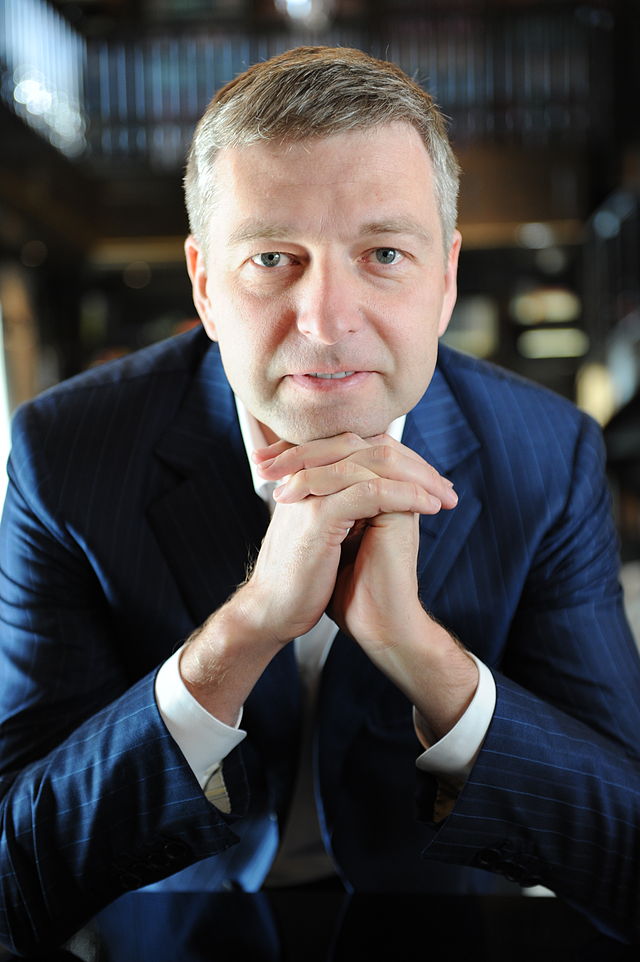
Dmitry Rybolovlev
I’ve written how this transaction has the marks of a bribery case I followed here in San Diego.
Not long after the mansion sold, Trump was approaching default on loan from Deutsche Bank. And the $50 million Trump pocketed on the mansion sale was enough to cover the $40 million he had personally guaranteed to the German lender.
Here’s a bit more detail: The Palm Beach mansion sold in July 2008. That fall, Trump was desperately trying to get Deutsche Bank to extend a senior construction loan for the 92-story Trump International Hotel and Tower in Chicago. The Chicago project was already facing weak sales before the 2008 financial meltdown hit.
Unlike many other Trump Organization projects, the Donald was personally on the hook in Chicago. He hadn’t licensed his name. He had no partners. He arranged all the financing himself: He put $77 million of his own equity into the tower and had given Deutsche Bank a $40 million personal guarantee. (See “In Chicago, Trump Hits Headwinds,” The Wall Street Journal, 29 Oct. 2008.)
Trump’s Deutsche Bank loan came due Nov. 7, 2008 with an outstanding principal balance of $334 million, plus $251 million in interest. Not only did Trump not pay, but with his usual bombast, he sued Deutsche Bank to force them to extend the loan. Deutsche Bank countersued, and demanded Trump cough up his $40 million guarantee. Deutsche Bank ultimately extended the loan for five years and eventually Trump paid it.
There are a lot of dogs sniffing around this tree. The personal guarantees Trump made for his Deutsche Bank loans are also of interest to New York State regulators looking at the president’s relationship with the German lender’s wealth management division: according to The New York Times:
Additionally, the New York regulators recently requested information related to the hundreds of millions in loans Deutsche Bank’s private wealth management division provided Mr. Trump, one of the people said, paying particular attention to personal guarantees he made to obtain the loans. Those guarantees have declined as the loans were paid down and the property values increased, but it remains a source of interest to the regulators.
For those who want even more detail, I’ve embedded Trump’s Deutsche Bank personal guarantee at the end of this post. If anyone with some expertise in these matters finds anything interesting in there, please let me know.
Mueller’s team are also said to be interested in dealings involving the Bank of Cyprus. Rybolovlev, the Russian oligarch who bought Trump’s Palm Beach mansion, became the bank’s largest shareholder in 2010 when he purchased a 9.7 percent stake through his British Virgin Islands holding firm, Odella Resources. (Wilbur Ross, Trump’s commerce secretary, invested in the bank in 2014.)
The shady mansion sale is just one of the things FBI investigators and others are examining:
It seems that Mueller’s team is looking for evidence of a payment disguised as a real estate transaction, fee or gift that would give Russians what the intelligence community likes to call “levers of pressure” that could be used against the US president.
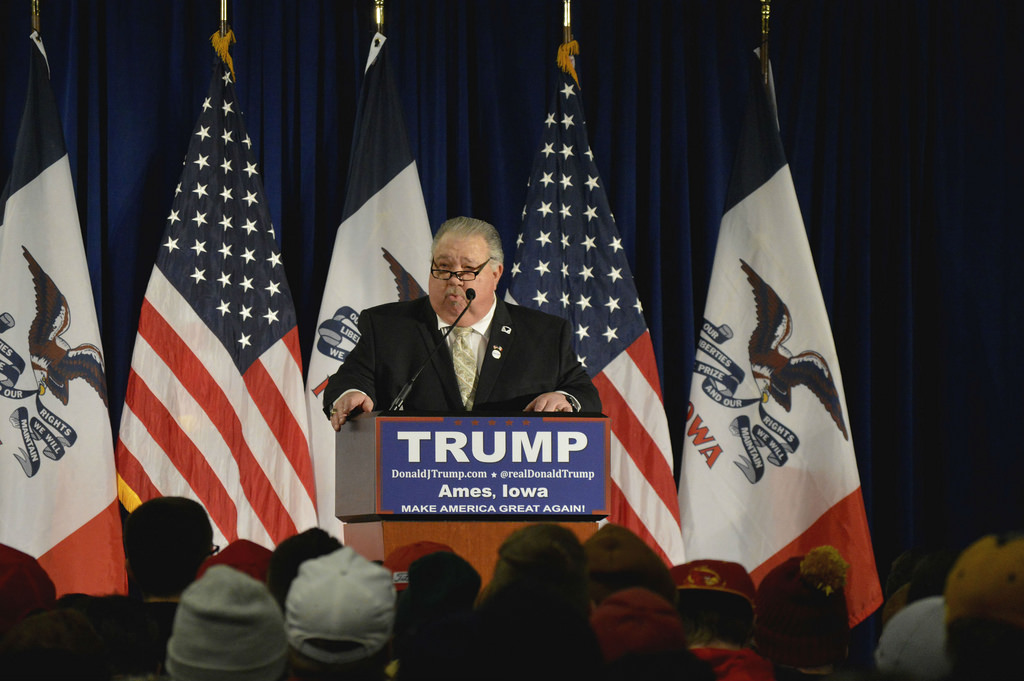 In September 2016, a longtime GOP operative launched a campaign to obtain Hillary Clinton’s emails from hackers.
The operative’s name was Peter W. Smith. According to a pair of blockbuster articles (here and here) by The Wall Street Journal, Smith “implied” that he had a connection to retired Gen. Michael Flynn, who served briefly as Trump’s national security advisor until he was ousted for lying about his contacts with Russian officials.
Flynn’s name is mentioned in a recruitment document Smith passed around last year:
Officials identified in the document include Steve Bannon, now chief strategist for President Donald Trump; Kellyanne Conway, former campaign manager and now White House counselor; Sam Clovis, a policy adviser to the Trump campaign and now a senior adviser at the Agriculture Department; and retired Lt. Gen. Mike Flynn, who was a campaign adviser and briefly was national security adviser in the Trump administration.
A name people might not recognize on this list is that of Sam Clovis, a porcine former college professor from Iowa better known as host of the radio talk show “Impact with Sam Clovis.” We don’t know how Clovis’ name wound up on the list but I have a feeling we may hearing more about Clovis in coming weeks or months.
Clovis was an early backer of Trump in Iowa, where Clovis is something of a conservative power broker. It earned him a spot in the campaign as senior policy adviser and co-chairman.
Trump finished second in Iowa, but he soon ran the table in ensuing primaries, and, as the Trump train gathered momentum, Clovis took leave from his position as a professor at Morningside College in Sioux City, Iowa to devote himself to the campaign. FEC records show he was paid more than $198,000 during the 16 months he worked on the Trump campaign.
The FEC filings say Clovis was paid for “communications consulting.” He described his role on the campaign to his hometown newspaper, the Sioux City Journal, as a “utility infielder.” His job was to appear on TV as a Trump surrogate, write talking points for speeches and “help find key people who can inform Trump’s developing policies on economics, immigration and foreign affairs”
Clovis told Bloomberg he led a two-person policy team that worked with campaign manager Corey Lewandowski to connect Trump to experts and former officials constantly.
In other words, Clovis was something of a gatekeeper for Trump. If you wanted to work on the campaign in a policy role or as a subject matter expert you went through Clovis.
“This whole notion that he is devoid of advisers is wrong. We have a lot of smart guys around us and a lot of smart people helping us,” Clovis said in January 2016.
One of the “smart people” whose name crossed Clovis’ desk was Carter Page, the head of an energy investment firm and a former banker with Merrill Lynch in Moscow. Clovis employed what The Washington Post described as the campaign’s “go-to vetting process” — a quick Google search — to check him out. Clovis gave Page his OK.
Page, we know now, was a disastrous choice. During his time as a Trump advisor, Page was the subject of a Foreign Intelligence Surveillance Act warrant, meaning that a US judge found probable cause to suspect that Page was acting as an agent of a foreign power. He reportedly was one of the Trump advisors Russian intelligence tried to use to infiltrate the Trump campaign.
Foreign diplomats trying to figure out Trump also realized that Clovis was the man to see. He was one of the few Trump campaign officials authorized to speak on behalf of his boss.
Joe Hockey, Australia’s ambassador to the United States, was one who called on Clovis. Hockey hosted Clovis and Stephen Miller, in March 2016 at his private residence. (See “Deep ties to keep relations on track,” The Australian, 11 Nov. 2016) It was the first of several meetings on defense, trade and immigration.
In April, German Foreign Minister Frank-Walter Steinmeier, who described Trump as a “hate preacher,” sent his state secretary, Markus Ederer, to meet with Clovis. The two men met discreetly at a cafe in Washington where Ederer struggled to understand what a Trump victory would mean for German-American relations. According to a report in Der Spiegel, “The Iowa Republican sought to ease the German’s concern about a possible Trump victory. But whenever Ederer probed deeper, Clovis was unable to provide satisfactory answers.” (See “Merkel Anticipates Frosty Relations with U.S.,” Spiegel, 4 January 2017) Clovis also met with Germany’s US ambassador, Peter Wittig, as did Jared Kushner.
It remains to be seen what meetings, if any, Clovis had with Russian diplomats.
Meanwhile, Clovis’ formerly hardline views on Russia were evolving. During his long career in the U.S. Air Force, Clovis had trained and planned for combat with the Soviet Union. In 2014, when Clovis ran unsuccessfully for the US Senate in Iowa, he advocated a “containment” policy against Russia. “I think we need to also make it very clear to Russia … that any incursions outside of Crimea, the Ukraine, would be met with great vigor,” Clovis told Radio Iowa.
Two years later during the Republican convention in Cleveland, however, Clovis angrily defended the campaign’s decision to remove language from the GOP platform that called for providing lethal defensive weaponry to Ukraine. It was too expensive, Clovis felt.
“It’s okay to go out here and load your mouth up and say stuff and say, ‘Yeah we are going to come to your aid, we’re going to provide you arms, we’re going to come out and do all these things. But nobody has taken the time to think this through to its logical conclusion,’” Clovis said. “What are the costs going to be to the United States, not just in Ukraine but also in NATO and also around the world?”
Although he doesn’t look the part, Samuel H. Clovis Jr. is a former fighter pilot. He grew up in rural Kansas and attended the U.S. Air Force Academy in Colorado. Clovis spent 25 years with the U.S. Air Force from 1971 to 1996.
His career included command of the 70th Fighter Squadron, at Moody Air Force Base in Valdosta, Georgia. In the mid 1980s, he served on the staff of the Pentagon’s Project CHECKMATE, where he assessed the performance of the Air Force in a hypothetical war with the Soviet Union. Clovis also served as chief of the office of military cooperation at the embassy in Bahrain. (He considers himself an expert on the Middle East.) He retired as the Inspector General of NORAD and the United States Space Command with the rank of colonel.
After leaving the military, Clovis worked at Logicon, an Alabama-based subsidiary of Northrop Grumman Corp. Then, he entered academia, which led him to Iowa and eventually to his position at Morningside College.
Today, Clovis is Trump’s nominee to be the US Department of Agriculture’s chief scientist. Clovis is not a scientist. What he is is a hardcore Trump loyalist. He once described Trump as “one of the greatest men to ever walk the face of this earth.”
But his feelings for Trump weren’t always so favorable. Before he joined forces with Trump in August 2015, Clovis had signed on as Iowa state chairman for former Texas Gov. Rick Perry. Emails leaked by the Perry campaign revealed Clovis as an opportunist who was scornful of Trump before switching sides. Trump’s remarks disparaging Sen. John McCain’s status as a war hero particularly galled Clovis, who served 25 years in the U.S. Air Force.
“I was offended by a man who sought and gained four student deferments to avoid the draft and who has never served this nation a day — not a day — in any fashion or way,” he wrote.
Michael D. Cohen
The New York Times is out with a front-page story today on Michael Cohen, Trump’s consigliere and personal attorney.
The article makes the point that Cohen has been sidelined because he’s been caught up in the Russia inquiry. He apparently was expecting to land a senior administration post in the White House, but nothing ever came of it.
But the article raises another point: What did Michael Cohen do at the Trump Organization?
He has declined to discuss the details of what he did at the company, and the Trump Organization did not respond to requests for comment. Some people who worked with him also declined to describe Mr. Cohen’s tenure, with several of them saying they feared being sued.
Whatever Cohen did, he wasn’t just reviewing contracts and documents. If you fear being sued for discussing Cohen’s job at the Trump Organization, something else was going on.
From May 2007 to the present, Cohen served as an executive vice president and special counsel to the Trump Organization, according to his LinkedIn profile. He was and is unquestioningly loyal to his boss. Despite the attention he attracts from the Russia inquiry, Cohen remains Trump’s personal attorney.
Cohen is slated to appear before the House intelligence committee in its investigation of Trump’s ties to Russia. Cohen’s name appeared in a dossier prepared by former British MI6 officer Christopher Steele. The dossier stated that Cohen served as an intermediary between Trump and Russian operatives and Kremlin officials. Cohen has denied these links.
While the dossier may have gotten the details of Cohen’s meetings in Prague wrong, it may have struck upon a deeper truth: namely, that Cohen did serve as an intermediary between Trump and the unsavory characters the Donald encountered in his business.
Before joining forces with Trump, Cohen was involved in the New York City taxi business, set up businesses in the Ukraine, invested in a gambling cruise with a pair of Ukrainians, and he once deposited a $350,000 check from a Russian hockey player that he can’t explain and doesn’t remember receiving.
These ventures, reported by Buzzfeed’s Anthony Cormier who has been doggedly investigating Cohen, all have an unsavory element. When asked about them, Cohen offers blanket denials, which he walks back when confronted with documents. But the unsavory elements in Cohen’s past obviously did not prevent him from getting a job with Trump; instead they may have helped him land it.
Every Mafia family has a consigliere. He (and it’s always a he) is a counselor to the boss, advising him on political relationships. He is traditionally not a member of the family and his role as an outsider is seen as allowing him to provide objective advice. Cohen may have played a similar role in the Trump Organization.
A search of news archives shows that Cohen appears mostly in the press as a Trump spokesman. In the 2012 campaign, Cohen launched a “Should Donald Run?” campaign. He later defended Trump in the press from charges that he had fraudulently bilked students out of thousands of dollars in the scam known as Trump University. He is known for threatening reporters with lawsuits.
A few instances, however, offer a clue as to what Cohen’s job involved.
After he joined up with Trump, Cohen’s name first surfaced in a batch of articles about EnCap, a plan to build a golf course on New Jersey landfill. One article about an EnCap contractor arrested on money laundering charges references Cohen trying to get an attorney removed from the project. (See “EnCap contractor hauled away; Arrested in unrelated money-laundering case,” The Record, 26 January 2008)
Nothing ever came of EnCap. The state pulled the plug on the project and EnCap filed for bankruptcy the next day. Trump kept a hand in the project, nevertheless.
The U.S. Attorney’s office, then led by future New Jersey Gov. Chris Christie, subpoenaed EnCap’s records. Cohen told a reporter the Trump Organization had not received a subpoena but he seemed to have insight into what exactly what interested investigators. (See “Feds Subpoena EnCap; Billing Records Sought,” The Record, 19 June 2008)
Cohen said those investigators appear to be focusing, in part, on the critical time frame from 2000 to 2005, when he said many key decisions were being negotiated.
“That’s when all the deals were cut,” he said, referring in part to the favorable loans from the Department of Environmental Protection and the Environmental Infrastructure Trust.
Another set of articles involve Cohen’s 2010 visit to Adjara in the former Soviet republic of Georgia. “Cohen has come to Adjara as he is interested in the investment climate in the region,” an article in the Black Sea Press. “Namely, Michael Cohen paid his attention to the ‘Project of Future’ which envisaged construction of comfortable hotels, entertaining complexes, modern buildings in Batumi.”
Trump signed up for a $250 million deal to build a 47-story residential tower in the Georgian Black Sea resort of Batumi, Work halted when Georgia’s then President Mikheil Saakashvili was ousted and fled in exile. His successor, Bidzina Ivanishvili, told reporters, “Trump did not invest in Georgia. It was kind of like a trick. They gave him money and they both played along, Saakashvili and Trump.” Construction eventually resumed, but Trump formally pulled out of the project shortly after his election to avoid what the Trump Organization said were conflicts of interest.
Trump pursued these kinds of deals with shady characters, whether in New Jersey or further away in places like Georgia or Azerbaijan. The potential rewards were huge. So were the risks. He needed a tough, loyal outsider like Cohen to figure out who the players were, what were the risks, and how exposed Trump would be if the whole thing went sideways.
That’s a consigliere.
 Trump / Russia