
From Trump Tower to Arson
The long, strange fall of Jacob Bogatin, a onetime partner of the “Brainy Don” Semion Mogilevich, now accused of murder in Virginia.
Once upon a time, Semion Mogilevich was one of the biggest gangsters in the world. The “Brainy Don” had his fingers in virtually every criminal activity imaginable, including murder, extortion, sex trafficking, weapons trafficking, money laundering, and even a stock fraud occurring right under the FBI’s nose.
In 2003, federal prosecutors unsealed an indictment charging Mogilevich in a $150 million stock fraud scheme involving YBM Magnex, a purported manufacturer of bicycles and magnets based outside Philadelphia. Also indicted was the company’s CEO, Jacob Bogatin.
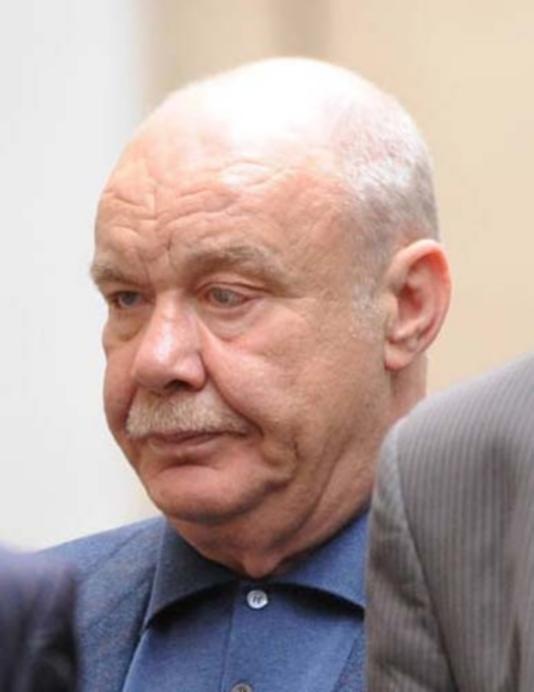
The case drew attention from those of us investigating Donald Trump’s Russia ties because Jacob’s brother, David Bogatin, had bought five apartments in the newly opened Trump Tower in 1984 for $5.8 million. The money came from a gasoline-tax scam he was running in Brooklyn with the Colombo crime family. According to one of Bogatin’s partners in that scheme, Trump himself persuaded Bogatin to purchase the apartments “as an investment.”
Trump didn’t merely broker the sale. As investigative reporter Wayne Barrett reported in Trump: The Deals and the Downfall, Trump personally attended the closing—an unusual move for a developer, and one that suggested this was no ordinary real-estate transaction.
The Bogatin deal carried classic money-laundering red flags. Of the five condos, only one was in David Bogatin’s name; the other four were held by shell companies created the same day by attorney Marvin E. Kramer, who specialized in forming shelf corporations from his Coney Island office. “We didn’t think he was living in five apartments,” former New York assistant attorney general Ronda Lustman told me. Prosecutors quickly concluded that the purchases were intended to launder cash and conceal assets.
Bogatin wasn’t alone. From its earliest days, Trump Tower attracted Russian organized crime figures. Roughly a third of its units were owned by foreign corporations, many of which were registered in Panama or the Netherlands Antilles. It was one of only two buildings in New York that allowed anonymous buyers. “Trump Tower allowed people who wanted to hide their money to buy there because their names were never really published,” said Jim E. Moody, former deputy assistant director of the FBI.
Among its early residents was Vyacheslav Ivankov, one of Russia’s most feared vory v zakone—“thieves-in-law.” The FBI tracked him to a Trump Tower apartment while he directed Russian Mafia operations in the United States. Years later, another mobster, Vadim Trincher, ran a multimillion-dollar gambling ring from a Trump Tower apartment just floors below Trump’s own penthouse.
Another figure often mentioned in connection with Mogilevich is Felix Sater, a Russian-born stockbroker-turned-government-informant and real estate developer who became one of Donald Trump’s more controversial business partners, scouting property deals in Moscow. While some have speculated about ties between Sater and Mogilevich’s network, any link appears to run through Sater’s father, Michael Sheferofsky. In Putin’s People, journalist Catherine Belton reported that two former Mogilevich associates said Sheferofsky had “become an ‘enforcer’ for some of Mogilevich’s interests” in Brighton Beach, where he ran protection rackets with the Genovese crime family.
Whether Trump knew about the Bogatins’ mob ties in 1984 remains unclear. The FBI never questioned him about David Bogatin. “In retrospect, we should have been looking in that direction,” said Ronald Noel, a former FBI agent on the case. What’s certain is that Trump was eager to make the sale, so eager he showed up in person at the closing.
David Bogatin fled the country, settling first in Austria and later in Poland, where he launched one of the country’s first private banking chains. When a Warsaw newspaper exposed his past in 1992, he was arrested and extradited to New York, where he served eight years in Attica.
His brother was more fortunate. The YBM case never reached trial. Mogilevich remains a fugitive despite years on the FBI’s Ten Most Wanted list and a $5 million reward for his capture. Jacob Bogatin remained free on bail ever since.
Until this week.
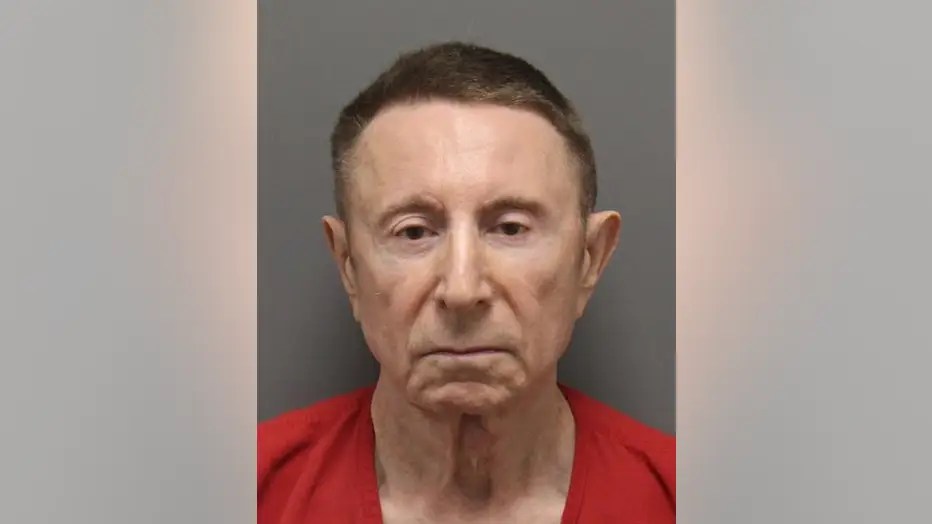
On October 28, Jacob Bogatin, now 78, was arrested and charged with murder and arson for a blaze that killed a 36-year-old woman and destroyed three townhomes in Sterling, Virginia.
According to the Loudoun Times-Mirror, Bogatin lived in the complex with his girlfriend, Valeria Gunkova, the listed owner, in a unit under foreclosure. One day after the October 24 fire, Bogatin filed an insurance claim for more than twice what was owed on the property.
Investigators say surveillance footage showed a man resembling Bogatin walking away from the scene moments after the fire began. A search of his car turned up a bottle of lighter fluid and a grill lighter.
Bogatin had been free on a $1 million bond since 2003 in the YBM Magnex case. His home-monitoring restrictions were lifted a year later, and he was permitted to travel abroad on the condition that he not commit any crime.
After the Loudoun County fire, pretrial-services officer Keri Foster asked the court to revoke Bogatin’s bail. In her report, Foster noted that Bogatin had dutifully called in to report his home had burned down—without mentioning that he might have been the one who struck the match.
 Trump / Russia