
Tommy K's Secrets
The Justice Department’s guilty plea with a Greek-born businessman and convicted felon who happened to be a friend of Randy “Duke” Cunningham is extreme even for an executive branch that is not known as a model of openness.
 Thomas “Tommy K” Kontogiannis secretly entered a guilty plea on February 23, 2007. Tommy K ran a New York mortgage business (among other things) and admitted paying off Cunningham mortgages in Arlington, Virginia and Rancho Santa Fe, California with what he knew were illegal bribes from Duke and others.
Fairly straightforward, but…the transcript of that plea hearing has been sealed ever since and is the subject of an ongoing battle between prosecutors who want it to stay that way and Larry Burns, the judge in the case who thinks the public is entitled to know more.
This week, the dispute was the subject of a unusual closed-door hearing before the 9th U.S. Circuit Court of Appeals. Prosecutors apparently didn’t like the way the winds were blowing in that hearing so they have agreed to release most of the transcripts at issue.
So what is going on here? There’s a lot of speculation in the blogosphere about a trip to Saudi Arabia that Cunningham made with Tommy K. But I think the truth is that all this secrecy has nothing to do with the Cunningham case.
The court documents help clear the fog a little bit. Following his guilty plea, Tommy K wasn’t fingerprinted for security reasons. (They already have them on file from Tommy K’s guilty plea years earlier to passport fraud)
More interesting, as part of the conditions setting his release, Tommy K was allowed to travel outside the United States in the company of “agents.” The court’s order setting release says: “Surrender passport to specific agents w/in 2 weeks. Dft can travel w/agents.”
Hmmm. There’s a lot of “specific agents” at a certain three-letter agency that does all its work (we hope) overseas. Bear in mind that while trying to keep the information about the plea secret, prosecutors invoked a law dealing with the handling of classified information, a law that almost always applies to CIA work. At least one transcript of a hearing was stamped “classified” by the government.
Given the extraordinary precautions in this case, it’s apparent that Tommy K had something to offer the U.S. intelligence community in this case. Since the intelligence community is all about rooting out terrorists, I would suspect that, unlikely as it may sound, he had something to offer in that department.
We’ll see what the transcripts say when they’re released. Judge Burns was out of town this week, so we’ll have to wait.
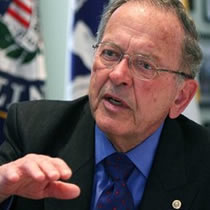 The Alaskan Native Claims Settlement Act of 1971 created the Alaskan native companies as a way of settling the Inupiat’s aboriginal land claims. The act divided nearly $1 billion and 44 million acres amongst Alaskan native peoples, and allowed construction of the Alaskan pipeline. The bill was introduced by Ted Stevens, then in his first term, and was subsequently ratified by the Inupiat. Stevens, now one of the Senate’s old bulls, had his home searched earlier this week in a widening criminal bribery probe.
 Trump / Russia